

A Pilot Program In Amsterdam Paid Workers In Beer. Here's Why

Getting paid for the work you do is a core principle of employment. What you spend the money you earn on is entirely up to you, and some people might like to buy a cold beer at the end of their shift. However, a pilot program that began in Amsterdam in 2013 turned this idea on its head. Employees tasked with cleaning up litter in streets and parks were partially paid with beer. The goal of the program was to help unhoused people struggling with alcohol addiction contribute to their community while giving them some daily structure.
Those in the program worked throughout the day cleaning up litter in parks and were paid five cans of beer. A New York Times profile mentions a possible sixth beer as a bonus for a good day's work. Payment came throughout the day, with two beers to start the shift, two beers at lunch, and one after work. Rolling papers for cigarettes, a free lunch of Dutch dishes like stamppot, and 10 euros per day rounded out the deal.
The unusual program focused on what was referred to as a "problematic group," using a harm reduction approach. These were people considered too deep in their addiction and for whom nothing else had worked. "We might not make them better, but we are giving them a better quality of life and it's better for the neighborhood, they're giving something back to society," the head of the project explained to the BBC. Muggings, stabbings, and arrests in parks, often attributed to addiction, were all reduced after the program began.
Making the best of a difficult situation
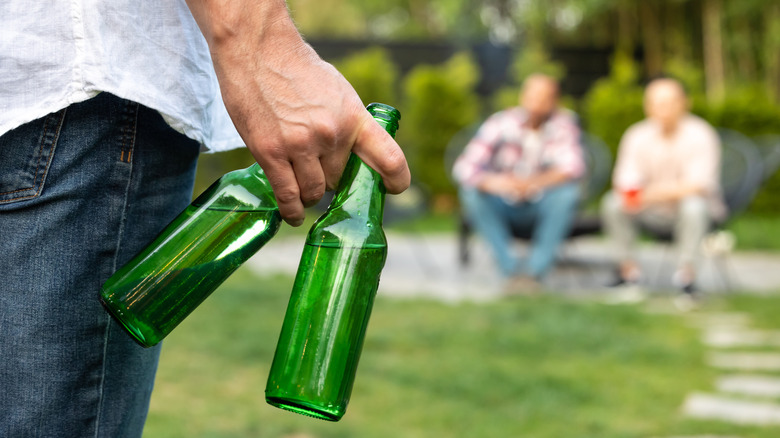
A post from 2025 on De Regenboog Groep (the Rainbow Group) website refers to the international coverage of the program in the New York Times. It calls the program a "resounding success" and notes that participants' health improved significantly because beer was paired with food. Although the program appeared to still be running, there was little additional information published. A similar initiative was undertaken in Germany in 2014, but few other communities appear to have followed suit.
Some saw the program as a way to prevent individuals from further damaging their own health while simultaneously improving the community, but it wasn't without critics. In Germany, it was called dehumanizing and referred to as "cheap labor" (via Independent). Government subsidies for the beer were also a cause for concern, and even De Regenboog Groep was tight-lipped about how much funding it received for fear of negative press (via BBC).
Despite what critics had to say, participants had a more positive outlook. "I'm not proud of being an alcoholic, but I am proud to have a job again," said one man, per The New York Times. Treating people with respect despite addiction issues is never a bad thing. Nor is allowing someone to have autonomy without judging them. Whether this was the best approach to dealing with addiction remains a bigger discussion.
If you or anyone you know needs help with addiction issues, help is available. Visit the Substance Abuse and Mental Health Services Administration website or contact SAMHSA's National Helpline at 1-800-662-HELP (4357).