

Why Walmart Refuses To Accept Apple Pay Despite Daily Complaints From Customers
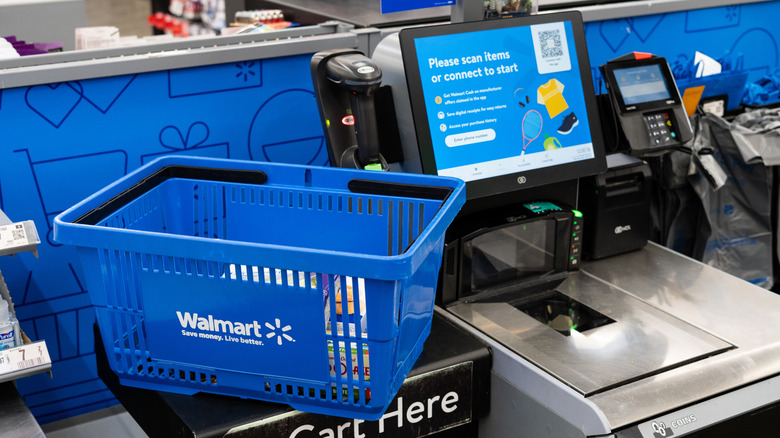
We've all been there. You forgot your wallet, but at least you have Apple Pay, right? Unfortunately, not every store accepts this form of payment. While most major retailers like Target, Trader Joe's, and Costco take Apple Pay, Walmart still does not. And it's not because they're behind the times, either. The main reason Walmart won't let you pay with NFC tap-to-pay methods, including physical contactless cards, is purely a strategic business decision. Sure, it'd be way easier for you to pull out your phone and scan it to pay with Apple or Google Pay or even tap your credit card, but that would mean stepping outside of Walmart's ecosystem. Needless to say, this is just one of many frequent complaints customers make about Walmart.
As an alternative to contactless payment, Walmart offers Walmart Pay and Scan & Go payment methods that allow you to check out without using traditional tap-to-pay methods. Walmart Pay allows you to link your debit, credit, or gift card to the app and pay with a QR code at checkout. Sounds easy enough, right? Customers don't seem to think so. While this requires the extra steps of manually downloading the app and adding your card information, the perks are that you'll be able to look back on e-receipts and easily make returns. If you're a Walmart+ member, you can take advantage of the Scan & Go feature, similar to Sam's Club's, which lets you scan items through the app as you shop and check out at the register with a QR code through the app. This leaves customers wondering why Walmart makes it more difficult to pay without signing up.
Walmart stores your data and protects its bottom line
The lack of Apple Pay functionality is all designed to keep you locked into the digital ecosystem, allowing the retailer to track every transaction and shopping habit, as seen in recent data on online grocery shopping trends, instead of giving that valuable data to Apple. This allows Walmart to extract more revenue through strategic mobile offers, notifications, and other app features that prompt adding items to your cart. Officially, the retailer states it uses big data to improve efficiency, such as ensuring pharmacies are properly staffed, speeding up store checkout, keeping transportation costs down, and making sure your favorite products are always in stock. But there's also something else at play.
On its website, it states that "Walmart can use data analytics to personalize mobile rollback deals," which can mean promoting certain products to parents who regularly shop for baby items, for example. The company states that this helps customers "live better by anticipating their needs." It sounds helpful on the surface, but it also reinforces a closed-loop system — one where your data helps shape what you see, and ultimately, what you buy.
Walmart's also trying to prevent making a major overhaul. Moving toward Apple Pay payments means nearly 5,000 stores would need to upgrade each and every payment terminal. This would come at an exorbitant cost to the chain, which obviously does not make financial sense, since the company is doing just fine without it. While many customers lament the lack of Apple or Google Pay compatibility, Walmart hasn't had much reason to change what's already working.
What do customers think of this policy?
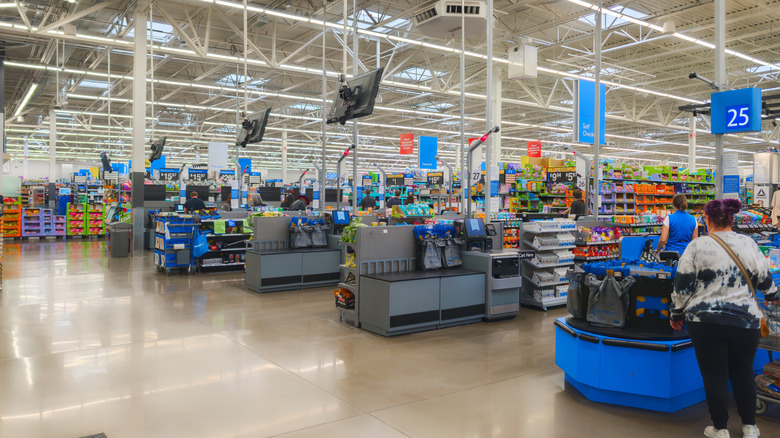
As a customer, the lack of traditional contactless payment is a pain. "Nothing sounds more appealing than to have to set up a different payment account in a different payment system for each and every store I go to," shares one Redditor. When some commenters declared they'd never use Walmart Pay, one Reddit reply stated that "[Walmart] could literally care less. Making record profits every year." Walmart's revenue keeps rising year over year, especially its online sales. It's hard to argue with its low prices, wide inventory, and convenient features, despite not having Apple Pay compatibility.
However, not all Walmart stores steer clear of Apple and Google Pay. For instance, Walmart Canada began accepting tap payments, including contactless NFC and mobile wallets, in late 2020. Since Canada's contactless payments were already standard there, the change was largely driven by customer expectations. In the U.S., some shoppers have pushed back in their own way, avoiding the store out of principle. "I only go to Walmart only when I have no other choice," and "leave a 1 star review rating every time," states one Reddit commenter.
Other customers reluctantly give in to the ecosystem. "I can't really fault them. I put up with it because a dozen jumbo eggs are 30 cents less than my Kroger," shared one Reddit user. And that's really what it comes down to. For plenty of shoppers, small savings add up, even if it means putting up with a few extra steps at checkout. As long as the prices stay low enough, convenience isn't always the deciding factor, even if Walmart isn't the cheapest grocery chain in the U.S.