

Why Aged Sushi Is Just As Good As Fresh Fish Options (If Not Better)
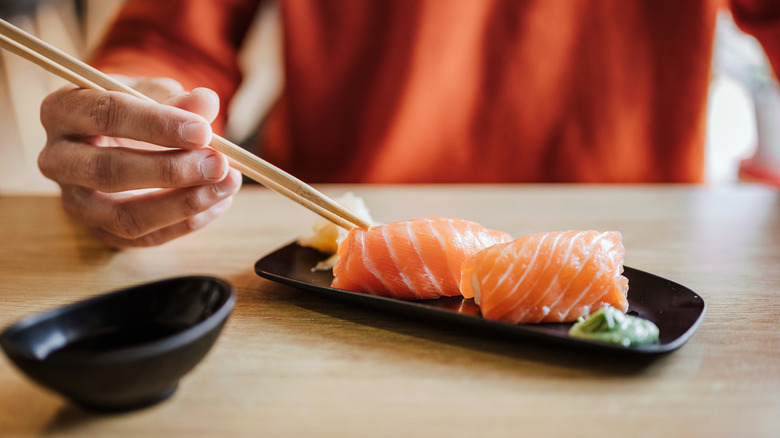
Ask any sushi lover what the essential ingredients for making sushi are, and their first response will likely be "fresh fish." Across the different methods of sushi preparation, the star ingredient is most often raw fish — and that should always be slightly chilled and as fresh as can be, right? Not always. There are benefits to dry-aging fish, but if you're new to aged fish in sushi, the concept might seem strange. We investigated further by speaking to an expert, Nana Darkwah, executive chef at Ocean Hai in Clearwater, Florida, about what aged fish even is aged fish — and what it does in sushi.
"The process for aged sushi is similar to curing fish or making smoked salmon," says Darkwah. "The fish is cured over time, which changes its texture and deepens its flavor profile." This is like the special technique behind dry-aging steak. "Old" fish (or steak) might sound off-putting, but the aging is done in carefully controlled conditions. Fish is most commonly dry-aged, removing excess moisture, which can lead to shrinking or spoiling.
Over time — which varies depending on the type and size of the fish — the tendons and connective tissue of the meat break down. As the moisture evaporates, the fish's flavor becomes more concentrated. Those aromas, like that "fishy" smell that is intense in fresh fish, begin to fade. "While many people prefer fresh fish for sushi, aged sushi can offer a more complex taste," Darkwah explains. Aged fish is cleaner, more flavorful, and more tender.
Chefs age fish carefully for richer, more tender sushi
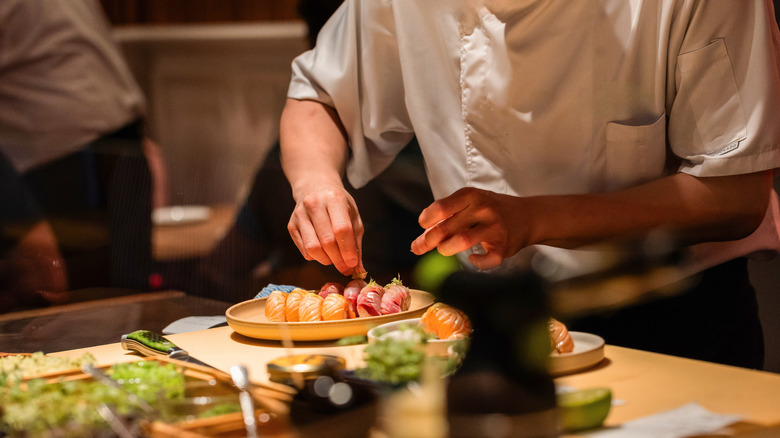
"For example, at Ocean Hai, our salmon is lightly cured for about an hour to give the flavor more depth," Darkwah notes, "while true-aged sushi is typically cured for at least a week." Of course, methods may vary from restaurant to restaurant, and even country to country. In Japan, you may also find fish that has been "wet-aged." Cleaned fish is sealed in plastic bags and refrigerated for several days. As with dry aging, the fish's tougher texture tenderizes, but the escaping moisture remains trapped by the bag, keeping the fish moist. It doesn't get that concentrated flavor profile, though, and it also can't be aged for too long due to bacterial growth.
Dry aging is the method most used in the U.S. Some of the best sushi you can find in this country will feature aged fish, which you can rest assured is anything but "old fish." Rather, it is carefully rested seafood that is clean, tender, and flavorful. Consider this: When fish is caught and killed, it goes into rigor mortis. That means tough flesh. It actually benefits from this aging time.
Chances are you've enjoyed cured salmon, and maybe even cured your own salmon at home. Now imagine how delicious that would be rolled up with vinegary sushi rice and seaweed, plus maybe crisp cucumber or creamy avocado. Whether it's salmon, tuna, snapper, mackerel, or any type of fish, if it's aged, you can count on sushi with a tender texture, no fishy aroma, and plenty of sweet, umami flavor.