

The 2 Ingredients For Perfect Pasta, According To An Italian Chef
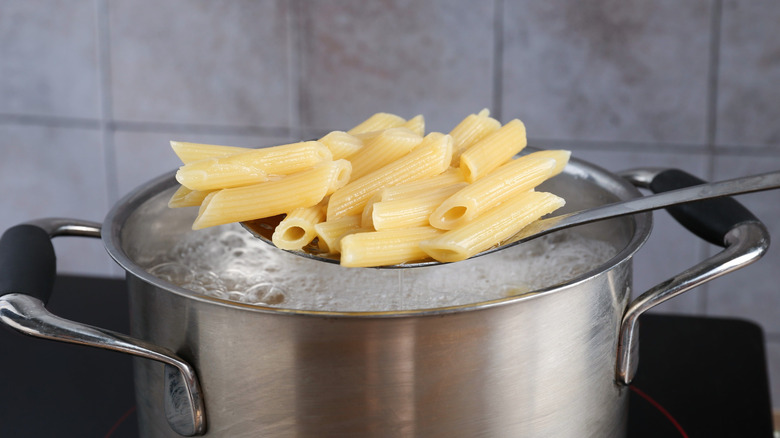
Pasta seems like it should be the easiest thing in the world to cook. You place the noodles in water and boil until done. And yet, who amongst us has never had overcooked pasta? Or pasta that was underdone, bland, clumpy, or seasoned all wrong? Its simplicity is deceptive and masks the many mistakes that can be made. You need to start it the right way, and that requires just two simple things: Pasta and salt in boiling water.
Tasting Table talked to Jasper J. Mirabile Jr., chef and owner of Jasper's Restaurant, and host of Live! From Jasper's Restaurant. Mirabile, whose family is from Sicily, received his culinary training in Italy, and Jasper's has been named one of the Top 10 Italian Restaurants in America, so he knows pasta. We asked him why the simplicity of cooking pasta in water with only a little salt works well. "Remember, pasta is just flour and water — and by adding salt to the water, it will give the pasta flavor from the inside out, which is a good thing," he shared. Even though only a small amount of salt is absorbed by the pasta, it changes the flavor for the better.
We also asked Chef Mirabile when salt should be added to the water. He recommended adding it before the pasta for a reason you may not have considered. "A lot of people don't realize that when you add a room temperature product to boiling water, it's going to stop boiling — but by having salt in it, it remains boiling." This is because salt raises the boiling point of water several degrees. We also recommend adding salt after the water boils so that the water doesn't reduce too much and make your pasta too salty.
Be bold with your salt
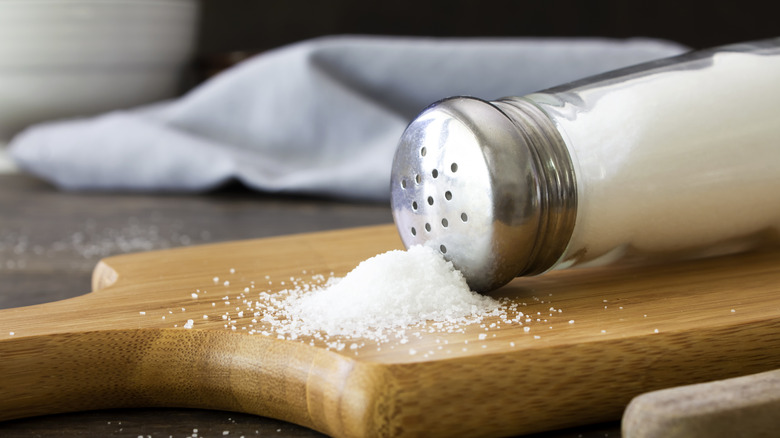
When it comes to how much salt is ideal, Chef Mirabile has a much more reliable answer than those who say "a pinch" or "until it tastes like the sea," which can be a little too vague. "A good rule of measures: About ½ tablespoon of sea salt per gallon of water," he told us.
For one pound of spaghetti, most directions recommend cooking in four quarts of water, or one gallon. So Chef Mirabile's recommendation may be less than you typically use, though other chefs recommend slightly more salt. But keep in mind Chef Mirabile also recommends sea salt. Sea salt typically has larger grains than table salt. Some kosher salts may be denser depending on the brand. So a half tablespoon of salt can make your pasta more or less salty, depending on what kind you use. Just avoid Himalayan salt since it has less sodium than others.
Not only does salt add flavor to pasta while you're cooking it, but it also helps maintain the structure of the pasta. Salt ions interact with the gluten in the flour of the pasta and help firm up the structure. The difference between pasta boiled in plain water and pasta boiled in salted water isn't just a better flavor; it also affects the al dente texture that you want. That means that even if you cook identical pasta for the same amount of time, unsalted pasta will taste not just blander but overcooked sooner.