

The Simple One-Second Test To Determine The Freshness Of Grocery Store Apples
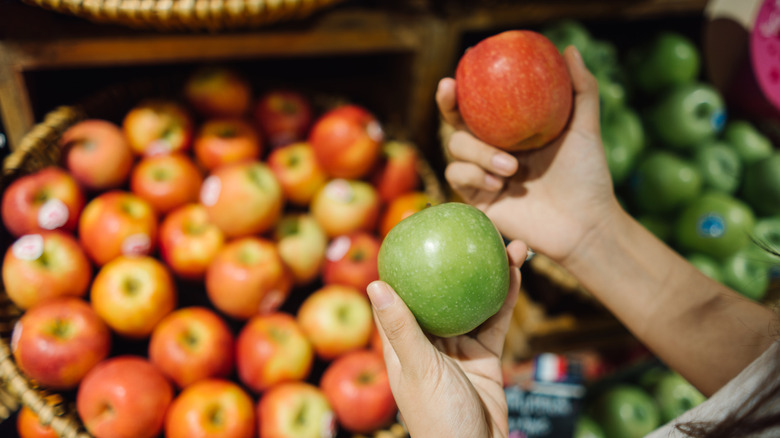
Apples are such a supermarket staple that it's easy to forget that they are in fact seasonal fruits. They are typically harvested from late summer through to late fall, but the fact they're available year-round is because they hold up incredibly well in long-term storage. Apples in the U.S. that aren't sent for immediate purchase are stored in climate-controlled conditions, where they can last up to 10 months. Some apple varieties ripen outside of these time frames, and even seasonality can vary by region, which means you often have no way of knowing exactly how fresh your apple is — unless you conduct this one-second test.
The simplest way to check for freshness is by giving your apple a sniff. Fresh apples should have a sweet and fruity smell, often more noticeable near the stem. Not all varieties have a strong fragrance, so a lack of smell isn't necessarily a bad sign. The most important thing, however, is that the apple doesn't smell unpleasant. Any hint of sourness or alcohol is a sign that the apple is past its prime.
Even when apples are in season, it's worth doing this sniff test for freshness. While some apples can last months when refrigerated, their shelf life is much shorter when left at room temperature. An apple with an off smell can indicate that it wasn't stored correctly during transit, or that it's been sitting too long in the grocery store.
Other signs an apple is worth selecting
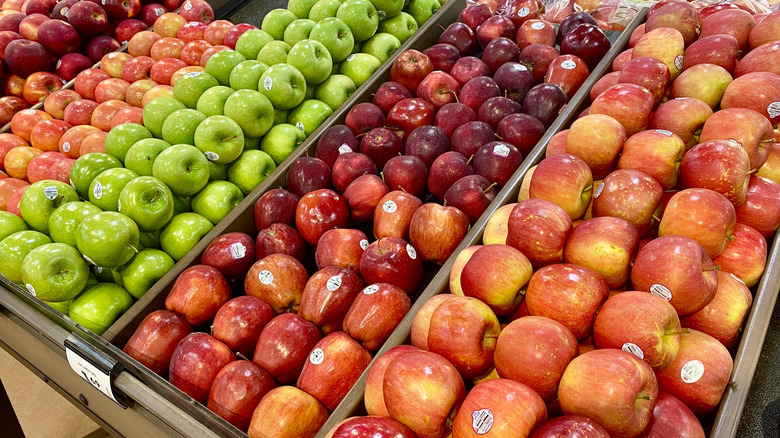
Along with aroma, there other freshness indicators you can look for to ensure that you pick the absolute best apples every time you shop. Fresh apples will be firm but not rock-hard, with no wrinkles forming when you rub your finger across the skin. Choose fruits that are also heavy for their size — these will be the juiciest, as apples will lose moisture as they age.
Freshness is one thing, but ripeness is another; for the best eating experience, you should be looking for a balance of both. Underripe apples can be overly acidic with a starchy texture and can cause an upset stomach, though they are not technically unsafe to eat. You'll know an apple is ripe as soon as you taste it, thanks to its sweet and juicy taste, but this doesn't help much when you're in the store. Instead look for apples with a brown stem. This indicates that they have reached full maturity and sweetness, meaning that they are ready to eat.
Apples will continue to ripen on the counter after you get them home, so if you don't plan to eat your apple on the same day, err on the side of buying fresh and slightly underripe fruit. To speed up the ripening process, add them to a paper bag with a banana and wait for a day or so.