

Daily Rations For American Revolution Soldiers Included Hefty Portions Of Beef
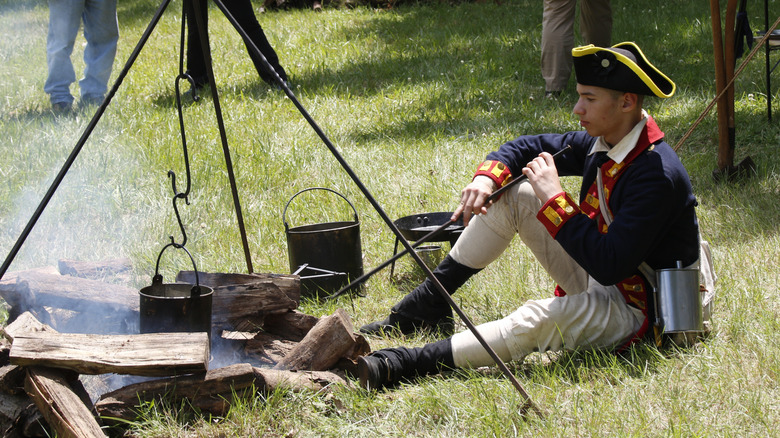
In instructions to his generals, Frederick II of Prussia once wrote that "The first object in the establishment of an army ought to be making provision for the belly, that being the basis and foundation of all operations." Indeed, the critical importance of food during wartime cannot be overstated — and for Continental Army soldiers during the American Revolution, much of that nourishment was beef.
Long before wartime meat rationing hit the kitchens of the WWII American home front, inspiring ingenious culinary creations like "Emergency Steak," there was the Revolutionary War, and beef was at its center. Although the war's inaugural Battle of Lexington took place on April 19, 1775, it wasn't until November 1775 that the Continental Congress finally announced universal rations that each soldier would receive each day — which included one pound of fresh beef per person. On some days, that fresh beef might be replaced with ¾ pound of pork or one pound of salt fish. But, as a general rule, considerable amounts of beef fueled the U.S. war for independence.
One pound of bread, one quart of spruce or malt beer, and one pint of milk were also rationed per person per day. Vinegar or sauerkraut were later added as an attempt to combat scurvy, a disease hitting malnourished troops from a lack of vitamin C. In September 1776, Washington issued an order that all soldiers should always carry two days worth of rations on them to help ensure there was always access to food in case of delivery issues.
Each soldier received a full pound of beef per day (ideally)
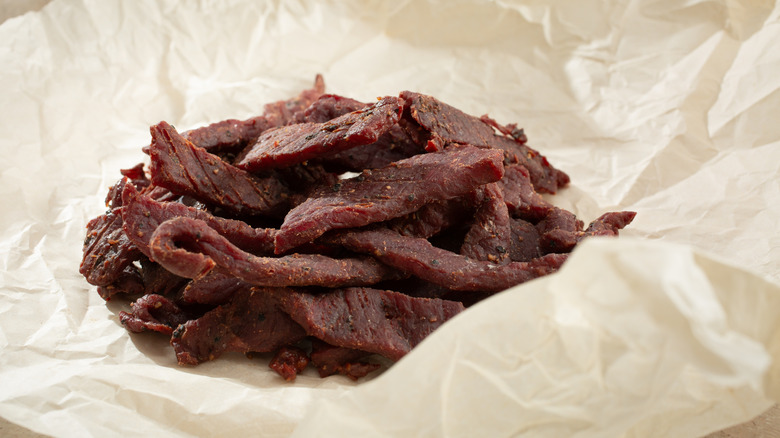
Beyond availability, the transportation and preservation of food also posed a major hurdle to nourishing troops. The American Revolutionary War lasted from 1775 to 1783, and the icebox (predecessor to the refrigerator) wouldn't be available to Americans until the 1860s. As a result, the meat that the soldiers received was heavily salted as a makeshift preserver to the point of being near-inedible – which also impacted the foods' nutritional value. But, no matter how salty, beef fueled the war.
The bulk of Continental Army soldiers' time during the eight-year war consisted of camp life. Chores needed to be done, including cooking. Six soldiers typically shared a tent or hut, and those same six soldiers would comprise a "mess" (aka an eating unit) to cook their rations amongst themselves. In the field, Revolutionary War soldiers relied on their cook pots for preparing meals. Thanks to the fact that the pot was made from tin, it could be transported on the backs of travelling soldiers much more easily than a pot made from heavy iron. On April 8, 1776, George Washington enlisted Joseph Reed, Philadelphia lawyer and Adjutant General of the Continental Army, to place an order for tin kettles and plates at Benjamin Harbeson's shop on Market Street. The 2 ½-gallon pots customarily measured at 9" in diameter and 10" deep. Some troops also travelled with families, in which case the women in the camps customarily performed the cooking duties.