

The Questions Everyone Forgets To Ask Before Buying Beef In Bulk
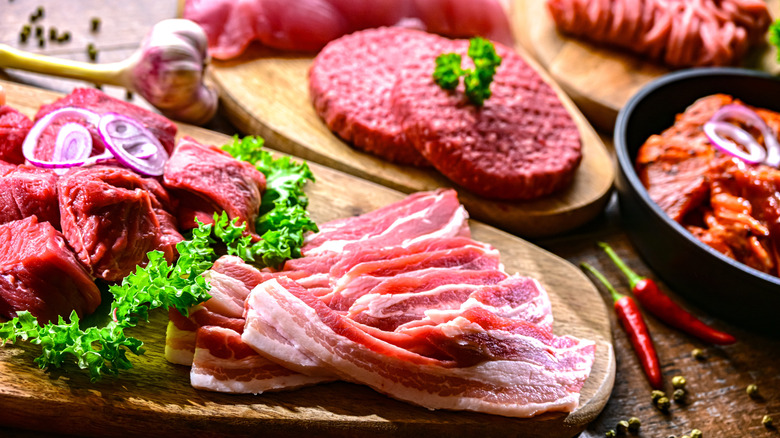
The price of beef continues to increase, and there's no indication that trend is going to stop anytime soon. So, if you have a meat-eating family, your grocery bill could potentially continue to become higher. For some, it may make more sense to buy in bulk. "Purchasing a half or whole cow can be a significant undertaking," explains Koji Fujioka, butchery manager at The Local Butcher Shop in Berkeley, California, "but it's also a great value in the long run if you have the time and storage space."
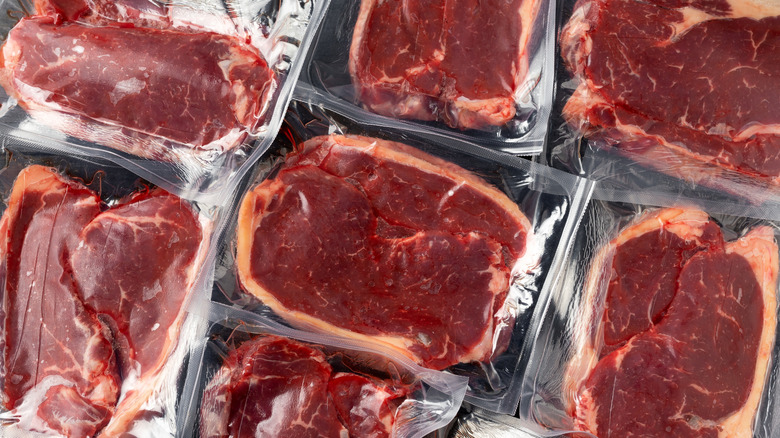
Our research found that purchasing a butchered, processed, and packaged half of a cow can cost anywhere from $1,200 to $2,600, depending on quality. The results are more than 200 pounds of meat that will require at least 8 to 9 cubic feet of freezer space, or 1 foot for every 25 pounds. So, you want to factor a deep freeze into the initial expense. Generally, customers have a say in how this meat is cut and separated into pounds of ground, a variety of steak cuts, ribs, marrow bones, and organ meats (liver, kidney, heart, and tongue).
"Make sure you ask for all of the bones from the beef you just purchased," advises Fujioka. "You're paying for a whole or half cow, so you should be able to take it all home!" To make the most of your purchase, Fujioka shares with us the best questions consumers generally forget or don't know to ask regarding breed, feed, and the positioning of the beef — and we're going to share them with you.
An experience that will leave a good taste in your mouth
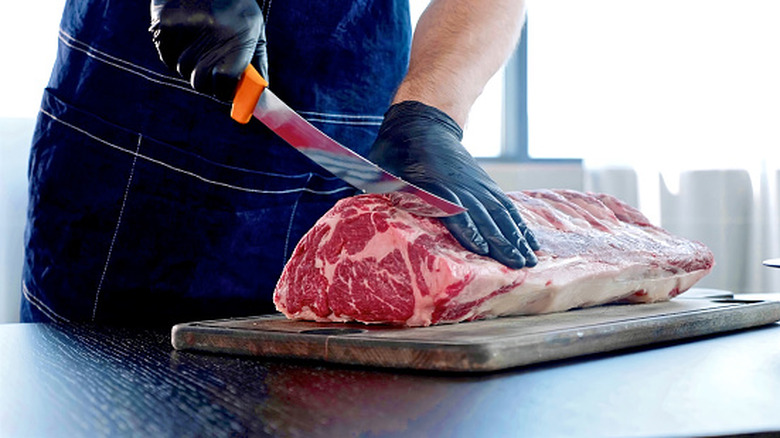
If you are investing in a large purchase like this, you want to enjoy it. According to Fujioka, there are a few factors that you need to consider, starting with the breed you're purchasing. "The breed will affect the tenderness, flavor, and marbling of the beef," he instructs. "For example, the increasingly well-known Wagyu breed will generally have more marbling (intramuscular fat) than Angus and many other breeds, whereas the Longhorn breed is known for being leaner with a more robust, beefy flavor."
In addition to inquiring about the breed, Fujioka says it is also important to inquire about the feeding habits of the cow. "The cow's feed also makes a huge impact on the flavor and fat content of the beef," he informs. "Beef from grass-fed and finished (entirely pasture-raised) cattle will generally be leaner but richer in flavor." He adds that there is some evidence that grass-fed cattle could be more nutritious and nutrient dense than cattle fed grain. Something that might be a deciding factor in your purchase.
"However, it's hard to beat the marbling and fattiness of grain-fed beef, if that's what you are looking for," adds the expert. "Those cows don't need to move and walk around as much as fully pasture-raised cows; their meat is generally more tender." So, there are different benefits and personal preferences to weigh out. Taking the time to gather the information before you purchase will make a big difference in satisfaction level.
Time to cut things down to size
The breed of the cow you purchase will offer different taste and texture values, but it will also determine the amount of product you receive. "Angus cattle, common in America, grow to be a few hundred pounds larger than Wagyu cattle," says Fujioka. So, if you are looking for a larger portion of meat to fill your freezer, Wagyu might not be your best option.
And regarding the meat you will be getting, he notes that it is important to be a part of the decision-making process on the cuts and grinds that will be made to your portion. "You definitely want to make sure you know what cuts of beef you will be receiving, especially because you'll likely be receiving the meat frozen and pre-portioned," he says. "A good butcher operation will ask you how you'd like this done. For example, do you prefer bone-in or boneless ribeye steaks? Do you want porterhouse steaks or filet mignon, or both? Do you prefer more steaks or slow-cooking cuts?" So, it's not only important to ask the questions but also to give some answers of your own.
Don't be afraid to be picky. With such a large investment, you deserve to get exactly what you want. "At The Local Butcher Shop, we ask you exactly how you want the beef prepared and portioned, whereas some operations won't give you much of a choice," Fujioka adds. So, if one butcher isn't able to fulfill your needs, look elsewhere.