

What To Do If Your Prime Rib Is Cooked Outside But Cold In The Center
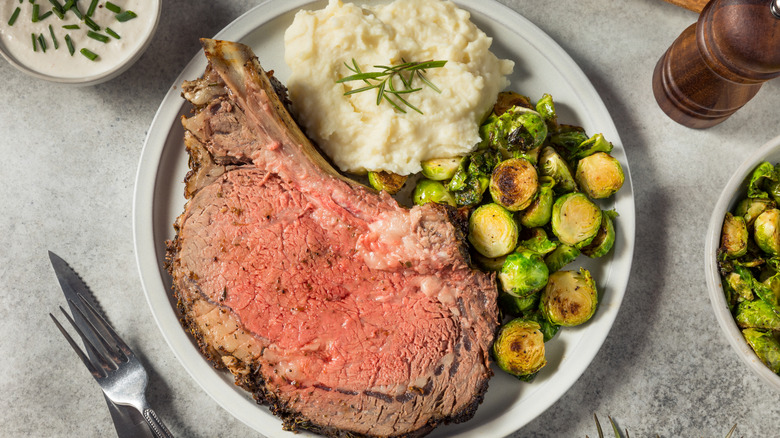
A prime rib is a beautiful piece of meat that can be exquisite when prepared properly, but because of its scale and density, doing so can be tricky. Heat travels from the surface inward, and a large roast gives it a substantial distance to cover. As the outer layer is permeated by the hot, dry air in the oven, moisture evaporates off the surface of the meat, which results in a nice, brown crust forming. Inside, the center is protected by sheer mass, warming more gradually as heat works its way inward.
When it all lines up, you get a balanced contrast between the deeply browned exterior, sometimes called a bark, and a warm, evenly pink interior. When it doesn't work out, a big, expensive prime rib can go to waste, ending up either too dry all the way through, or picturesque on the exterior but cold and still-raw on the inside. Tasting Table spoke with chef and culinary expert Dennis Littley to address the latter. "If a prime rib is cooked on the outside yet still cool/cold inside," he explains, "it generally indicates that it was either improperly cooked or did not receive sufficient time at a consistent roasting temperature."
Once the temperature gap is established, certain choices make it harder to close. You might be tempted to jack up the temperature to try to force heat into the uncooked center area, but more intense heat will simultaneously push the outside further along, deepening the crust past the ideal, satisfyingly-crusty-bark point and into dry, drier, driest territory. This is why Littley cautions against attempting to "blast it with high heat," because it will "result in overcooking the outside even more."
Some pink
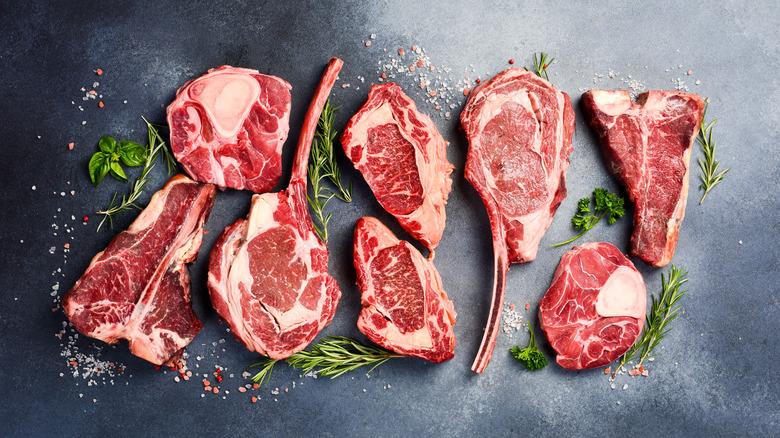
The priority should be consistency, over intensity, and the best rescue is the classic slow-and-low method. Littley recommends that you "return the prime rib to a low oven to complete its cooking slowly," which allows the internal temperature to rise without punishing the crust. This is why a lot of good prime rib recipes begin with a lower oven, saving the final "blast" of heat for the end. That way, the roast definitely gets the chance to warm through on the front end of the cook.
The way the roast looks, visually, isn't always a reliable indicator of done-ness. The rosy interior of a properly cooked prime rib comes from myoglobin, a protein in muscle tissue that retains its color even as the meat reaches a desirable temperature. What does matter is how evenly that temperature is distributed from edge to center, which is why Littley says that "utilizing an internal [meat] thermometer is by far the safest and most effective method to ensure that" uneven undercooking never happens in the first place.
Smaller is better
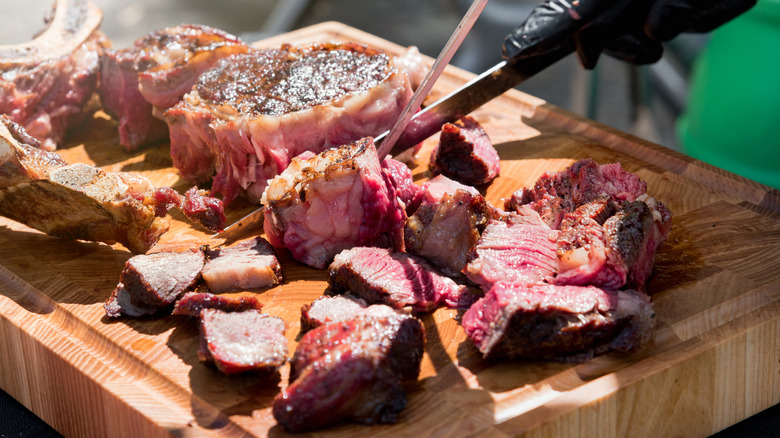
If you didn't check the temperature and don't discover the undercooked middle until carving, breaking the roast down can actually work in your favor. "Cutting larger slices of prime rib into smaller portions will allow for faster/even heating without compromising the texture too much," Littley says. It might make for a less stately centerpiece, but its worth sacrificing the aesthetics for the eating experience. Smaller pieces will shorten the distance the heat has to travel, so they warm more quickly with less risk of drying out. Littley says to then "return the prime rib to a low oven to complete its cooking slowly," giving the interior time to come up without pushing the exterior further.
"Prime rib should always be cooked based on internal temperature, not time, since the size/thickness and shape of each piece of prime rib can vary greatly," he says, and the thermometer will give you a direct read on what's happening inside the meat. Once the prime rib is removed from the oven, it's crucial to let it rest before slicing. "Carryover cooking will continue to elevate internal temperature once removed from the oven," Littley explains. "Pulling the prime rib at optimal times ensures it cooks evenly and is tender." As the heat in the outer later continues to move inward, the juices settle back through the meat, evening out the roast from edge to center.
A big roast of meat might look deceptively simple to cook, but things can go wrong. Understanding the science of the techniques allows you to pivot if they do.