

A Roman Twist Turns Classic Deviled Eggs Into Something Unexpected

If you've grown weary of the same old deviled eggs, then it's time to change things up. Modern deviled eggs have found a resurgence on restaurant menus in recent years with luxe toppings like caviar and gold flakes — but the real flavor inspo dates back to ancient Rome.
Interestingly, eggs and spiced eggs (most similar to modern deviled eggs) were ubiquitously enjoyed during the early Romans' primary meal as part of the gustatio (or appetizer course) — typically accompanied by spicy sauces. This ancient Rome-inspired deviled eggs recipe makes use of common ingredients used back then, such as honey, pine nuts, salt, cumin, black pepper, dates, and mint. In fact, recipes found in one of the world's original cookbooks, ancient Rome's "Apicius," incorporate similar flavors of honey, dates, pine nuts and herbs to create a perfect balance of sweet and savory with aromatic elements — something the Romans were obsessed with. Roman cuisine often combined honey (sweet), vinegar (acid), herbs and spices (aromatics), and other savory elements to create all kinds of multidimensional enticements.
This recipe is easy to make. After cutting your hard boiled eggs and separating the whites from the yolks, simply combine the mashed yolks with honey, lemon juice, yogurt, ground cumin, salt, and pepper. Lastly, stir in the dates, pine nuts, and mint, before spooning the mixture back into the halved whites. To garnish, delicately sprinkle the tops of the yolk mixture with more pine nuts and chopped mint. That's it; now you have a devilishly good appetizer.
Add Roman-inspired stuffed dates for an historic meal
Keeping in line with the theme, there are plenty of other fun ways to zhush up your deviled eggs — including adding in an umami blast similar to garum, a fermented fish sauce often used during the Roman era. Your pantry might already be stocked with fish sauce, anchovy paste, or miso, to give them that hidden depth your guests won't be expecting. Additionally, crushed walnuts or almonds could easily replace pine nuts for texture, and a drizzle of local honey or minced dates could be used as garnish, adding both flavor and an enticing visual flourish.
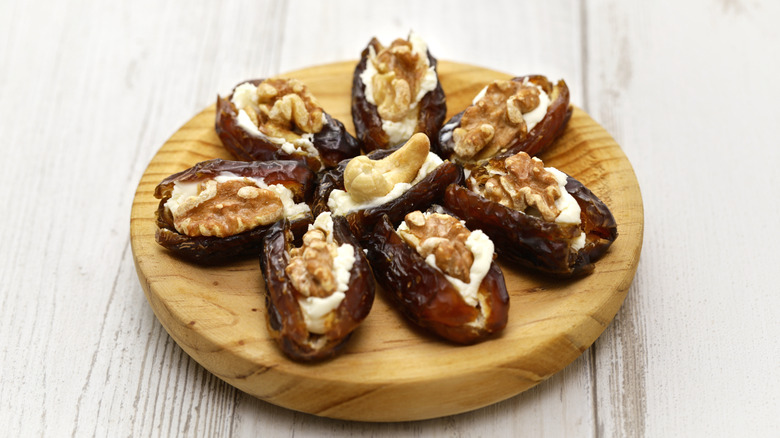
If you're looking to expand your menu, look no further than stuffed dates, which happened to be a popular snack at the Colosseum. Expanding even further into this fascinating historic realm of both the exotic and familiar, you might consider serving your eggs alongside meatballs, lentils, or fritters, which were often eaten by the common folk. The aristocracy, on the other hand, were notorious for their love of rare foods, such as flamingo tongue or dormice (rodents), but we promise not to recommend that. Stick to the familiar, and you and your palate will be pleasantly pleased with the results.