

How To Use High-Proof Liquor In Cocktails Correctly
We may receive a commission on purchases made from links.
If you're an amateur mixologist, you might be interested, albeit intimidated, to experiment with high-proof liquor in your homemade cocktails. Higher-proof isn't about yielding the strongest cocktails. It's about deepening the flavor and enriching the overall experience and enjoyment of your favorite libation. As you can probably guess, a higher-proof liquor will increase the intensity and alcohol burn in your cocktail, but you can also achieve more subtle results. Finding the right balance of complexity takes practice and precision.
For help, Tasting Table turned to Sarah Becan, author of "Let's Make Cocktails!" She told us, "I'm honestly a big fan of using higher-proof spirits in small amounts as an accent in a cocktail, rather than replacing the main spirit entirely." For her, it's about rounding out the recipe with complexity and depth for a more satisfying sip. "Higher-proof spirits are great for standing up to the more cloying qualities of super-sweet cocktails! An overproof rum can really round out a piña colada, for instance. They can also work very nicely in hot drinks, like an Irish coffee or a hot toddy," she said.
Expert tips on when to mix cocktails with high-proof spirits and when to leave them out
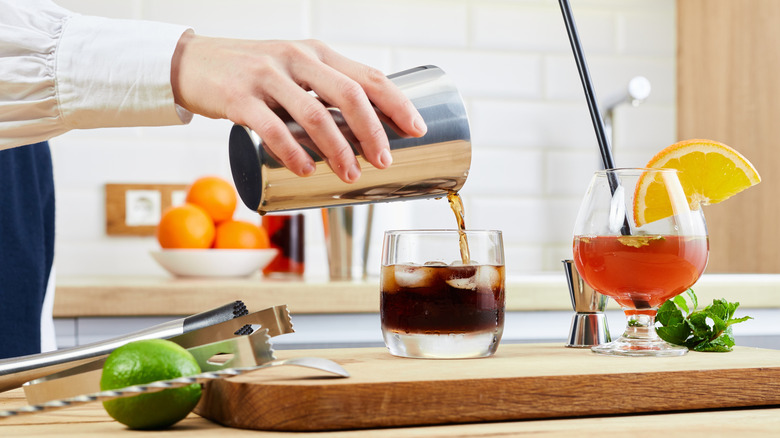
Not sure where to begin? Trying out a higher-proof bottle in your bourbon cocktails is a great place to start. Especially for bourbons, the higher the proof tends to be synonymous with a greater depth of flavor. "Billy Sunday, a fabulous cocktail bar in my neighborhood in Chicago, makes a house old fashioned that includes a small amount of Willet 4-year Bourbon, which is around 125 proof," Sarah Becan shared. "It's subtle, but noticeable. It adds a lovely, concentrated bourbon note without overwhelming the rest of the flavors in the drink." If you're on a mission to make a perfect old fashioned, remember that balance is key, and expect that it will take some practice before you find just the right ratios, especially using high-proof spirits.
While higher-proof bottles might pique your interest, Becan advised that not all cocktails warrant stronger spirits. "I personally wouldn't try a higher-proof spirit in some of your more delicately balanced drinks, like the aviation or the clover club," she said. When you're aiming more for light and refreshing rather than bold and fiery, stick with low-proof liquors. "A navy-strength gin could easily overwhelm the quieter floral notes of either cocktail. It could be done, certainly, but figuring out the balance might be more trouble than it's worth."