

Garam Masala: The Ultimate Guide To A Staple Indian Spice
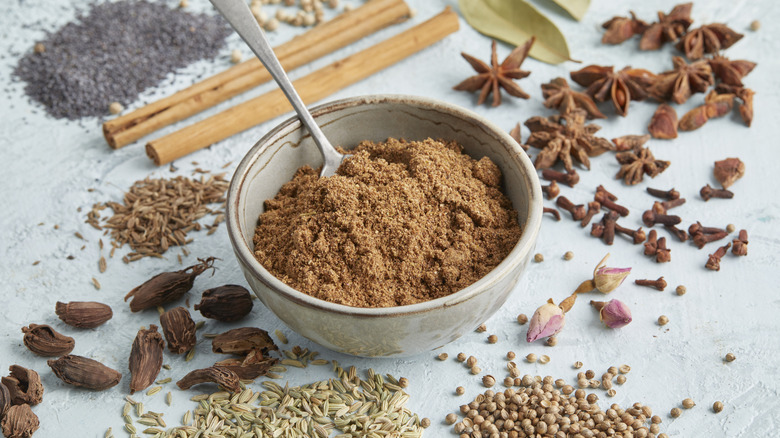
Recipes for garam masala, one of the Indian spice blends everyone should be using, often stretch as long as a grocery list. Indeed, the beauty of this spice blend lies in the details. Garam masala requires a fine balance of flavors and aromas, and adding too much or too little of a certain spice can transform it.
The only mandatory ingredient in garam masala is personal flair. Recipes vary widely from home to home, and different regions of India lean into different spice combinations and proportions. Even if you buy a blend instead of crafting your own, you have every right to make adjustments until it meets your preferences. That said, there are several generalizations we can make about garam masala to help you better employ this superstar spice blend at home.
To get a better sense of garam masala's nuances, we turned to a handful of experts: Ethan Frisch, the co-founder and co-CEO of single-origin spice company Burlap & Barrel; Barkha Cardoz, founder of Cardoz Legacy and author of "With Love & Masalas: Everyday Indian Recipes from My Kitchen to Yours"; Sana Javeri Kadri, CEO and founder of Diaspora Spice Co.; and Alyse Baca, culinary director of Spicewalla.
What is garam masala?
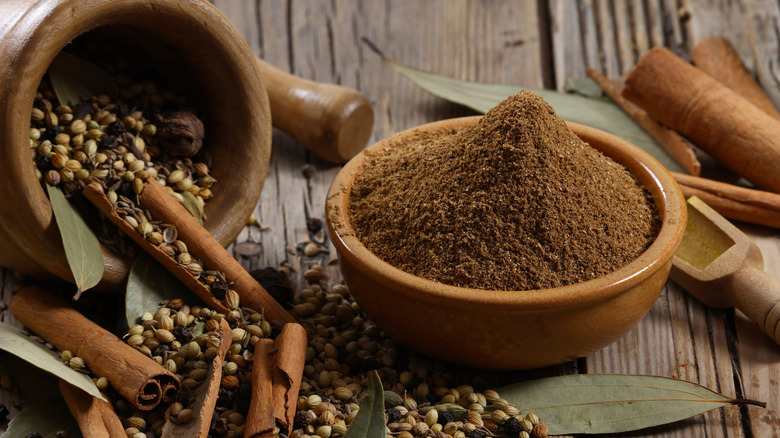
Garam masala consists of several spices that can run the whole gamut of flavors, from subtly sweet to shockingly spicy. However, when these spices are properly balanced, garam masala becomes a blend that can complement curries, biryanis, and even ice cream. It tends to be reddish brown in color, perhaps with a few flecks of green depending on how finely it is ground. Its texture is powdery, but not like powdered sugar; it retains a coarseness, particularly in homemade versions. Meanwhile, its aroma can be earthy, piney, smoky, and floral all at once. The aroma of garam masala can change with the application of heat, too.
Not all garam masala ingredients are native to India, shares Ethan Frisch, co-founder and co-CEO of Burlap & Barrel. For example, nutmeg and cloves originated in Indonesia. It's difficult to trace the exact origins of garam masala, and the spice blend has evolved over time alongside shifting patterns in trade and production. That's why recipes differ dramatically between Indian states. Furthermore, you can find variations of garam masala under different names across the Middle East and Asia. Historically, Mughal cuisine was very meat-heavy and complemented by the flavors of garam masala, observes Barkha Cardoz, founder of Cardoz Legacy, helping the popularity of this spice blend rise as the Mughal Empire expanded.
Ultimately, we shouldn't try to put garam masala into a box (or rather, a jar), advises Alyse Baca, culinary director of Spicewalla. "The whole history of this blend is about personal expression," she says. "It has evolved in every kitchen it entered." You should, therefore, release any trepidations about using garam masala and let your creativity run wild.
What spices are in garam masala?
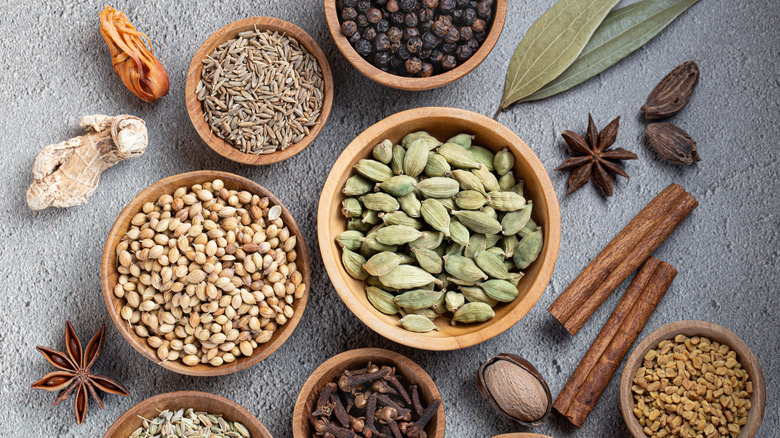
Garam masala translates to "warm spice blend," shares Alyse Baca, and while there's no set recipe, it typically includes spices that will heat you up from the inside out. But you can't just throw together a random assortment of cinnamon and ginger. "Understanding the flavor personalities or categories of each spice is really helpful in understanding how they interact with each other," explains Baca. Aim for harmony between earthy, spicy, and warming notes.
Sana Javeri Kadri, CEO and founder of Diaspora Spice Co., agrees, adding that spices like cumin, coriander, and fennel can lend nutty, savory notes that complement the warmth of spices like black pepper, cinnamon, ginger, clove, nutmeg, and green and black cardamom. Five to six spices are enough to create an excellent garam masala, Kadri says, though many recipes will call for more.
At the same time, garam masala can lean entirely sweet. The blend sold by Burlap & Barrel and Cardoz Legacy doesn't contain even a pinch of coriander or cumin. Ethan Frisch compares it to "an Indian-inflected pumpkin spice" well-suited to dishes like pancakes and banana bread, as well as traditional Indian cuisine. In fact, garam masala can even be the secret ingredient for a next-level pumpkin pie.
As mentioned earlier, the exact spices constituting garam masala largely depends on historical fluctuations within the spice trade. In Kashmir, Kadri explains, spices like caraway, fennel, and black cardamom may steal the show. Meanwhile, in Maharashtra, cumin and coriander are favored.
What does garam masala taste like?
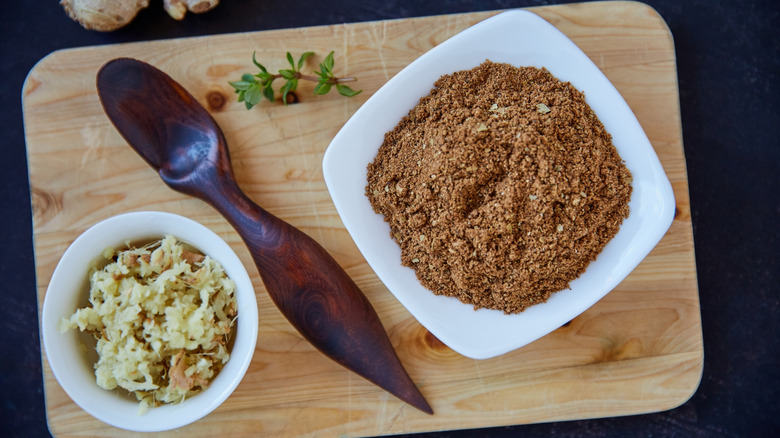
Garam masala's flavors change depending on when the spice blend is added to a dish. Incorporating garam masala right off the bat can help infuse an entire dish with its flavors, notes Alyse Baca. Meanwhile, implementing it as a finishing spice helps highlight garam masala's fragrance and bold flavors. She often adds it twice to reap both benefits.
Adding garam masala just before serving allows the steam from the rest of the dish to uniquely lift the blend's aromas, says Ethan Frisch. On the other hand, Sana Javeri Kadri explains that untoasted garam masala needs extra cooking time and should, therefore, be added to dishes early on to prevent excess bitterness from assaulting the palate.
Again, garam masala can be sweet, spicy, savory, or anything in between. When crafting your own, Baca recommends tasting small amounts at regular intervals as you build the blend. And, while toasting isn't mandatory, she says it can be helpful. "Toasting and grinding your spices releases fresh oils in the spices, wakes everything up, and deepens the flavor and complexity," she says.
Finally, shuffling a spice's variety can make a world of difference. For example, Ceylon cinnamon leans into savory flavors, while royal cinnamon from Vietnam offers sweeter flavors, says Frisch. Star anise also offers a unique and flexible flavor. Frisch lauds the complex nature of star anise, which he says boasts sweet, savory, and tart notes. Burlap & Barrel sources a smoky, umami-like star anise from Vietnam that he especially loves.
Which dishes are complemented by garam masala
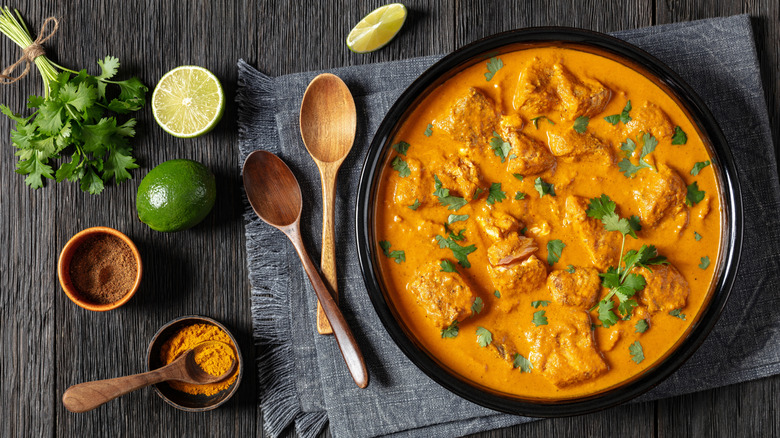
Garam masala belongs not only in Indian dishes, such as malai kofta and dal, but also in other cuisines. It's stellar when bloomed in brown butter, shares Alyse Baca, and this savory concoction can be drizzled over pasta or roasted vegetables. She often adds a smidge of garam masala to cookies, cakes, and pies, too, where it provides warmth. When paired with grilled cheese, she says, it can result in a meal that your family demands regularly.
Meanwhile, Sana Javeri Kadri favors meat preparations that include garam masala. Add a pinch of garam masala while your meat is braising, Kadri advises, and you'll be pleased with how complex your dish turns out. It can even add dimension to burgers, meatballs, or recipes in which a marinade is involved.
Like Baca, Kadri is a fan of pairing garam masala with sweet dishes, too. Recognizing that garam masala is a savory topping destined for ice cream, Kadri likes to incorporate it into homemade pumpkin garam masala crumble ice cream. Kadri also whips up a garam masala apple pie each Thanksgiving. A sweeter garam masala can also be added to smoothies, oatmeal, and coconut-based dishes with ease. Even fruitcake and chocolate can be given a boost by garam masala, says Barkha Cardoz.
Where and how to buy garam masala
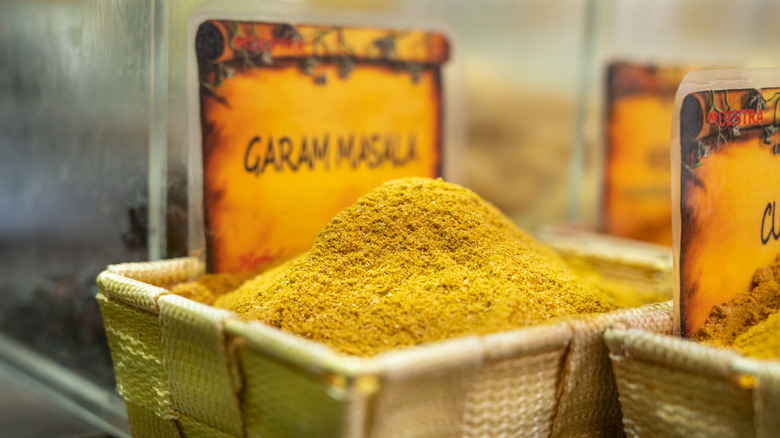
Garam masala is commonly found on the spice rack of major grocery stores, and you'll find a larger selection of the spice blend at Indian grocery stores and online. But, oh, which one to buy? First, follow Ethan Frisch's advice and try to locate a production date on your garam masala. Also, see if you can figure out when it was ground. A stale garam masala will not do your dish any favors.
Pay attention to the geographical origins and sourcing practices behind your spices, too, whether you are buying them whole or in powder form. These have ethical, environmental, and health ramifications. For instance, green and black cardamom frequently sport pesticide residue, explains Sana Javeri Kadri. She encourages folks to find brands that are committed to transparency and support regenerative farmers.
Finally, keep in mind the general theme of the dishes you'll be preparing. "A good garam masala can sit comfortably in both savory and sweet dishes, especially if it has floral, fruity notes like mace and white pepper," says Kadri. But if you don't plan to make anything close to a dal or curry, and ice cream and cookies are on your mind, go for a product emphasizing warm spices like cinnamon, star anise, and mace.
Garam masala's nutritional benefits
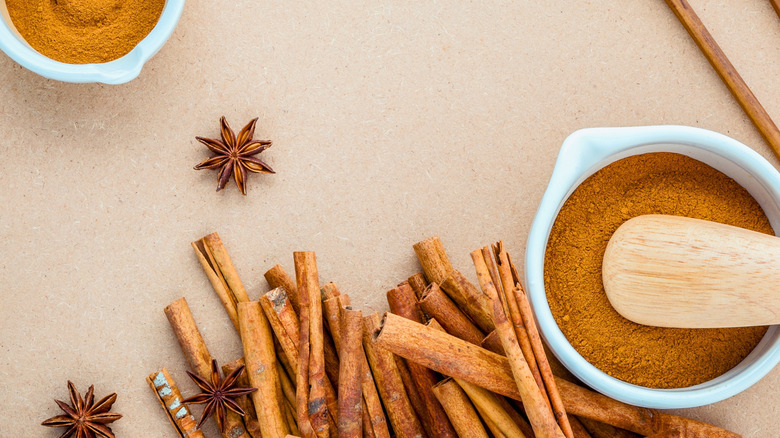
Garam masala may not be your go-to source for macronutrients like protein, but it's an excellent repository of micronutrients and antioxidants. It has both short-term and long-term benefits when used appropriately. For example, Ceylon cinnamon is believed to support blood sugar moderation and digestion, shares Ethan Frisch. Plus, in Ayurveda, a traditional Indian medical system, cinnamon is thought to be a natural expectorant and even an aphrodisiac.
Furthermore, according to Ayurvedic wisdom, star anise and other warming spices in garam masala are believed to help prevent and treat colds. In fact, one derivative of star anise — shikimic acid — is incorporated into modern flu medicine. You should not eat spoonfuls of garam masala hoping to get rid of a cough or treat diabetes. Like other spice blends, garam masala should be used in moderation and never in replacement of prescribed medicine. The maximum amount of cinnamon you can safely eat in a day is lower than you might think, and the same is true of other spices, so don't go overboard.
How to store garam masala
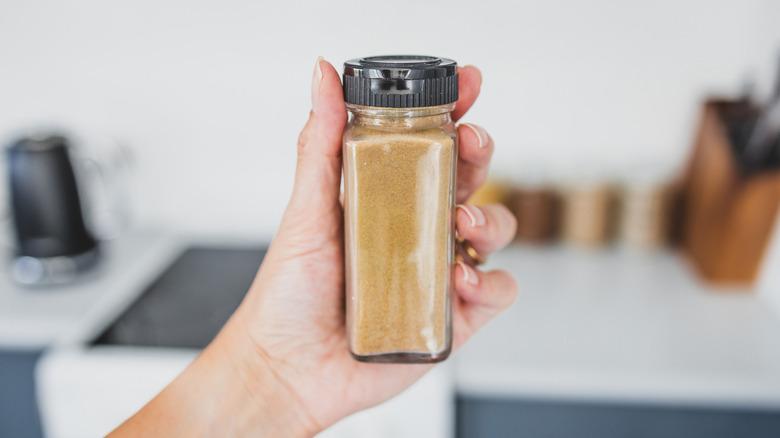
Once you've got your hands on the right garam masala, then you'll need to consider another challenge: How to keep your spices tasting fresh and smelling divine. Ethan Frisch recommends keeping garam masala in eyesight so that you frequently use it. Barkha Cardoz grinds a week's worth of garam masala and stores it in her masala dabba, a container from which she takes spices daily.
On the other hand, Alyse Baca recommends not keeping spices near the stove, where excess heat can reduce their potency. Light, too, should be limited, so store homemade blends in airtight, dark glass bottles. When storing garam masala in a cabinet or drawer, keep it at the front to encourage regular use.
If you're storing ground garam masala, Baca suggests investing in a new blend every six months. As such, you might wish to purchase smaller bottles. Similarly, if you're going the homemade route, only make around 1.5 to 2 ounces in one go, as Sana Javeri Kadri recommends, and don't forget to date your jar. You can store the rest of your whole spices separately, and their strength can persist for roughly a year.