

The Difference Between Crispy And Greasy Fried Fish Isn't What You Think
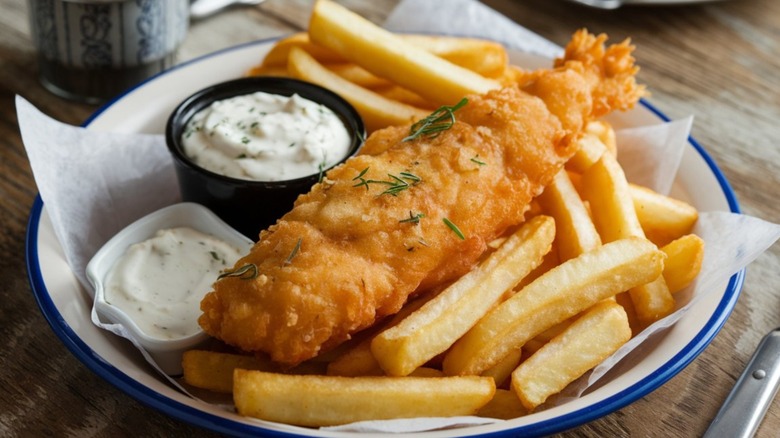
There's nothing worse than tucking into what you hope to be a salty, crispy-but-juicy fish n' chips dinner and finding that instead, you've got an unappetizing, soggy, greasy pile of mush. If you've ever found yourself in this position (or you just want to ensure that when you're frying fish you never do) it's imperative you follow this one simple rule to making your next fish fry light, fluffy, crispy, and golden on the outside, while maintaining a tender, juicy, and meaty inside. Though uncomplicated to make (in theory), a flawless execution takes practice to master. Of all the determining factors that one might think to blame (the recipe, the amount of oil in the pan, the type of fish), it's the temperature of your oil that ultimately results in crave-worthy fried fish or lackluster slog.
Seasoned chefs understand just how critical using the right temperature can be. Get your oil too hot, run the risk of burned batter and undercooked fish — too cold, and your batter will absorb all that oil, resulting in a greasy, weighed-down mess. Rather, aim for the sweet spot, maintaining an oil temperature of 350 to 375 degrees Fahrenheit,the absolute best oil temperature for perfectly golden fish and chips.
Experts recommend the higher end for smaller, thinner pieces, and lower end for larger, thicker ones. Never drop your fish until the oil has reached this ideal range, keeping in mind that when you add the fish to a pan, it will lower the temperature a bit. You'll also want to check the temperature throughout the frying process, not just at the start.
How to ensure crispy fried fish
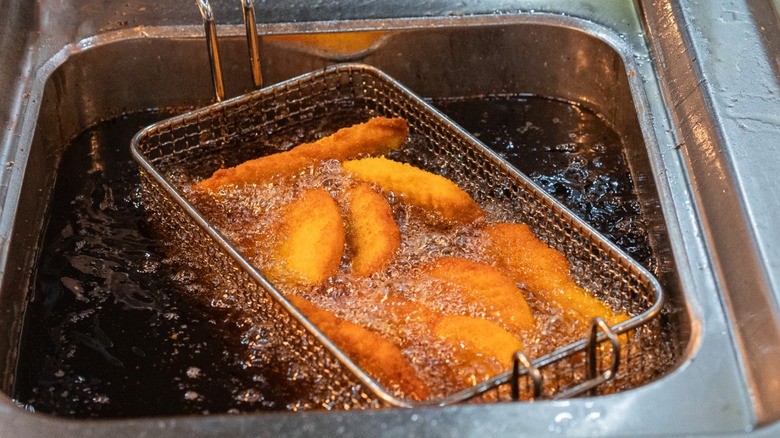
The best method for monitoring the oil temperature when frying is to use a standard candy thermometer. If you don't have a thermometer, there's a spoon trick for testing whether frying oil is ready. Make sure you use an oil with a high smoke point, such as canola, coconut, or avocado oil.
It's also better to slowly bring your oil up to temp using medium-high heat as opposed to faster (on a higher heat) because the oil's temperature will continue to climb, even once it's been turned down and it will take significantly longer to cool back down, when heated too quickly. When your fish has reached the target range, adjust your temperature accordingly throughout cooking. Expect an initial drop in temperature when the fish is first added before it rises again, as the fish reaches doneness. Re-check it frequently, especially in between batches, waiting to bring the oil back up to temp, as needed.
Although oil temp has the most important role in keeping your fish crispy, it's not the only one. Other key factors include using oil that isn't too old, making sure you're using one of the best types of fish that hold up well to frying, and drying the fish before applying the batter, so that it has the intended reaction when hitting the high temp. In addition, how much batter you use, frying in small batches (to avoid overcrowding), and draining on a rack (rather than paper towels which locks in steam) are just some of the 12 essential tips for frying fish.