

Using Aluminum Foil Instead Of Parchment? Here's How To Adjust Your Baking
We may receive a commission on purchases made from links.
Do you keep parchment paper on hand in the kitchen? For many, it's one of those kitchen essentials you only realize you are out of right when you need it most. While it's tempting to reach for an alternative like aluminum foil, the two are not ideal replacements for each other. "Parchment is always my first choice for baking," food blogger and cookbook author Alex George tells us. Her blog, Lily P Crumbs, and cookbook, "In the Mood to Bake," are all about encouraging home cooks to embrace their creative side in the kitchen.
It's easy to see why she reaches for parchment paper first for her recipes — it has a food-safe silicone coating that makes it non-stick and heat-resistant up to 425 degrees Fahrenheit. Granted, you can make aluminum foil non-stick using the crumple hack or by coating it with an oil spray, but even then, foil will affect your baking results. "If you do use foil, it conducts heat much more aggressively than parchment, so your bottoms will brown faster," George explains. Rather than setting a hard and fast rule for swapping parchment for foil, you'll just need to keep a close watch on your baked goods. "My advice would be to lower your oven temperature and start checking for doneness early," George says.
Pros and cons of using foil for baking
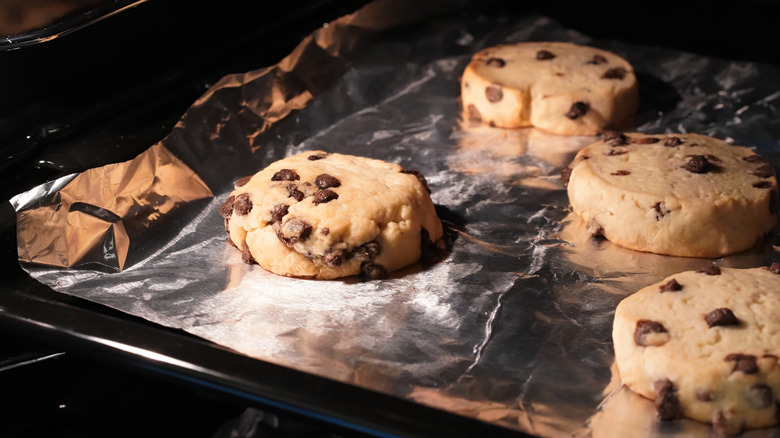
While George believes that "if you bake, then you're a baker," she concedes there are some lessons you can only learn through trial and error. "You would be shocked to see a side-by-side of a chocolate chip cookie baked on parchment versus on tin foil!" George warns. So ideally, avoid using aluminum foil when baking cookies, but if you must use it, George reiterates baking at a lower temperature and checking on the cookies at least three to four minutes early. And even then, it depends.
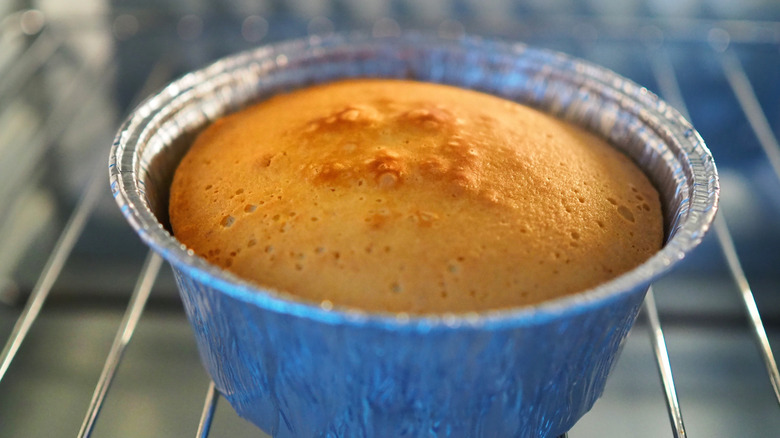
Parchment may be ideal for most baking recipes, but there are plenty of instances where you should use foil in the oven instead. Parchment is heat-resistant but it doesn't hold up well at high temperatures. If your recipe calls for temperatures over 425 degrees Fahrenheit or use of the broiler, use foil. Foil is a great option for main dishes and sides, especially to achieve a nice, even browning effect. Aluminum foil products aren't always a bad idea with baking, either — such as disposable pie tins or foil cupcake liners which can help promote a quick cook. But George's baking advice still applies. Use these items when you're after more browning on your baked goods. Also remember that covering your dishes with foil can help prevent them from burning or browning too much if you want an evenly-colored cake, for example.