

The 2-Second Slow Cooker Trick That Prevents Moisture (Aka Flavor) From Escaping
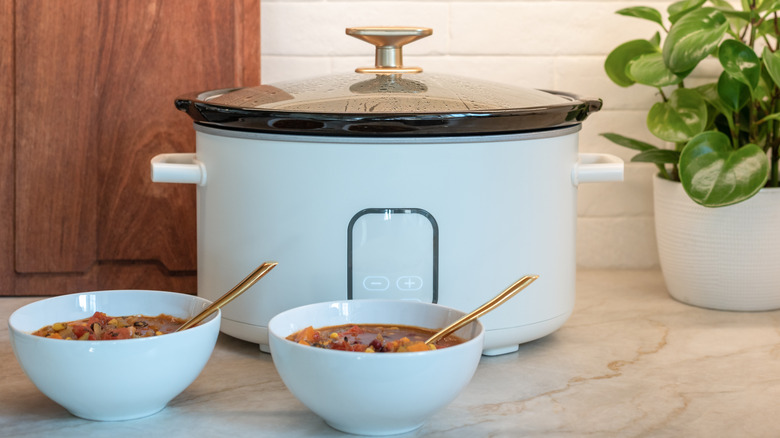
As wacky as it might sound, it can help slow cooker home chefs to think of their crockpots as microclimates — basically, edible terrariums. Add too much water, and no matter what you put in comes out as soup. Run dry inside your crockpot, and you've got a crusty mess that will take some muscle to scrape off the base. But maintaining consistent moisture inside your crockpot is as easy as laying a sheet of parchment paper between the slow cooker and its lid to create a tighter seal.
This is one of the easiest parchment paper kitchen hacks out there. Simply tear a length of parchment paper long enough to span the length of the slow cooker rim. Place this lightly on top of the filled pot and replace the lid, pushing down enough to set the paper seal. There will be some paper sticking out of the sides but the seal will be tighter. Most crockpot lids don't seal 100%, and some feature a small hole, the purpose of which is debated, from equalizing pressure, releasing excess steam, or even providing a thermometer entry-point. Regardless of its intended purpose, this small hole allows a slow leak of moisture from the crockpot, which over the course of long cooks can lose the balance of moisture inside the crockpot. A layer of parchment paper under the lid prevents this leak while providing a loose enough seal to stop pressure from building up. One Redditor describes this method as working "like a gasket."
On the right recipes, this trick makes a big difference
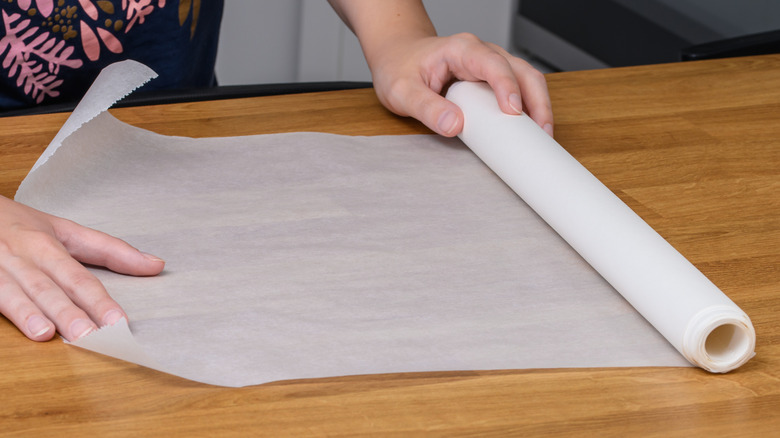
This hack isn't necessary for all slow cooker recipes. Obviously, recipes like stews or soups aren't as reliant on threading-the-needle when it comes to moisture and can survive a few lifts of the lid. Recipes where you're relying on the moisture content of the ingredients themselves, however, can benefit from the extra containment the parchment paper offers. For example, you can make succulent slow cooker chicken thighs by cooking them in their own juices alone. The parchment paper seal allows the flavorsome trapped steam generated in the cooking to surround and cook the meat.
You won't need to implement this strategy for recipes in which you need to release excess environmental moisture, however. In recipes where you want to crisp up the skin of meat, for example, it's best to not trap every ounce of steam, otherwise you'll get a soggier result than what you're after. But if accumulating steam is what you want, this is the method for you. A hearty piece of salmon, for example, would come out beautifully after some slow self-steaming in the crockpot.