

5 Reasons Acacia Wooden Kitchenware Is Worth Trying
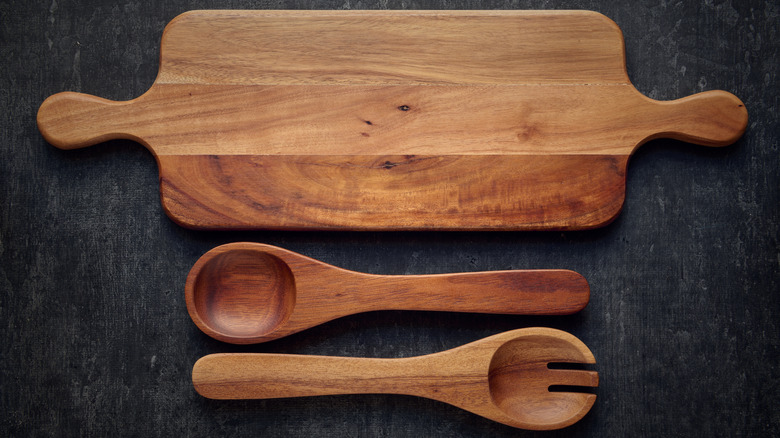
Wooden kitchenware has a charm that you'll never find in plastic or steel items. As a naturally sourced material, it's a visual representation of nature, making us feel more connected to the ecosystem we're a part of. Serving food on a wooden plate hits different; stirring chicken noodle soup with a wooden spoon is almost meditative; chopping onions on a wooden cutting board passed down to you by your grandma makes you cry for two different reasons. The only problem is, wood can be delicate, especially when you're using it every day. That's why acacia wood is a rising gem in the kitchenware department — it has the best balance between aesthetics, longevity, and price.
The first thing you'll notice about acacia wood is its effortless beauty. It looks so elegant that any functional piece can easily double as decor. Because there are thousands of species of acacia, the kitchenware made from this tree comes in diverse color tones and unique grain patterns. Reaching for acacia bowls and cutting boards has plenty of benefits beyond the aesthetic, though.
Acacia is an affordable hardwood with immense durability. It doesn't ask you to compromise on quality for a low price. It's sustainable to grow, therefore allowing for a faster turnaround than most other hardwoods. It's sturdy, resilient, and robust, all while appearing delicate and subtle. Acacia products belong in your kitchen, and here are five big reasons why.
It has great water resistance
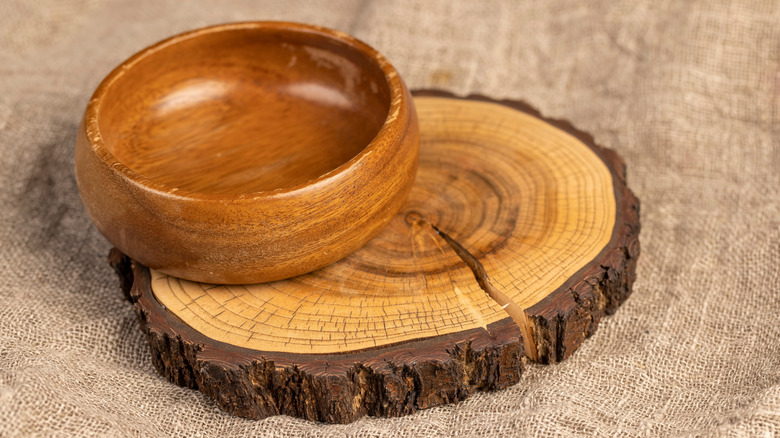
Many shy away from wooden kitchenware because they worry about water damage, and rightfully so. Kitchen utensils are regularly in contact with moisture, so it's necessary to look for a type of wood that has natural water resistance, even when it's left untreated. Acacia has a dense structure, which naturally protects it from absorbing too much moisture. That's why it's often used as a material for outdoor furniture — historically, it was even used to build boats!
Now, being water-resistant doesn't mean the material is completely waterproof, so we'd still advise against purposefully soaking acacia bowls and spoons for a prolonged amount of time. But acacia-based items definitely won't give you any headaches with normal kitchen use, nor will you find them ruined and warped if you leave them to air dry after washing when you're in a hurry. This is certainly not the deal you get with, say, beech wood.
The exact degree of water-resistance of acacia kitchenware does depend on the finish. Even though untreated acacia faces good odds against moisture, there's no denying that well-oiled and sealed products can withstand contact with water for a much longer period.
You'll have it for a long time
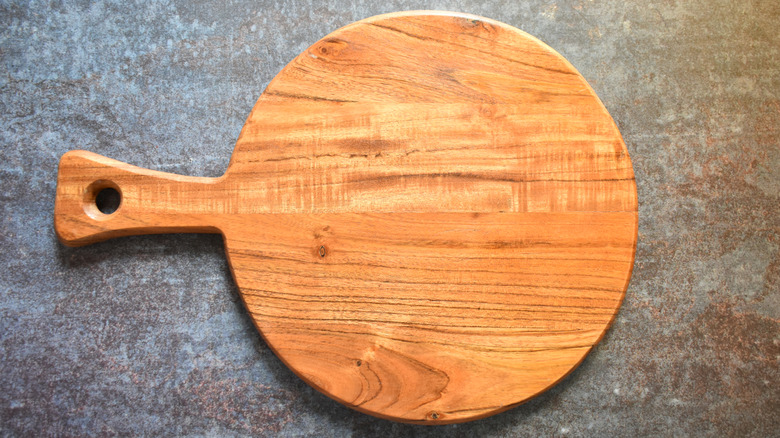
The practice of passing down kitchenware has somewhat disappeared in the modern world, as most of our plastic items have to be replaced quite often. Even if they did last, gifting a plastic cutting board to your grandkids doesn't really carry the same feeling as a well-loved wooden piece. Hardwood is the absolute best type of wood for cooking utensils if you want to hold onto them for a long time — and for acacia, longevity is its middle name.
Acacia kitchenware is made to be used. It's non-reactive and is resistant to bangs and scratches, making it a good fit for homes with little kiddos, busy kitchens, and dinner parties. With proper care and maintenance (which is in itself fairly minimal), items made from acacia wood can last over 50 years. The only thing that can genuinely shorten the lifespan of acacia kitchenware is the sun's UV rays. Untreated acacia begins to fade when exposed to sunlight for too long. If you have a very bright and sunny kitchen, it's recommended to treat your acacia items with a sealant once a year.
It's high quality, low maintenance
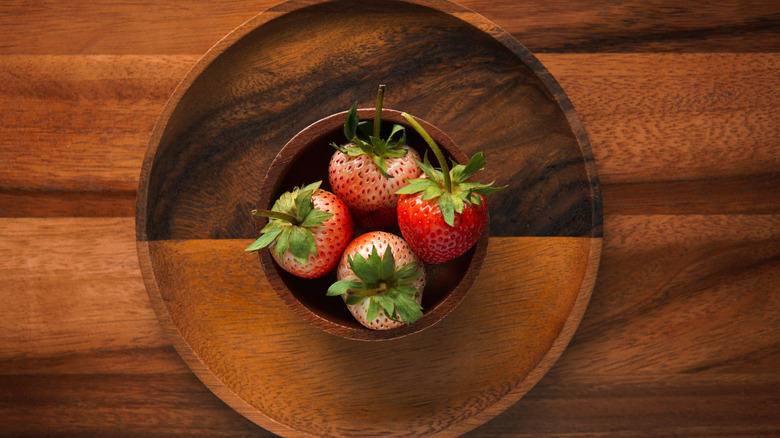
Acacia wood kitchenware is perfect for people who lead busy lives and are looking for low-maintenance utensils and such that stand the test of time. Because acacia is a dense, closed-grain wood, it has a low porosity that makes it naturally sanitary and easy to maintain. Still, there are some care guidelines that you should stick to.
First, you should never put wooden utensils in the dishwasher, and that includes acacia kitchenware. Items should exclusively be hand-washed, as the moisture and heat from the dishwasher can ruin even the most durable wood. Avoid harsh detergents and abrasive sponges, opting instead for mild cleaning solutions and soft sponges or rags.
For the best longevity, you really do need to oil wooden utensils as periodic oiling will keep your acacia items in peak condition — especially those that are frequently exposed to moisture. Even so, acacia doesn't need nearly as much oiling as, say, oak, maple, cherry, or beech woods. Once or twice a year will work just fine, depending on how often you're using a particular item. Trust any visual cues; if the wood is looking dry and lacking its luster, it's time to apply some oil.
It's more affordable than most other hardwood varieties
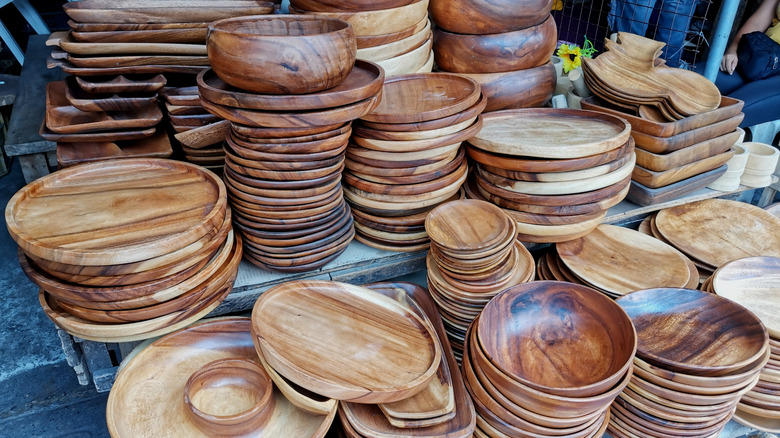
Hearing us sing acacia's praises, one might think this wood comes with a premium price tag, but that couldn't be further from the truth. Acacia is incredibly affordable, often considered a great substitute for the luxe-priced teak. You'll often see acacia products in stores that are known for their low prices, such as the high-rated acacia floating shelves from Costco or the acacia kitchen bowls with a high-end look from Aldi.
Let's look at how acacia compares to certain other hardwoods with concrete examples. At Ikea, a single walnut spatula is selling for $9, while a three-piece set of acacia spatulas is going for $8. At Costco, you could pay $44 for acacia shelves that can bear up to 50 pounds of weight, rather than spend $58 for walnut shelves that can only carry 15 pounds. Acacia, therefore, gives you a better bang for your buck than walnut.
The price difference is even more obvious when compared to oak and teak. At Ikea, the thin ARTISTICK oak cutting board is twice the price of a bulkier SKOGSTA board made from acacia. If you go to Walmart, you can pick yourself up an acacia serving tray for under $20, while a similar platter made from teak costs over $60. Acacia genuinely has one of the best balances between quality and price, offering affordable kitchenware while still rocking that premium look.
It's sustainable
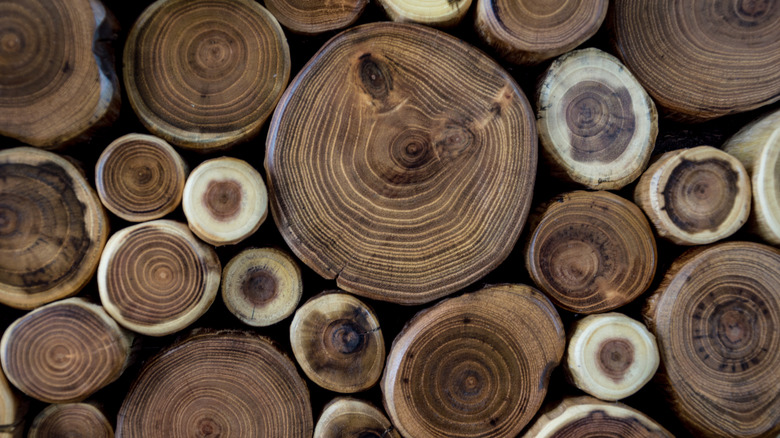
When we're talking about wooden utensils, we can't look past sustainability. Wood is a naturally sourced material, and we know deforestation is a real problem. Luckily, acacia is a sustainable tree to grow and harvest. Although acacia is mostly native to Australia, it can grow and prosper in many places around the world, thus lowering potential transport fees as well as emissions. It doesn't require complicated growing conditions and is, in fact, quite resilient. On top of that, acacia grows very fast for a tree and can be harvested within just a few years, whereas many other hardwoods need decades to mature. All of this makes acacia easy to source and cheaper to buy.
Unlike teak, acacia is also not an endangered species, so sourcing it is more environmentally responsible and eco-friendly. Harvesting and processing acacia wood also results in a low carbon footprint, particularly because a single tree can be made into various wooden products, thus significantly reducing waste. Another reason why acacia trees are viewed as sustainable is because they participate in carbon sequestration while they are growing. This mean they naturally absorb carbon dioxide in the atmosphere, which helps fight climate change. As such, acacia wood is a phenomenal kitchenware pick for anyone seeking to make mindful choices for the planet.