

The Most Popular Donut In Germany Is Also A Staple In The US
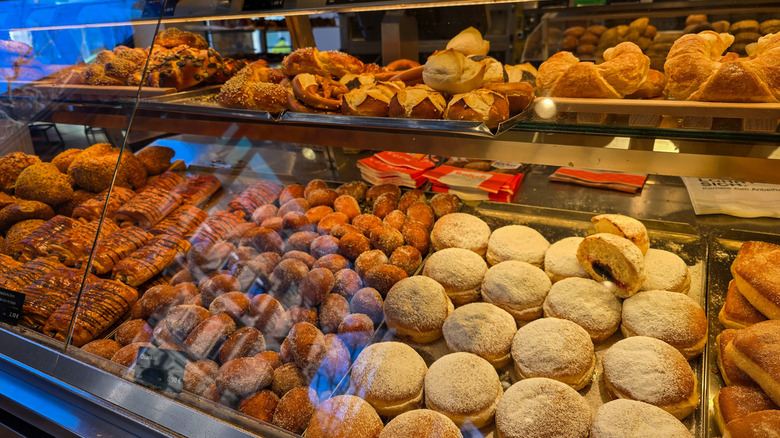
At the mere mention of donuts, a parade of sugary glazed pastries pop to mind, typically circular with a perfect hole right through the center. At least that's true in America — perhaps not so much in Europe, home to Germany and the ever-luscious jammy delight known as the Berliner. When in Germany, expect to hear it presented as a Pfannkuchen or other regional names such as Krapfen and Kreppel.
Berliners are a signature sweet in Germany, but the yeasted fried donut has become a staple in parts of the U.S. as well, even widely reported as being President Franklin Roosevelt's favorite breakfast food. It begs the question of what this delightful treat actually is, and why fans go out of their way to snag them. In essence, the pastry presents as a round, jam-filled doughnut, sans a center hole, made from a lightly sweet yeast dough, and typically finished with more sweetness from powdered sugar, granulated sugar, or icing. Traditional fillings include jam or citrusy marmalade, though some modern bakery versions may also use cream or chocolate.
In America, particularly in Midwest regions, the Berliner is sometimes conflated with a "Bismarck" or jelly donut, primarily due to the filling. Many folks consider them the same thing, though German pastry chefs may beg to differ. The two definitely hold different places in societal customs.
Berliner donuts, then and now
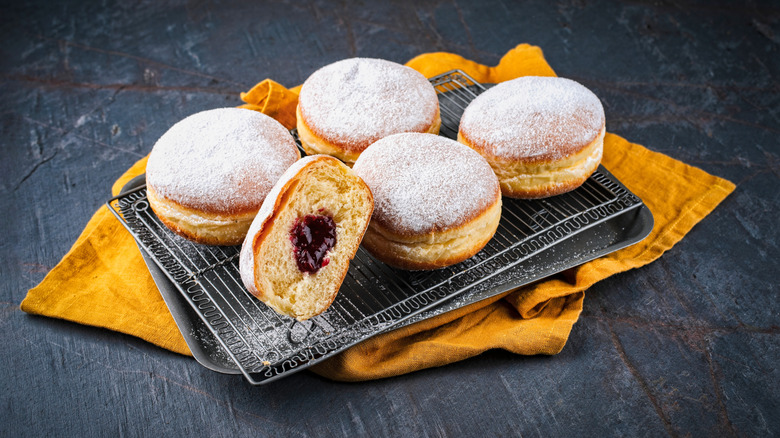
The Berliner donut's history reaches back centuries in Germany's food ethos, with a recipe for a jam-filled donut, Gefüllte Krapfen, reportedly appearing in the 15th century German cookbook Küchenmeisterei. Later lore and legend link the name "Berliner" to an eighteenth-century baker from Berlin who reportedly shaped dough in the form of a cannonball, then fire-fried it outdoors in hot oil while serving as a field baker for a Prussian military regiment. Some early versions are said to have been filled with meats, cheeses, and other savory ingredients, adopting sweet jellies as they rose in popularity.
Regardless of origins, the Berliner, aka Pfannkuchen, maintains elevated status in contemporary Germany, unlike ordinary American jelly donuts sold in countless daily bakery shops. The pastry is strongly associated with Germany's public celebrations, especially during Carnival season. The type of jam varies across different regions of Germany, ranging from red to plum, apricot, and versions made from rose hip. It's worth noting that a Polish donut version called paczki is treated in America more like a special holiday or festival food. Many renditions of paczki are very similar to Berliners, with the same deep-fried texture, round shape, yeast base, and a fruit preserve filling. They're especially prominent during Mardi Gras and Fat Tuesday, as well as at other pre-Lenten gatherings in places such as Chicago, Detroit, and Buffalo, New York.
If you're lucky enough to live near authentic German bakeries, here's a look at 19 items to try at a German bakery. You can also try making your own jelly-filled doughnuts at home with this easy hack.