

7 Signs You're At A Traditional Italian Bakery
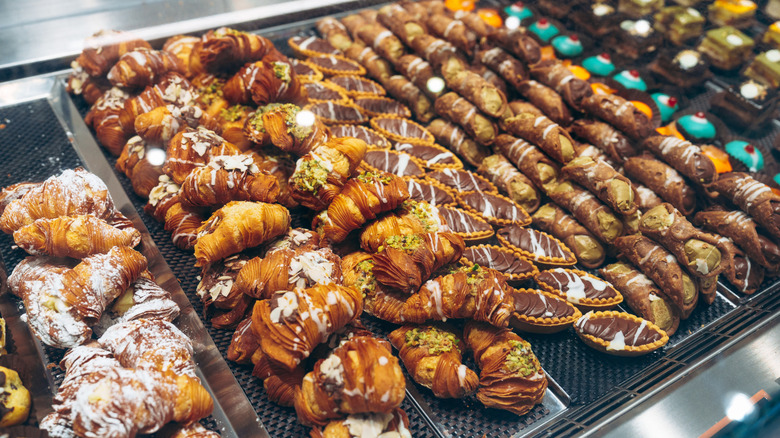
For many, a visit to a quaint, traditional Italian bakery for a cannoli after a meal is considered a necessary part of a trip to Little Italy. A bakery may also be an important stop when purchasing sweets for a holiday celebration, like Christmas or Easter. Though bread might be sold at these places, it is the pastries, cookies, and other dessert items that really encourage the detour. A traditional Italian bakery can offer a delectable sweet taste of Italy or of the Italian-American culinary culture. And for some, these shops can offer palpable connections to family gatherings past.
The most familiar type of traditional Italian bakery in America is largely found in neighborhoods and areas settled by immigrants who arrived from Italy many years ago. But this is not the only type of Italian bakery that might be considered traditional. In some parts of the country, there are newer kinds of bakeries that offer a different type of Italian tradition, that of contemporary Italy. These can offer goods just as enjoyable. I have written extensively about Italian food over the years and have lived and traveled in areas across the country where traditional Italian bakeries are a part of the landscape, and I have used my experience to curate this list of signs that can help assure you that you've entered a traditional, "real deal" Italian bakery.
1. You live near an area that saw a large amount of immigration from Italy over 100 years ago
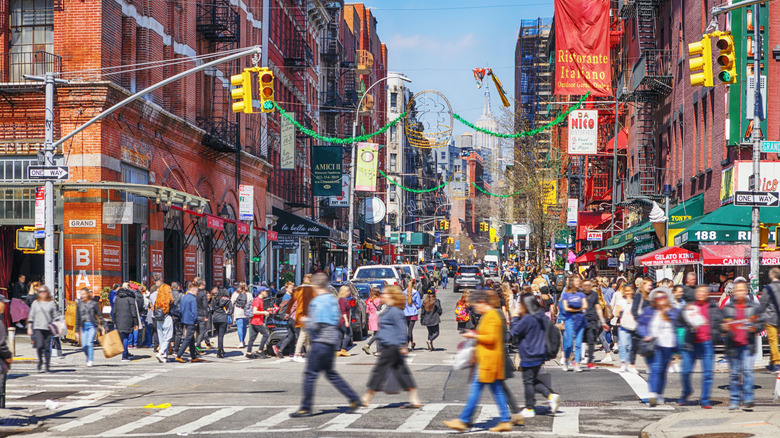
Baked goods, especially bread, were historically an integral part of life in Italy. Bakeries making and selling bread, as well as celebratory goods, invariably soon opened in areas where Italian immigrants clustered. These bakeries became numerous in the Northeast, especially in the big cities of New York, Philadelphia, and Boston, and also smaller ones like Providence, Jersey City, New Haven, Rochester, and Buffalo. These places were where large numbers of Italian immigrants settled during the great wave of immigration between 1880 and the early 1920s. Italian immigrants, and their bakeries, were also found in the Midwest in cities like Chicago and St. Louis, and in San Francisco. The bakeries in these areas became intrinsic parts of the community and many thrived in the coming years, even if their customers now had to drive more than a few miles for pastries, rather than walk a few blocks.
As the country prospered and the suburbs grew following World War II, many Italian-Americans moved out of the city and into surrounding states. New Jersey is a prime example of the prevailing Italian influence — and a nexus for traditional Italian bakeries — that has extended beyond cities and the Little Italys in some places. The Italian-heavy cities and their surrounding areas, like New Jersey, are where most of the traditional and legacy Italian bakeries are today, as would be expected.
2. Mostly pastries and cookies are sold
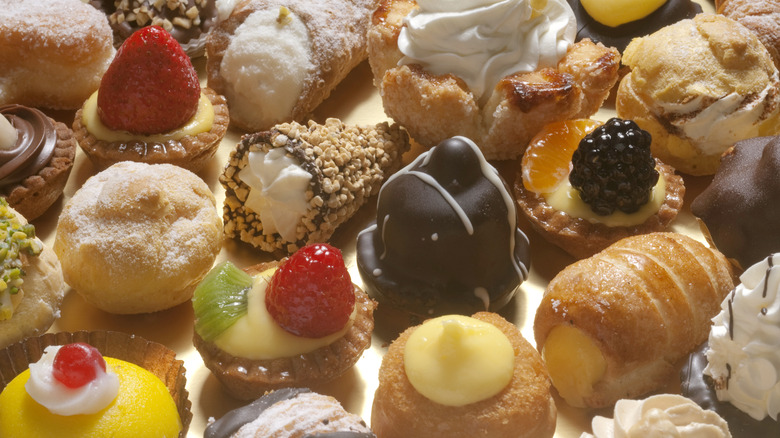
Pastries, cookies, and desserts are what traditional Italian bakeries have become known for. Bread was once a staple at these spots, but it is not a frequent purchase for many customers today. If they do buy bread, it is more likely picked up at the invariably more convenient supermarket. Responding to the marketplace, many traditional Italian bakeries shifted their emphasis to pastries and dessert. Traditional shops often offer treats with heritages that extend back to Italy, including taralli and pizelle cookies, flaky sfogliatella, and cannoli. These Italian cookies and pastries grew to be part of the food culture of the areas with large populations of Italian-Americans, though non-Italians quickly learned to appreciate, even crave, sweet treats like zeppole, tiramisu, and cookies in a wide array of forms. If you too are looking for a spot to satisfy your longing for Italian cookies and pastries, you'll ideally want some indication that these came from an on-site bakery operation. A traditional bakery is not a sales kiosk, after all. Its goods should be identifiably fresh. Plastic wrapping is generally not a positive sign for this.
Different from these sweet-focused shops, and fewer in number, there are some traditional Italian bakeries that still specialize in bread like Sarcone's Bakery in South Philly. Mancini's in Pittsburgh, a spot famous for its Italian bread, is another example. The traditional bread bakeries operating today might also be commercial in scale and act largely as restaurant suppliers, like Amoroso's in the Philadelphia area. A big part of their business is often crafting rolls for Italian-American sandwiches.
3. You'll see many items with Italian words, maybe not all familiar
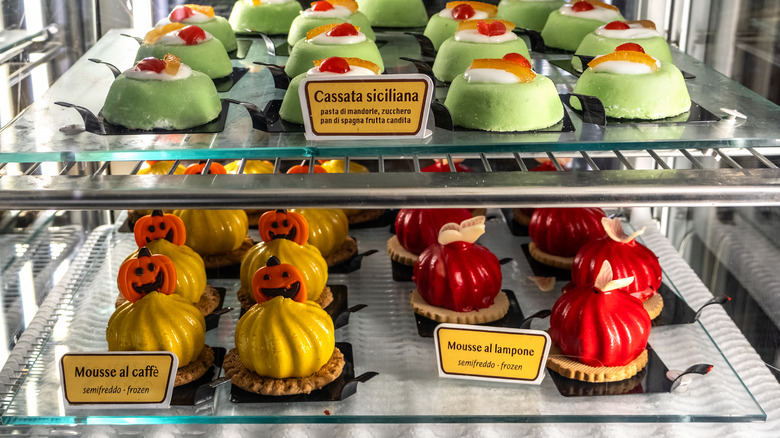
Baci di dama, bombolini, brutti ma buoni, cantuccini, cartocci, ciambella, cuccidati, fava dei morti, maritozzo, pasticcioti, sfogliatella, and struffoli, are just a portion of the Italian baked treats you might find at a traditional, old-school Italian bakery, like those in New York City. Traditional Italian bakeries sell their wares by their traditional Italian names, which should not come as a surprise. Like other food items from elsewhere — croissant, macaron, gougères, sachertorte, to name a few — Italian pastries, cookies, and desserts carry their native names.
Not all of the tempting treats in the display cases will have Italian names, of course. But you should expect traditional Italian bakeries to offer a significant array of Italian or Italian-American items. These are known as Italian bakeries, after all. It may also sell non-Italian treats that are popular in the area, including cheesecakes, blueberry muffins, black-and-white cookies, éclairs, cream puffs, and whoopie pies. Bakeries, like other businesses, have to satisfy their market demands. In the Northeast, you'll likely find a pastry with an English name but an Italian lineage: the lobster tail. This is a beloved American riff on the Naples-originated sfogliatella, with which it often shares space in the display case. The lobster tail has the benefit of being much easier to pronounce for most.
4. It is likely family-owned and -operated
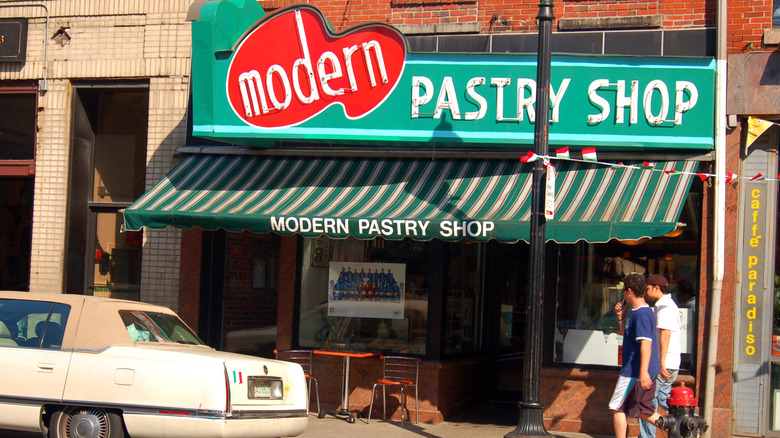
Traditional Italian bakeries are almost always small businesses. And like other small businesses, these are usually family-owned and -operated. For example, Giovanni Picariello founded Modern Pastry in the North End of Boston in 1930. Located on bustling Hanover Street, the very popular shop is still owned and operated by the Picariello family. Family ownership is emblematic of the several oft-crowded pastry shops located in the city's North End. In New York, Circo's Pastry Shop is a cozy Italian bakery that's been feeding NYC sweet treats for over 80 years. And these are just a couple examples. Family ownership is about the rule for traditional Italian bakeries everywhere.
Families are much more apt to carry on tradition than a sprawling corporate chain. Tradition is much easier to hold in a small or moderate size, which is why many traditional bakeries don't scale. Even the bigger Italian bakeries are not that big, like Termini Brothers Bakery and Amoroso's in the Philadelphia area. Both are also still family-owned, and both have been in their respective families even longer than the many years the Picariellos have had Modern Pastry.
5. It's been in business for a number of years
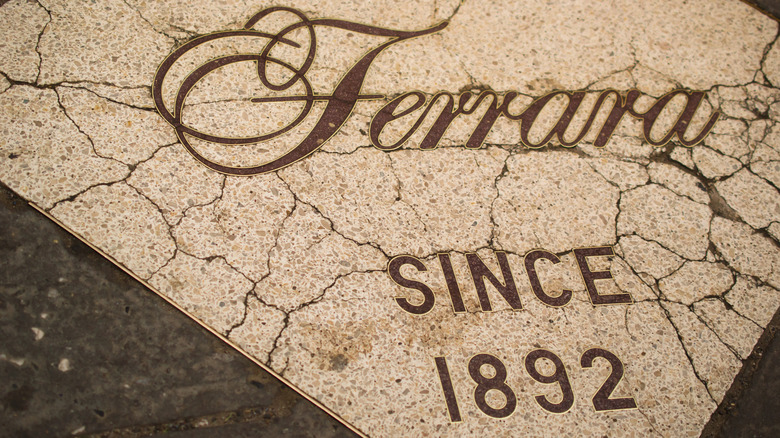
Several traditional and well-loved Italian bakeries have been open for decades — many decades. It is easier to carry on tradition if you've got the tradition. Though having a number of years under the belt is not a requirement to be a traditional Italian bakery, it helps. The long-tenured bakeries have evolved over the years to adapt to their locales, but have continued to bake some items — like cannoli and struffoli – that carry on the tradition from years past. Tradition runs strongly at these bakeries.
Ferrara Bakery — the oldest Italian bakery in the country and the oldest espresso bar – has been in business since 1892. It might be the longest-lasting, but there are a few others also operating for well past the century mark. Veniero's Pasticceria and Caffe, just over a mile away in the East Village, opened only a couple of years later in 1894. Across the East River, Caputo's Bake Shop in the Carroll Gardens neighborhood of Brooklyn first fired its ovens in 1904.
The City of Brotherly Love is home to several well-loved traditional Italian bakeries. Isgro Pastries opened in the Italian Market in Philadelphia in 1904 and is still there. Amoroso's started that same year. Another bread specialist, Sarcone's, started in 1918. They were joined in the neighborhood in 1921 by Termini Brothers Pasticceria. Currently named Termini Brothers Bakery, it has a half-dozen locations throughout the Philadelphia area.
6. Pizza might be sold
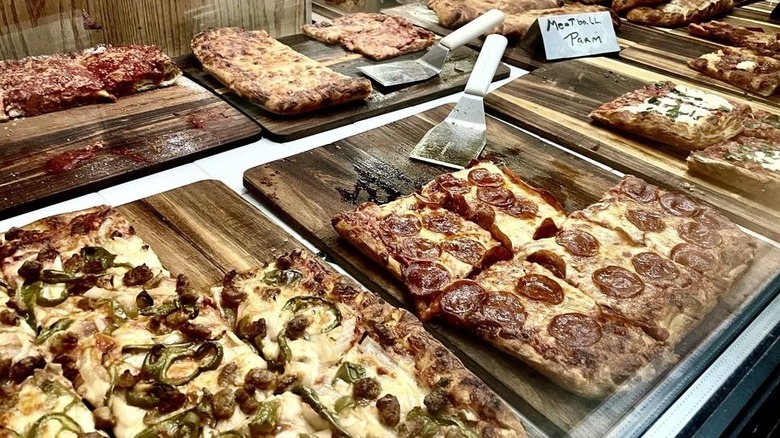
You might not immediately think that pizza would be served at a bakery, but thick, rectangular slices of pizza are far from unusual sights at some traditional Italian bakeries, especially in the Northeast. It's certainly not a requirement of a traditional bakery, but it is a sign that its heritage runs deep. Bready pizzas prepared in baking pans are a custom in southern Italy, from where most Italians in America emigrated. Women baked these bready pizzas in their kitchens — like my great-grandmother from the southern Italian region of Calabria did — as these were sold at many of the small local bakeries. These simple and homey pies don't require specialized pizza equipment, like that needed to make round, thin-crust pizzas often found in pizzerias. This tradition continued at some of the bakeries started by immigrants here. One Italian bakery still in business today is even credited with serving Boston's first pizza: Parziale's.
In Philadelphia, this bakery pizza is often called a tomato pie. It was first sold at a bakery around 1910 and is one of the specialties of the city's grand Italian-American food heritage. These can be found at several of the city's traditional Italian bakeries. Another, if similar, type of thick-crust pizza under a different name is sold alongside lush Sicilian pastries at the slick, comfortable La Sicilia bakery in Houston. The bakery was opened in 2018 by a Sicilian native and serves plush rectangles of focaccia, which might be called pizza elsewhere, featuring a range of toppings that change daily.
7. The shop might be popular with tourists
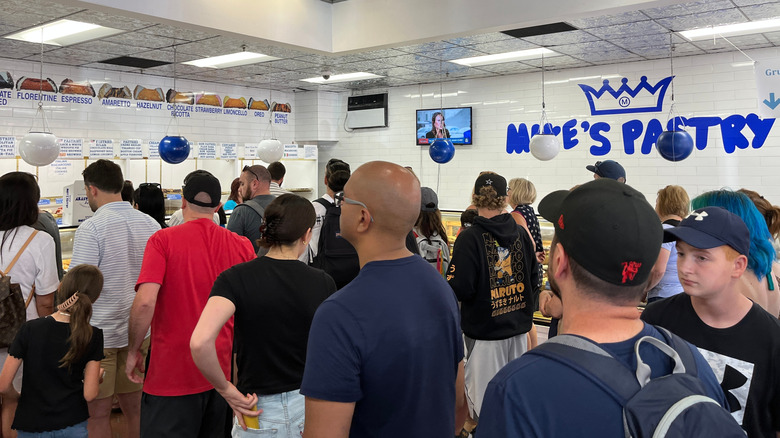
When the Red Sox are at Fenway during the spring and summer months, it is common to see fans sporting caps and jerseys from the visiting teams standing in the lines extending down the sidewalks near Mike's Pastry, Modern Pastry Shop, Bova's Bakery, and Parziale's in Boston's North End. A line is often an indicator of a traditional Italian bakery. Not a requirement, to be sure, but a good sign.
Traditional Italian bakeries initially drew those in the neighborhood. Other locals eventually caught on to the delectable pastries and more. Then came the tourists, who added to the regular queues at these small establishments. Tourists are quick to learn that walking a block or two to grab a cannoli or another pastry after an expectedly zesty Italian-American meal is a near-requisite part of visiting a historic Italian neighborhood. Many visitors are especially apt to make a stop at a traditional Italian bakery post pranzo. A tourist doesn't have to be from a few states or further away, either. Using a broad definition, tourists can be the family traveling in from the suburbs to enjoy the fun of food in a Little Italy.
The North End might be the most amendable to the tourist trade, but other long-standing Italian enclaves draw visitors to their traditional Italian bakeries. Manhattan's Little Italy might rival it. There are also special stops on Arthur Avenue in the Bronx, South Philly, Federal Hill in Providence, and Baltimore, too.