

The Food Label That Often Misleads Even Savvy Shoppers
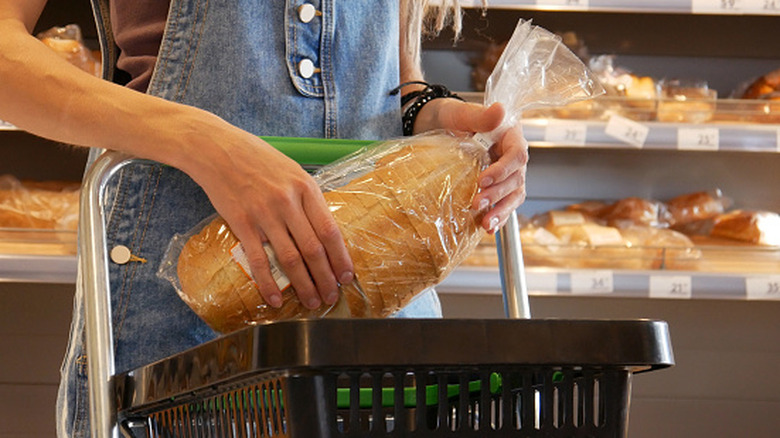
Do you consider yourself a savvy shopper? Even if you do, note that there may still be a food label or two that may stump you. We chatted with Destini Moody, a registered dietitian-nutritionist at VNutrition, who reveals a misleading food label she's not quite fond of. She states, "'Multigrain' is a food term on labels that really bothers me... What most people don't realize, though, is that many brands of multigrain bread do indeed contain multiple grains, but those grains include either very little whole grains or none at all." In other words, the label "multigrain" may not be the best or most reliable indicator of a product's nutritional value.
Moody adds, "To further confuse things, these multigrain products can even be colored to look brown to fool consumers into thinking they are made of more fiber-rich whole grains than they are, despite being comprised mostly of refined grains that cause inflammation and offer little nutrition." And if you're curious, the ingredient the brands may use to deepen the brown hue of bread is typically molasses.
Instead of reaching for multigrain bread the next time you're at the supermarket or grocery store, Moody suggests that you should "switch to whole wheat and whole grain products" while reducing your intake of refined grains. We've ranked nine store-bought whole wheat breads from worst to best, so be sure to check out our list.
Some food labels may give the impression that something is bad for us
Moody tells us about one other category of food labels that often misleads even the savviest of shoppers. She explains, "Unfortunately, we've been conditioned to buy food labels to believe that 'x-free' means that whatever the 'x' is must be bad for us. However, something like 'lactose-free milk' doesn't mean that lactose is bad for us, because most of us consume milk and yogurt and cheese as part of a healthy diet every day."
In other words, if you don't have lactose intolerance, there's no need for you to seek out lactose-free milk or other dairy products at the supermarket. Likewise, if you don't have celiac disease or a gluten sensitivity or an inability to process gluten, you don't need to purposely purchase gluten-free products. Moody adds, "For people who do not have these conditions, you aren't giving yourself more nutrition or avoiding anything harmful by consuming gluten-free products."
For those who do have food sensitivities, however, modern grocery stores have become far more inclusive. For example, there are at least eleven popular grocery stores where you can find gluten-free snacks.