

How To Sous Vide Prime Rib For Juicy And Tender Results
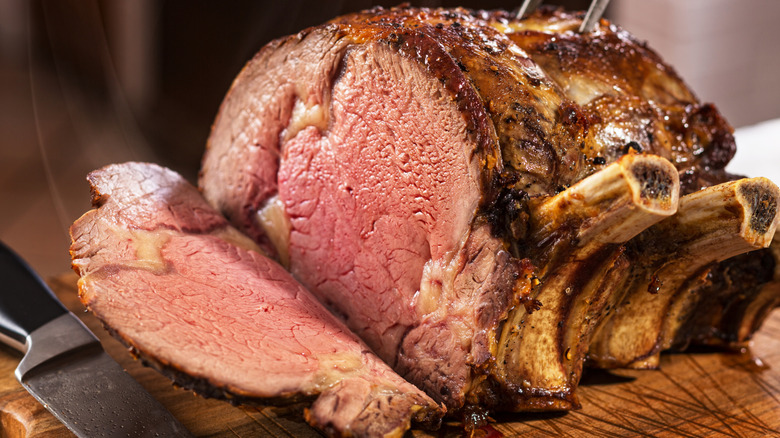
Prime rib is the king of all beef cuts, and sous vide is the most foolproof way to make it perfectly. Coming from the center of the rib section of the cow, both bone-in and boneless prime rib is famous for combining exceptional marbling with a tender texture, making it more juicy and flavorful than any other cut of beef you can buy. That's also why it's famously expensive, making it intimidating for a lot of home cooks to tackle. But this is exactly the kind of project sous vide was made for: giving yourself the largest room for error on a recipe that normally requires a high degree of precision. And to make sure we do it right we talked to Scott Thomas, the owner of Grillin' Fools and Cookin' Fools, to ask how he gets the most tender prime rib from a sous vide machine.
Thomas helpfully walked us through the whole process. First he recommends sealing some of your favorite aromatics like herbs and garlic cloves in the bag with the prime rib. Other than that, Thomas doesn't recommend brining ahead of time, saying "prime rib doesn't need it." Then he tells us "place said bag o'beef in the immersion cooker and bring it up to about 15-20 degrees [Fahrenheit] short of your desired doneness and then wait 6-8 hours for it to get there." For prime rib the final target temperatures are around 120 degrees Fahrenheit for rare, 130 for medium rare, and 140 for medium, so just subtract 15-20 from those goals for your sous vide temperature.
Sous vide prime rib 15-20 degrees short of done and then sear it for a perfect finish inside and out
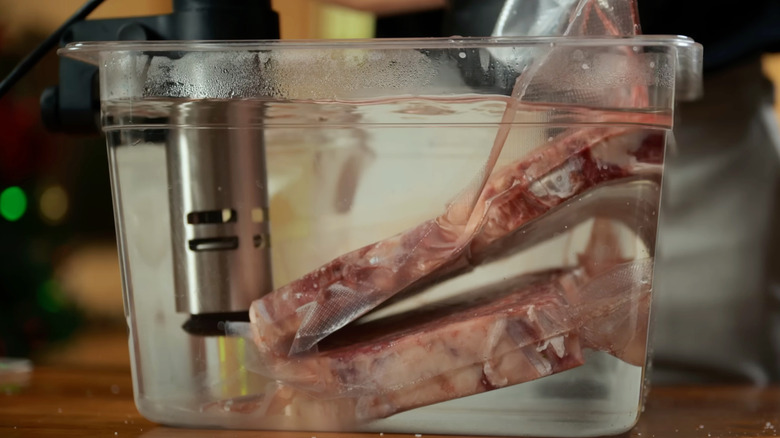
Once your prime rib is done in the sous vide it needs to be seared to develop a delicious browned crust. Thomas says, "crank up a grill to 500 [degrees Fahrenheit] or get a cast iron pan ripping hot. Remove the prime rib from the bag, pat dry with paper towels and sear it all the way around — the flat sides and the rounded edges." If you stopped that 15-20 degrees short of done Thomas recommended in the sous vide, he explains that by the time you get a good crust on both sides, the beef should be at your desired doneness. Then he says, "remove from the pan, season with salt and pepper and allow to rest for 15-20 minutes. Slice and serve."
Beyond that, there is no reason to make that sous vide and sear two-step process any more complicated. There are only two mistakes Thomas warns against. One is not taking that long cooking time seriously, explaining, "a steak may take an hour or two to bring up to temp in a sous vide/immersion cooker. Prime rib could take 4-6 times that long." The second is seasoning your prime rib with salt and pepper before you cook it. He says, "Seasoning it before will cause the pepper to burn and the salt will draw out moisture making it more difficult to get that perfect sear. In the United States people usually season before they cook out of habit more than a legit scientific reason." So there you have it, perfect prime rib with minimal effort and nothing but a little salt and pepper at the end. It's what sous vide was built for.