

9 Cocktails That Inspired Their Own Drinkware
Crafting a cocktail isn't just about the drink itself, but nailing the presentation, too, and choosing the right drinkware can completely transform the overall sipping experience. From sleek, long-stemmed glasses to sturdy tumblers, some vessels have become closely tied to specific cocktail creations, to the point where it's hard to imagine one without the other.
In many cases, the drinkware isn't just about aesthetics. In fact, there's also a science behind many of the world's most iconic cocktail and drinking vessel pairings. The shape of a glass or mug can help to keep a drink chilled, showcase the cocktail's bold color, or enhance its aroma. Your choice of drinkware also adds plenty of personality to the serve, whether the goal is to inject a touch of class or amp up the playful vibes.
Today, we're celebrating nine beloved drinks that inspired the very vessels they're served in, where form and function come together to elevate a simple mix of ingredients into a vibrant, flavorful pour. Whether you're a fan of something simple and refined, or a bright, tropical showstopper is more your style, these timeless pairings demonstrate how easy it can be to make every sip feel extra special.
1. Martini
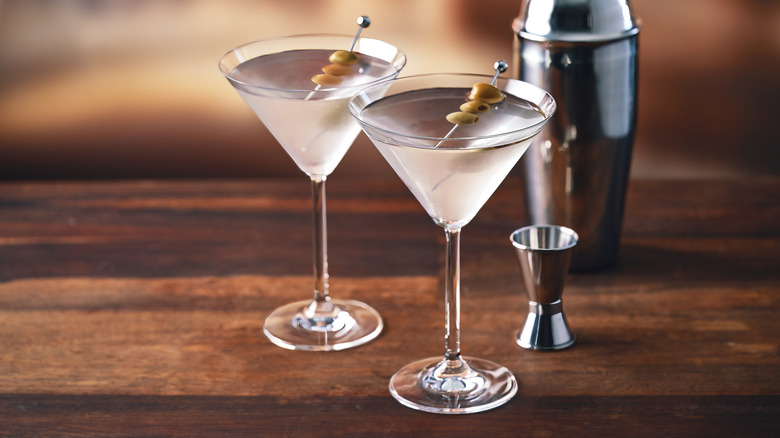
One of the most iconic sips in the cocktail realm, the martini is loved for its clean, crisp flavor and effortlessly elegant presentation. This drink is typically made with vodka or gin and dry vermouth, which are shaken with ice before straining, for a perfectly chilled finish. And the vessel most commonly associated with the martini has played a key role in shaping how we think about the drink.
Order a martini, and it'll likely come served in a V-shaped, long-stemmed glass. The roots of the martini glass go back to an earlier style, simple coined the cocktail glass, which was smaller in size and more rounded in shape. But as the martini grew in popularity in the early 20th century, the glass evolved into something even better suited to the drink. The martini glass boasted a longer stem, a wider rim, and that distinctive conical shape, and all of these features were designed to elevate the martini drinking experience.
The martini glass' long stem helps to preserve the icy chill of the drink, since the drinker's hands don't come into contact with the V-shaped bowl. The wide brim also prevents garnishes from sinking, while heightening the aroma of the liquors as you lift the glass to your nose. Garnished with a twist of lemon peel or a briny olive, this cocktail is undeniably sophisticated, and the martini's signature drinkware certainly contributes to its timeless appeal.
2. Old fashioned
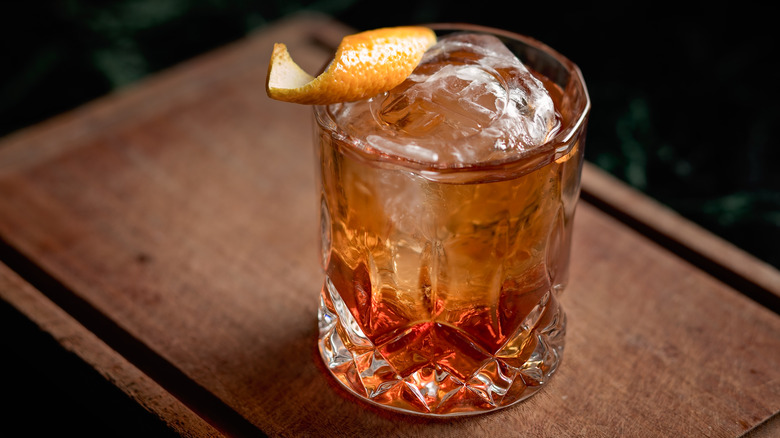
The old fashioned cocktail is a smooth and comforting mix of whiskey, bitters, sugar, and an orange twist. This classic concoction generally comes served in either an old fashioned glass or a rocks glass (aka the double old fashioned glass), and these sturdy vessels play an important role in the drinking experience.
Both varieties of these glasses are stout, short tumblers with a wide base and heavy bottom, and their solid, satisfying grip makes them perfect for slow sipping. While a standard old fashioned glass holds between six to eight ounces of liquid, the double old fashioned glass is larger, housing up to 12 ounces. This more generously sized version stemmed from growing demand for a double portion of the cocktail.
The double old fashioned glass is perfect for crafting drinks with large ice cubes, which keep the drink chilled without diluting it too quickly. The sturdy base and roomy interior also lend themselves well to muddling ingredients directly in the glass. Though it's often paired with its namesake cocktail, this glass has also become a popular pick for other spirit-forward sips, like the white Russian and the negroni.
3. Margarita
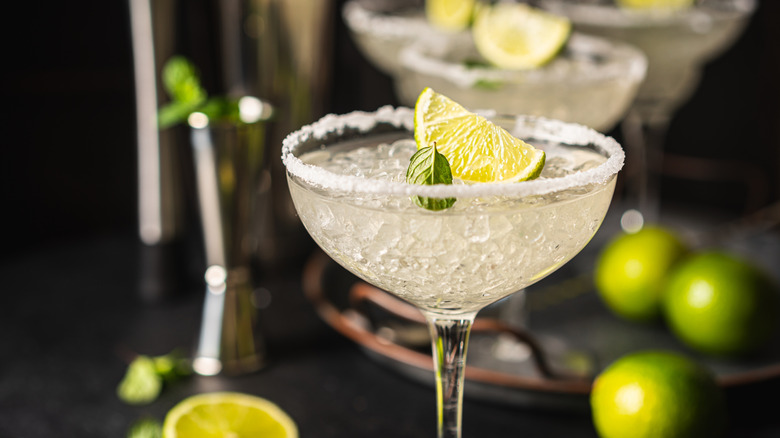
With its vibrant blend of tequila, lime juice, and orange liqueur, the margarita offers an irresistibly bright, punchy flavor. While you can enjoy this cocktail in many formats (we love whipping up a frozen version), the choice of drinkware tends to remain constant — a wide, shallow bowl perched atop a slender stem. The margarita glass was invented in the early 20th century, and while it took inspiration from the champagne coupe, its shape was tailored to the margarita cocktail itself.
The expansive rim of the margarita glass is perfect for adding a salted rim, which many drinkers love for balancing those tart, citrusy notes. This wide shape also allows plenty of space for garnishes, whether you're adorning your glassful with fresh lime wedges, mint leaves, or spicy jalapeño slices. And much like other long-stemmed glasses, this vessel helps to keep the drink cool by keeping your hand away from the bowl. So, reaching for a margarita glass not only makes your drink look polished and party-ready, it helps you craft a more flavorful sip, too.
4. Mint julep
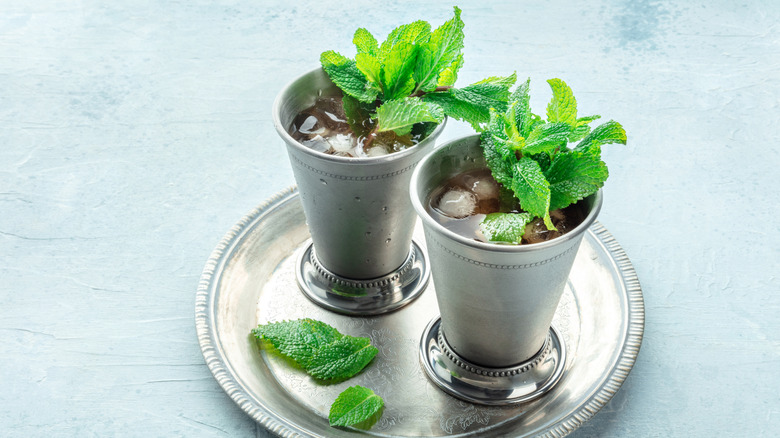
This refreshingly cool sip is steeped in Southern tradition, and while its ingredients may be simple, the mint julep's character is amplified greatly by the drinkware it's served in. The cocktail, which consists of muddled mint leaves, sugar syrup, bourbon, and sometimes Angostura bitters, comes in a broad, tapered metal vessel called the julep cup.
Juleps began as sweetened mixtures designed to make medicines more palatable, but over time, they evolved into the boozy, mint-laden creations we know and love. By 1937, the mint julep had earnt its spot as the official cocktail of the Kentucky Derby, and sipping from a frosty metal cup has since remained a quintessential part of the race day experience.
Often crafted from silver or pewter, the julep cup not only gives the drink a rather regal appearance, but it also comes with practical benefits. Metal is highly effective at conducting cold, and once filled with crushed ice, the cup quickly frosts over. This keeps the drink chilled for longer, so you can sip away at a leisurely pace, enjoying the fragrant aroma of the mint and smooth warmth of the bourbon as the ice slowly melts.
5. Moscow mule
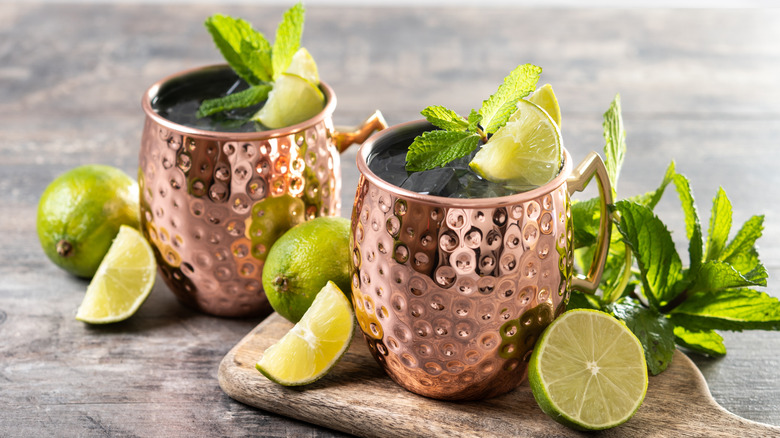
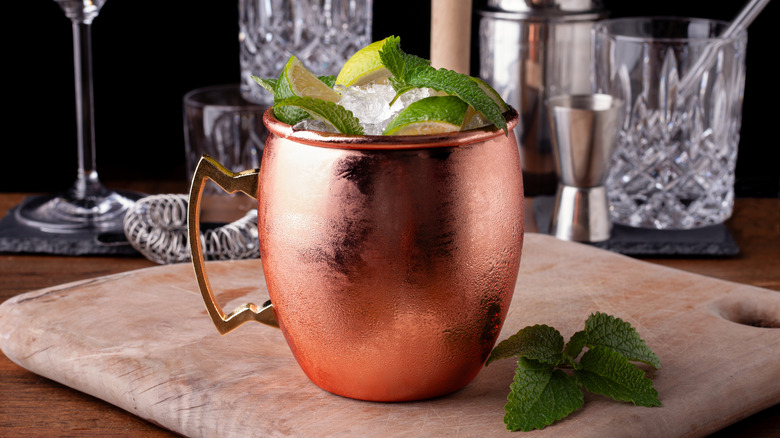
Another cocktail that's easily recognized by its signature drinkware is the Moscow mule. Here, a shiny copper mug is the vessel of choice, and this perfectly complements the drink's sleek yet playful character. To craft this zesty sip, vodka is mixed with lime juice, sugar syrup, and ginger beer, yielding a wonderfully light, tangy, and effervescent drink.
The story of the Moscow mule's copper mug begins in the 1940s, when three enterprising friends first concocted the spicy, citrusy sip. One had a surplus of Smirnoff vodka, one sought to popularize ginger beer, and the third happened to own a stockpile of shiny copper mugs. The gleaming vessels were a fitting match for the bubbly cocktail within, and this striking approach to the presentation quickly caught on.
Today, this drink and mug combination remains the go-to at cocktail bars around the word, and for good reason. Copper does an excellent job of conducting the cold, ensuring the contents of the mug stay chilled for longer. There are also some claims that as the metal comes into contact with the alcohol, it begins to oxidize, thus enhancing the flavor of the drink. But, perhaps most importantly, there's no denying the visual appeal of the famous copper mug, and it'll certainly help you serve your drink in style.
6. Irish coffee
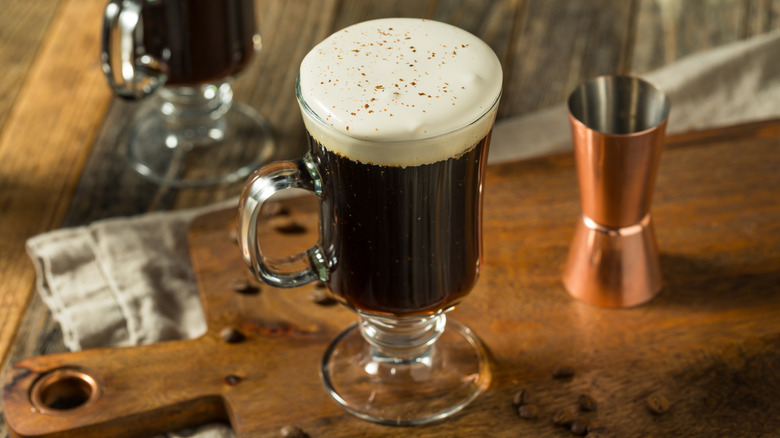
Irish coffee is a delightfully warming blend of hot coffee, Irish whiskey, sugar, and softly whipped cream, delivering richness and comfort in every sip. Traditionally, this drink is presented in a clear, footed glass with a handle, giving it a far more elevated feel than your average morning mug.
The Irish coffee cocktail was invented in 1943 by Joe Sheridan, a chef at Ireland's Foynes Airport. With wintery weather causing travel delays, Sheridan's aim was to raise the spirits of tired passengers, and his cozy concoction went down a treat. Weeks later, the chef had the idea to boost the presentation of the drink by serving it in a stemmed glass. As the drink went on to gain global popularity, this elegant approach to serving stuck.
With its tall height and tulip-shaped rim, the traditional Irish coffee glass highlights the distinct layers of the drink while allowing you to sip the rich, boozy coffee through the top layer of silky cream. The handle is also a particularly useful feature, enabling drinkers to hold the glass comfortably without burning their hands.
7. Collins
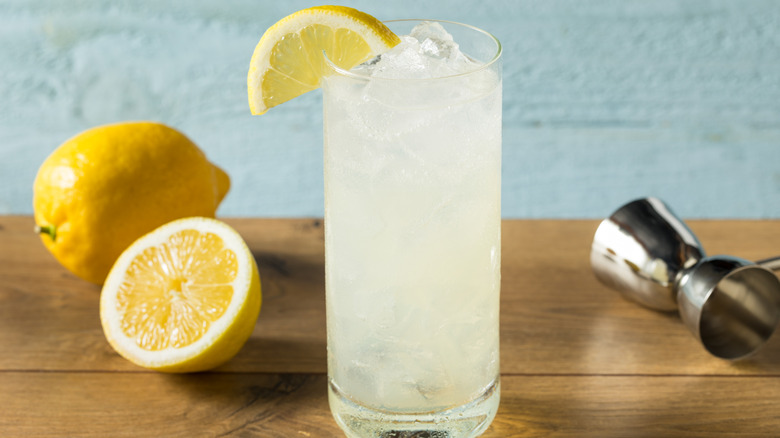
The Collins family of cocktails take a base spirit and combine this with lemon juice, simple syrup, and soda water, creating a moreish balance of citrus and fizz. These drinks tend to come in a tall, narrow glass, aptly named the Collins glass, which is similar to a highball glass, but slightly taller and more elongated.
The earliest version of this cocktail is the John Collins, which dates back to the 1800s and was originally made with gin. Somewhere along the way, the Tom Collins emerged as a close relative (also gin-based). However, the modern John Collins is now rather confusingly made with whiskey. Over time, the format has inspired plenty of other refreshing variations, such as the Joe Collins (made with vodka) and the Pedro Collins (white rum).
Ideal for holding a generous pouring of that fizzy mixer, the slender Collins glass also helps to maintain the drink's signature effervescence. The narrow top limits the amount of liquid exposed to the air, helping to preserve that all-important carbonation. Plus, this shape allows for a neat stack of ice cubes, which melt more slowly than they would in a wider glass, keeping the drink cool and perfectly balanced.
8. Zombie
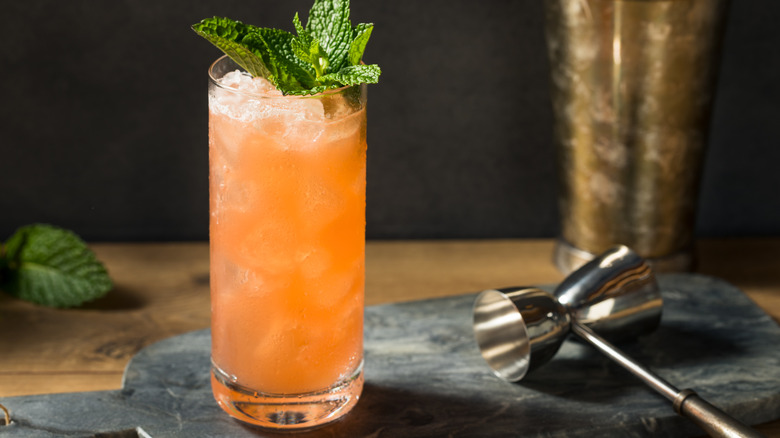
Made with a punchy blend of rums, fruit juices, and syrups, the zombie cocktail has a striking orange hue and the bold flavor to match. This tiki classic delivers a layered mix of sweetness, citrus, and warming spice, and it's certainly not to be underestimated when it comes to strength.
First created in the 1930s by bartender Donn Beach, the drink was allegedly designed as a hangover cure. However, it had quite the opposite effect, instead leaving customers feeling more "zombie"-like than refreshed. Despite this, the cocktail's potent and deceptively fruity nature soon made it a standout on the tiki scene, with bartenders opting for a tall, narrow glass that could accommodate its generous blend of ingredients.
As first glance, the zombie glass might appear similar to a Collins glass, but it's typically taller and narrower. This extra capacity is crucial for a drink that relies on multiple components. Plus, the slender glass provides the perfect canvas for vibrant garnishes — think mint sprigs, swizzle sticks, pineapple wedges, and cocktail umbrellas. A zombie glass is also a top pick for housing the equally bright and fruity tequila sunrise cocktail, where the elongated shape helps to showcase the stunning gradient effect.
9. Highball
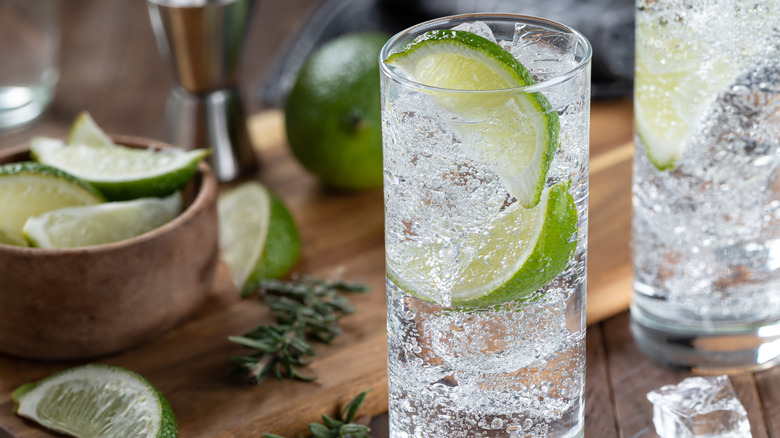
A highball cocktail refers to drinks made with one spirit and one carbonated mixer, such as the gin and tonic, whiskey soda, or dark 'n' stormy (rum and ginger beer). A tall, slim vessel is an ideal pick for showcasing these delightfully fizzy sips, and that's where the highball glass comes in.
Shape-wise, the highball glass is similar to the Collins glass, with both varieties sharing a narrow, elongated look. The highball's vessel, however, is generally smaller, holding between eight and 12 ounces of liquid, while the Collins glass accommodates up to 14 ounces. This makes sense, since the minimalistic nature of highball drinks gives them a slightly smaller volume overall.
Despite the size differences, highball glasses essentially serve the same purpose as Collins glasses. The narrow, straight-sided shape prevents the dissipation of gas bubbles to preserve the drink's fizz, while also housing a compact stack of ice that melts nice and slowly, preventing premature dilution. It's a sleek, simple design that really allows the ingredients to shine.