

When You Use Beef Tallow, Braised Cabbage Is Hard To Mess Up
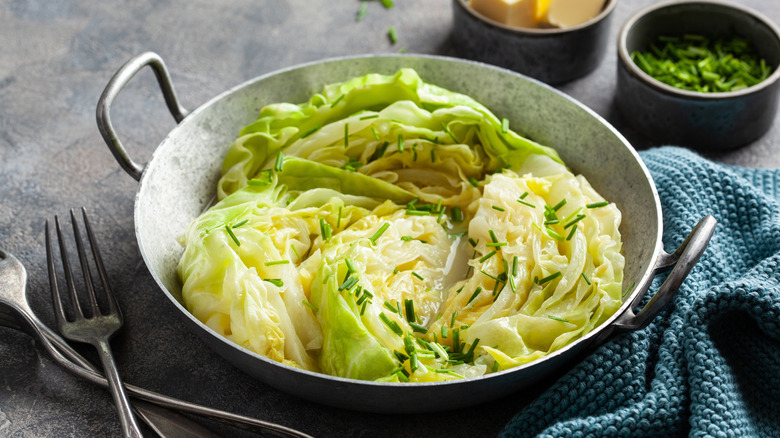
Beef tallow and cabbage are humble ingredients that cook up remarkably well together as a winning combination. Fat, of every ilk, is often controversial, but every few years, the crown shifts to some other food in question. Cabbage has its own baggage too, dismissed as stinky and cheap; something to boil sadly when you've run out of other options or combined in soup with with canned tomatoes for one of the most famous "7-day diet" foods of all time. But when you braise cabbage in beef tallow, it's transformed into something quite delicious, worth making on purpose over and over again.
Cabbage is dense with fiber, water, and natural sugars, which means it cooks in stages. First, it releases moisture and turns soft, potentially watery. If it continues to be exposed to heat, the moisture will cook off, and the sugars will concentrate, which can cause the once-limp vegetable to start catching and scorching. That's the tipping point where things go wrong, when it turns from pale and mild to bitter and overdone. (Here are some simple ways to cook cabbage.)
Long cooking requires intentionally applying the right fat — something that can stay steady throughout the whole process. This is where beef tallow shines. It won't panic under high or long heat, because it has a high smoke point, all the way up to 420 degrees Fahrenheit. It will evenly coat the cabbage leaves and support gradual caramelization. Don't worry, it won't taste greasy, but it will help the cabbage develop a gentle, savory flavor and create a perfectly permeated, melty confit-texture with no acrid char. The 'melting' method would also work well here.
Fat chance of messing up
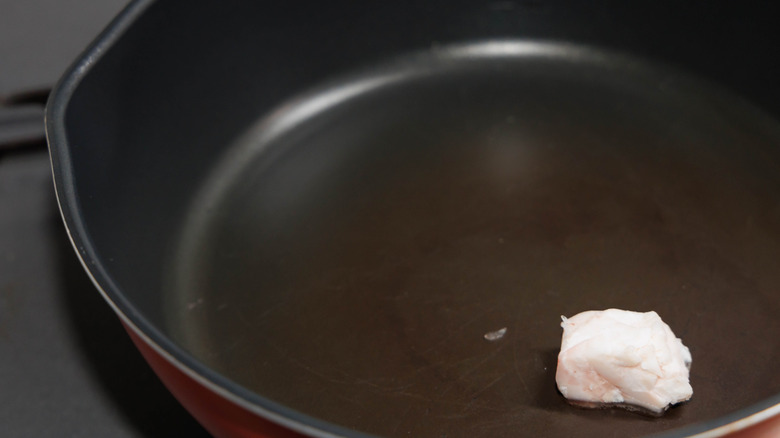
Start by heating a generous spoonful of beef tallow in a wide pan, then add sliced cabbage and a healthy pinch of salt. Through the magic of osmosis, the salt helps draw the water out of the cabbage right away, simultaneously seasoning it. Use a wooden spoon to spread and shift the cabbage around the pan evenly and let it cook uncovered over medium heat. As it softens and reduces, stir it occasionally. The goal is an even collapse, followed by slow browning — so not boiling, but not aggressive searing, either. If the pan starts to get too dry, add a splash of water or stock.
Once it starts to caramelize, you can build on it. A hit of apple cider vinegar is a key to a better braised cabbage, and can sharpen the richness from the fat. Some thinly sliced onions or apples can likewise contribute a balancing sweetness and aroma. Mustard seeds and/or caraway are classic cabbage spices that would be right at home with the tallow, which will help their volatile oils blossom. Garlic is also a natural fit, just add it toward the end so that it doesn't burn. Lastly, bacon or chili flakes can take the braise in a slightly more assertive direction.
Cabbage, despite its peasant-food roots and reputation, brings a lot to the table nutritionally. It's packed with fiber and vitamin C, along with compounds like glucosinolates that give brassicas their characteristic bite and have long been studied for their role in preventing disease and supporting health. Beef tallow is similarly a humble nutritional powerhouse, containing key fat-soluble vitamins like A, D, E and K, lipids which distribute both flavor and essential nutrients. Braised in tallow, cabbage turns silky and tender. It's still cabbage, but it's handled correctly.