

9 Signs You're At A Traditional French Bakery
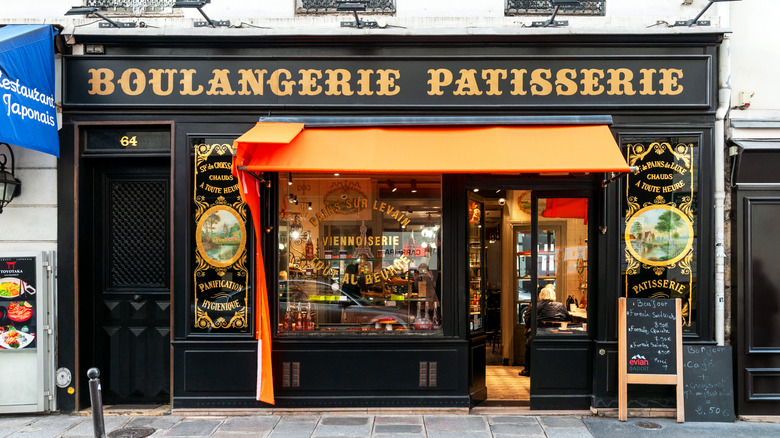
It's no secret that the French are baking pros. Countless iconic baked goods originate in France, but you don't have to plan a trip abroad to enjoy them. Plenty of bakeries on this side of the Atlantic have mastered the art of French baking, whether by bringing a French baker into the business or by doing important research through taste and travel. Nevertheless, a whole lot of bakeries know that slapping the word "French" or "boulangerie" on a label can entice customers to make a purchase, whether the moniker is factual or more of a stylistic choice. If you're looking for traditional French baking in a setting that wouldn't be out of place in France, there are some signs to look out for.
We spoke to a few experts in the field to learn what these signs are, including Scott Cioe, executive pastry chef at Lafayette, a café and bakery in New York City; Zachary Golper, a repeat James Beard nominee for Best Baker from Bien Cuit in Brooklyn; and Franck Buiron, owner and head pastry chef at L'Atelier Patisserie in Vancouver, Canada. Read on for their excellent advice as you seek out your next stop for traditional French bakery goods.
Butter is at the heart of the operation
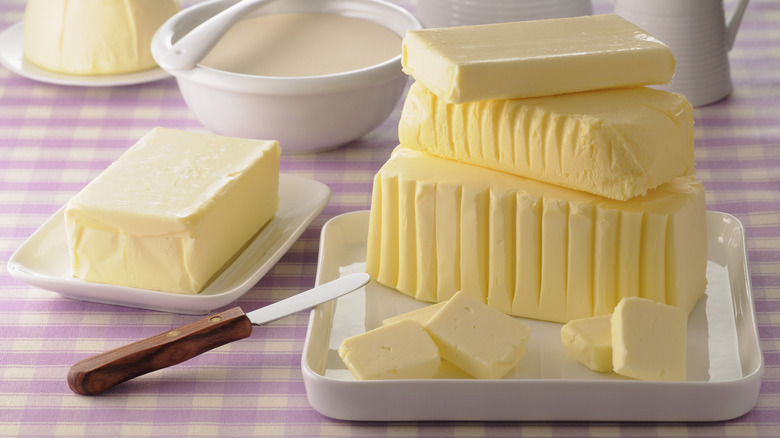
This might not be surprising if you've sampled your fair share of French baked goods, but it deserves a mention. Butter is fundamental to most French pastries, and if it's not present in the baked good itself, then chances are you're spreading it on top. "Butter is by far the most important ingredient in a French bakery," executive pastry chef Scott Cioe says. While it has the power to change the flavor profile of whatever item you're picking up from the bakery, it goes further than that. Cioe explains that it also plays an important role in the texture and shelf life of the goods.
Butter introduces an element of richness that pairs well with sweet and savory ingredients without overwhelming the subtleties. Its ability to complement flavors makes it a star in the French bakery. The water in the butter becomes steam as it's heated, resulting in air pockets that add a flaky consistency to pastries and doughs. Plus, it has the capacity to caramelize as it bakes, further adding to its appeal. Meanwhile, its moisture also helps prevent goods from drying out and becoming stale, extending their shelf life. And if it's not made with butter, like a baguette, the best way to savor it is to spread it thickly with butter.
Nowadays, many bakeries list the ingredients they use as customer expectations increase. If there is no written ingredient list, a respectable bakery will answer questions about the content of its baked goods. Meanwhile, visual cues on the baked goods, like a deep golden color and a flaky texture, rather than a pale, uniform hue with a denser consistency, are signs that butter was used.
Sugar is used to enhance, not take over
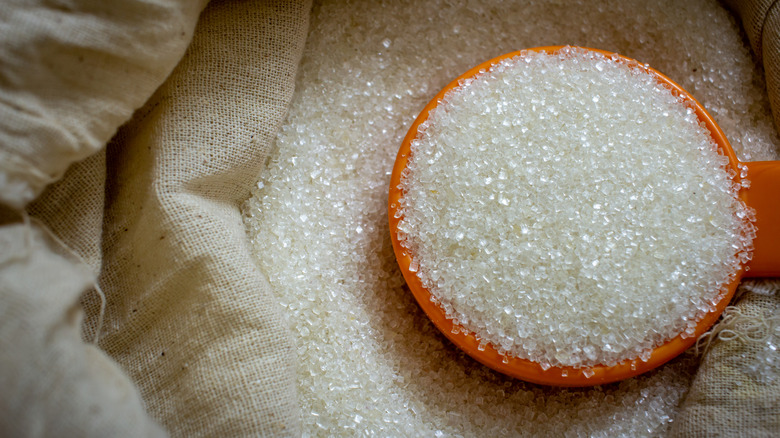
You might think a traditional French bakery is all about decadence, but there's often more restraint than you would expect. Sure, butter is the star of many items, but it's used judiciously to create delicate, airy textures rather than to add weight. Meanwhile, an authentic French croissant, by nature, isn't particularly sweet. Instead, the sugar is used to complement the buttery notes and aid in browning the exterior of the dough. Even a pain au chocolat recipe calls for adding a thin stick of dark chocolate rather than coating the whole treat in it.
Subtlety is often the name of the game in French bakeries, as pastry chef Franck Buiron suggests. "French taste is slightly less sweet and usually smaller portions. So we can eat more often," he says. Sugar isn't shunned; rather, it's expertly used to bring balance to the various flavors present, allowing them to shine through as well, rather than leaving any one ingredient to take over. If your first bite of pastry or viennoiserie is overwhelmingly sweet, you may not have landed in a traditional French bakery. Similarly, if the baked goods are loaded with glazes, frostings, and sprinkles, the chefs may be taking creative liberty with classic recipes.
Quality ingredients are key
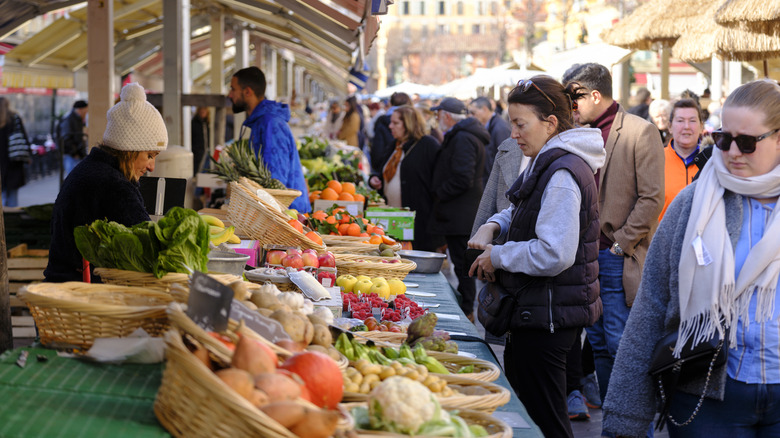
When you're sticking with classic recipes and aren't trying to stand out with glitzy flavors and add-ins, the quality of the ingredients you use becomes all the more essential. All of the experts we spoke to noted the importance of carefully choosing ingredients to guarantee superior results. "We put attention into making sure our butters, flours, oils, spices, nuts/seeds, chocolates, salts, sugars, fruit purées, produce, dairy and proteins are all high quality," chef Zachary Golper says.
Meanwhile, Franck Buiron notes that natural, raw, and local ingredients are priorities, as well as eliminating any preservatives. Considering ingredients form the components of all the items on sale in a bakery, if they aren't up to par, the chance of you getting traditional, quality French baked goods is compromised. As Golper says, sourcing the best ingredients is essential. "This ensures that we are working with material we can trust and makes it easier to evoke intended flavors honest to their origin."
Typically, food businesses are eager to share their connections with local producers if they are making a point to source ingredients regionally. You might find logos, brand names, or mentions that the products contain items that were grown or made in the area. If you're unsure, be curious and ask about the origins of the ingredients. If the staff looks back at you blankly, you might not be in a traditional French bakery where ingredients are carefully selected for quality.
Traditional French techniques are prioritized
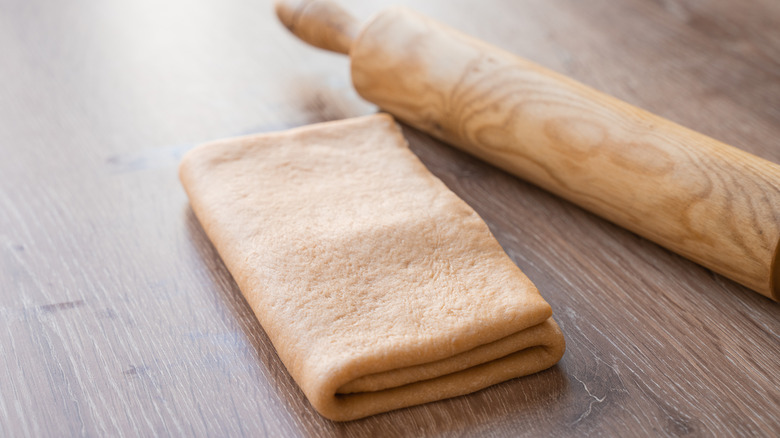
French baking is rooted in technique, and if a bakery purporting to be traditionally French isn't using any of them, then you're better off going elsewhere. Zachary Golper lists "how we mix, how we ferment, how we shape, how we pipe, how we laminate, how we emulsify sauces, how we construct custard ratios, how we build flavors and textures," among classic French techniques, and adds, "but we are always open to intelligent techniques no matter where they originated."
Scott Cioe highlights the importance of lamination (the process of folding butter into dough to create thin, flaky layers that rise in the oven) when it comes to French bakery classics like croissants and puff pastry. Meanwhile, key elements like pâte à choux used for éclair shells, profiteroles, and cream puffs rely on methods developed by French bakers. Other techniques, like proofing, which are commonly used all over, are treated with more precision in French bakeries, notably when baking a baguette to obtain a perfect crust.
There's a big difference between a croissant made with ordinary dough and merely rolled out, versus one that uses the technique of lamination. Delicate, flaky layers puff up beautifully in the latter, whereas the former looks more similar to a packaged good. Meanwhile, a crusty, browned French baguette has an allure that no quick-bake bread can mimic. If you're unsure, simply ask the staff about the process.
Classic recipes are the stars of the menu
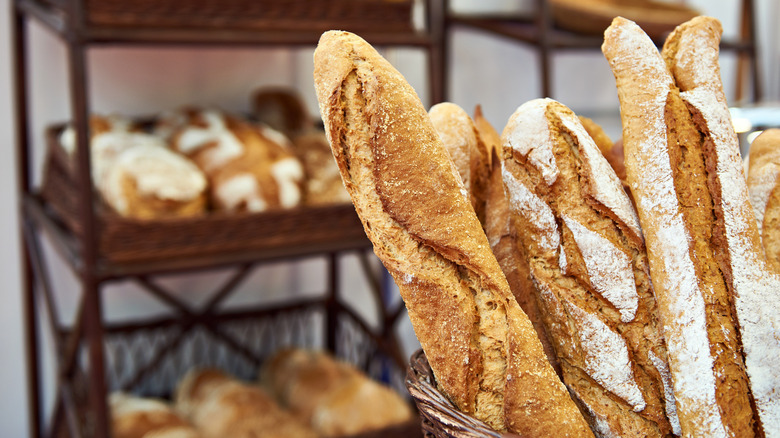
It's not that the French are against innovation, but when your cuisine has perfected croissant recipes and baguettes, there's no reason to experiment with endless creations. Scott Cioe describes it as "the dedication to the basics," adding, "As much as chefs in NYC (myself included) love to reinvent everything, a perfectly executed croissant or baguette will always be its best form." Similarly, Zachary Golper says that "Any self respecting French bakery will have at the very least, a baguette and a croissant worth being served at your table. It is a must."
Golper goes on to note that these two fundamental recipes act as the standard of judgment for a baker, whereas pastry chefs are measured by the success of their Opéra cake and croissant. With croissants at the heart of any truly traditional French bakery or pastry shop, Golper says, "I would therefore say that the croissant is very telling of a French baker's style and level of expertise." Franck Buiron highlights baguettes as the priority at his bakery, confirming that these classic recipes need to be front and center at a traditional French bakery.
If you walk into a self-purported French bakery and there's no classic croissant or baguette to be seen ... try again. Similarly, if all the baked goods are super-viral takes, the bakery might be more interested in keeping up with trends rather than showcasing traditional French baking.
Shortcuts aren't part of the equation
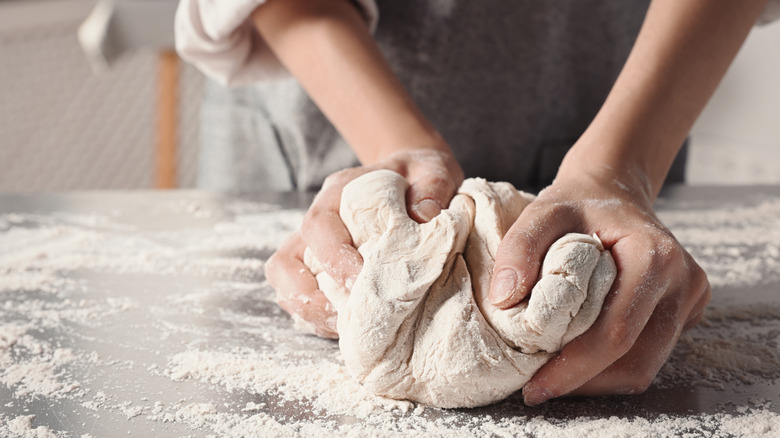
While some parts of the food industry are all about using shortcuts to simplify the process, reduce costs, and speed up production, that's not the case in a traditional French bakery. Shortcuts simply aren't part of the equation, as our experts attested. Zachary Golper, for example, notes that numerous parts of the baking process work optimally when they occur over time. "Our fermentation process requires a lot of time in order for our doughs to peak in flavor and digestibility," he says, adding that this is also the case with standard French bakery recipes like croissants, pastries, and savory bites.
Time is one factor that can't be cut short, along with the food costs required to make some of the regular recipes. Franck Buiron views reducing costs for the bottom line or simplifying recipes for ease as a quick way to sacrifice quality. "My customers come to try the best pastries and we are very thankful for that," Buiron says. It wouldn't be a true French croissant without using butter, even if margarine is much cheaper. Golper says that "without using correct techniques and quality ingredients, the results will not reach their potential."
Quality ingredients and techniques prove a bakery isn't cutting corners. Look for mentions of ingredient sourcing and quality, as well as signs that lengthier baking techniques are employed. Light and flaky pastries hint at proper lamination, whereas robust crusts and airy dough bubbles suggest slow fermentations.
Traditional fermentation methods are used
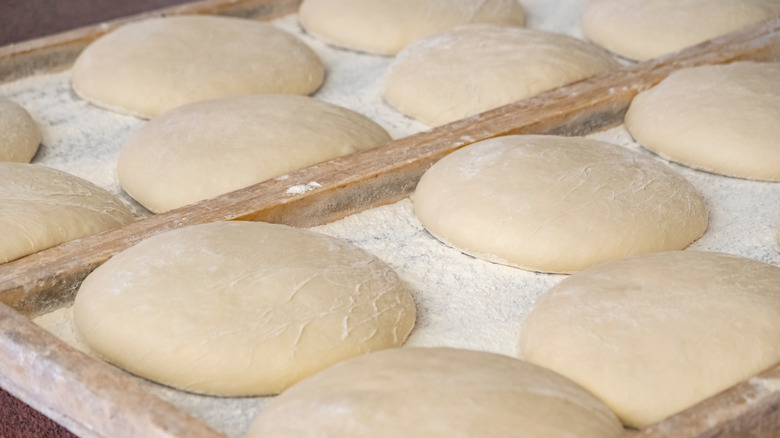
Considering shortcuts are a no-no in any self-respecting French bakery, it's no surprise that traditional methods of fermenting dough for classics like baguette take time. Although there are a few different elements that can be altered along the way, time is the common denominator. A traditional French bakery might highlight the characteristics of its fermentation methods by specifying the duration of the process, and, as previously described, certain visual cues can confirm.
Traditional French bread doesn't rely on additives or agents to assist in the fermentation process. It should only contain flour, water, salt, and yeast or sourdough starter. Many recipes omit cultured yeast and let the natural starter take over by fermenting the bread for a few hours. Though it requires patience, the outcome is always more interesting than bread made with larger amounts of yeast to get the process moving quickly. Another way to add flavor to a baguette is by preparing a pre-ferment dough a few days in advance and mixing it in with the fresh dough partway through the process.
Controlling temperature is also important for the results, and bakers often chill the dough during the second proof (known as cold retardation) to slow down the process and build more complex flavors. Meanwhile, traditional recipes often call for baking baguettes before they've fully risen, allowing the moisture from the dough and the heat of the oven to collaborate and produce steam that will contribute to the rising.
Quality is preferred over quantity
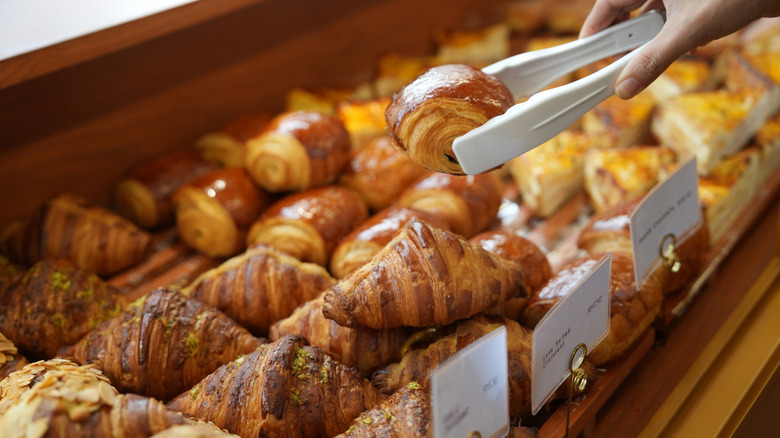
Supersizing everything is the norm in the U.S., but you aren't going to see giant portions in a traditional French bakery. Franck Buiron notes that products are typically sold in smaller formats than what you might see in a standard American bakery. Reduced portion sizes contribute in part to the French paradox, which suggests that although the country's dietary saturated fat tends to be high, rates of obesity and heart disease are low. Numerous factors are involved in these findings, such as nutritional moderation and active lifestyles.
Furthermore, by prioritizing high-quality baked products made from wholesome ingredients, maximizing quantity is cut out of the equation. "I will never sacrifice quality by lowering cost of production or [changing] a recipe," Buiron says. When real ingredients are used in the production of baked goods, the results speak for themselves. Just like a square of high-quality dark chocolate can be more satisfying than a bar of low-quality chocolate candy, the same is true of well-made baked goods produced following traditional methods.
Clues like pastries that can comfortably be eaten in a single sitting and croissants that are reasonably sized for a simple breakfast indicate a conformity to this philosophy. On the flip side, you'll never see record-breaking, massive single-serve pastries in a traditional French bakery.
Welcoming service is equally important
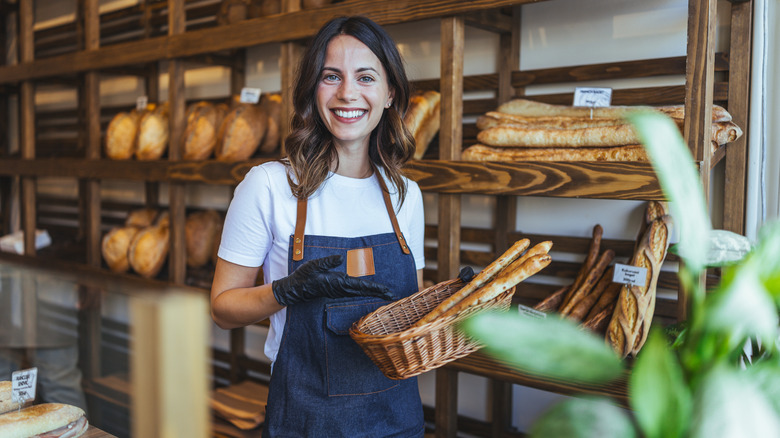
Although the French sometimes have a reputation for being aloof, a true French bakery welcomes its customers and aims to make them happy with their purchases. Franck Buiron highlights the interaction with customers as important, noting that getting to know repeat visitors is just another facet of running a successful bakery business. When you're in the business of serving crusty baguettes and flaky, buttery pastries, cultivating a welcoming environment adds to the enjoyment.
As Zachary Golper puts it, "More importantly, we adhere to the philosophy (which my chef in France taught me) that everyone deserves at least one great thing every day, and it is our duty to ensure that if someone comes to us, we give them exactly that." By offering high-quality baked goods made with wholesome ingredients and ensuring clients feel well taken care of, building a repertoire of regular customers becomes second nature. If you walk into a bakery and quickly feel like you belong, it's a pretty good sign the staff is serious about treating you well, so you keep making satisfying purchases.