

Do Your Dishes Like This To Avoid Contaminating Your Cookware
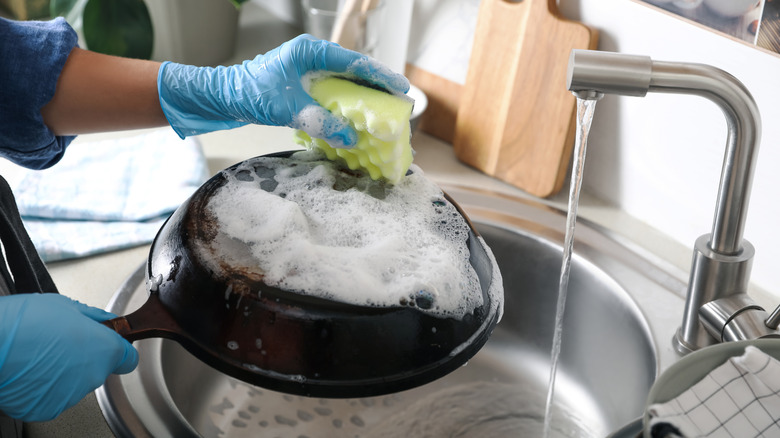
It sounds counterintuitive, but there are things we might do when washing our cookware that can actually backfire and sabotage our efforts to keep bacteria at bay. It's frustrating to think all the time you're spending hand-washing pots and pans could be for nothing, and it's scary to think you could then be preparing food with contaminated cookware. Luckily, there are easy guidelines for nipping this problem in the bud and actually getting the clean results you want.
Many cookware pieces fall on the list of items you can't put in the dishwasher, and so require the steps of hand-washing. There are two key tips for protecting your clean cookware and avoiding contamination. The first regards your initial wash, which is to make sure you're regularly washing and swapping out your sponges and dishcloths. The second has to do with drying your cookware or putting it away post-wash, which is to never stack pieces that aren't 100% dry. This includes any items you can put in the dishwasher, too — even a little dampness can help bacteria grow.
Sponges can harbor up to 362 different kinds of bacteria, per a 2017 Scientific Reports study. We use them to clean everything imaginable off our plates and pans, including raw meat. They can even pick up pathogens like Salmonella that spell serious health risks. If you clean with a sponge you've been using for a few weeks, you could just be passing all of that on.
Ways to clean sponges and fully dry cookware
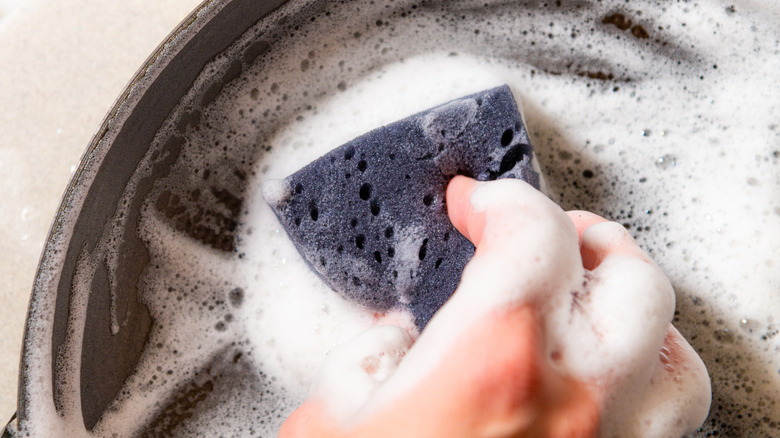
Ideally, we'd replace our kitchen sponges weekly. But there are safe ways to prolong their lifespans. Always thoroughly wring sponges out after every use. America's Test Kitchen found wet sponges to have 25,000 times more bacteria than dried ones. Regularly give your sponges their own thorough clean, too. Soak them in a quart of warm water with ½ a teaspoon of bleach or microwave them for one minute to kill bacteria with heat. If you use dishcloths, wash those in hot water with soap and sanitizer. Swedish dishcloths are a great upgrade because they're super easy to clean in the dishwasher or washing machine, and can last up to six months.
After you've washed your cookware in the sink with your new or newly cleaned sponge or cloth, make sure it's totally dry before closing it in a cabinet or stacking it with other cookware. When pieces aren't allowed total access to airflow, their moisture gets trapped, creating conditions that bacteria just love to grow in. Allow cookware to completely air-dry on dish racks — even if you're short on counter space, you can use dish rack storage hacks like hanging them. Better yet, use a clean, dry cloth to really scrub pots and pans dry. You can even efficiently dry pieces like cast-iron pans by cooking them at a low temperature in your oven for 10 to 15 minutes. With clean sponges and effective drying, you can rest assured your cookware is contamination-free.