

Measuring With Your Heart? Here's What Really Happens When You Eyeball Vanilla Extract
We may receive a commission on purchases made from links.
Viral baking trends are constantly spreading across social media. One recent trend focuses not on a recipe, but on skipping a single step: measuring vanilla. Food influencers and home bakers have turned their back on the idea of measuring out vanilla in favor of going with vibes, just taking a guess at how much is needed. While this approach is fun and skill-affirming if the recipe turns out, it's not always the best idea.
Tasting Table talked to Helen Goh, a pastry chef, food writer, psychologist, and recipe developer best known for co-authoring "Sweet" with Yotam Ottolenghi. Goh's newest cookbook is "Baking and the Meaning of Life," and we wanted her take on the trend of eyeballing vanilla in a recipe. Is it actually okay to do this?
"Being flexible and intuitive with ingredients such as vanilla in recipes can build confidence in the kitchen. The TikTok trend of eyeballing the amount of vanilla is not wrong, per se, but is dependent on the type of recipe it is," Goh said, noting it can deepen the flavor in some cases. "However, because vanilla extract is suspended in alcohol, adding too much can introduce a sharp, boozy bitterness that can overpower a delicate dish." In a pinch, you can measure vanilla with the cap of the bottle, which usually equals one teaspoon. There are plenty of vanilla extract brands to choose from, too.
Goh also notes that things get more complicated when you use vanilla essence or artificial vanilla. It's more potent than real vanilla, so "a casual splash can tip from being pleasantly vanilla-y to a cloyingly sweet and artificial taste."
Having a thrilla with your vanilla
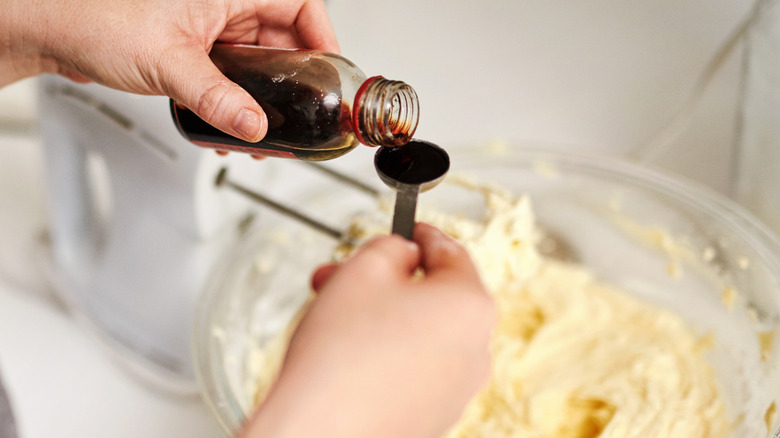
Too much vanilla affects more than just flavor. Goh said, "The addition of extra moisture from the vanilla extract can affect the texture of cakes and cookies, leading to extra spreading, sinking, or a gummy crumb." It can also affect appearance. "Since good vanilla extract is dark brown in color, too much can visibly muddy the color of pale batters like a white sponge cake or vanilla buttercream, and turn it an unappealing brown or gray." It's also worth considering how expensive vanilla extract is.
Goh believes some recipes are just too precise to risk not measuring vanilla. "Creme brûlée or pannacotta rely on balance — too much alcohol from vanilla can prevent proper setting," she said. "In macarons, pavlovas, and souffles, extra liquids can disrupt the stability of the mixture, and in marshmallows, the gelatin is sensitive to liquid ratios."
"In delicate cakes such as white sponges or chiffon cakes, the color and delicate crumb structure can be easily disrupted by too much vanilla extract," Goh adds. For any of these dishes, you'll want to make sure you're measuring your extract the best way you can.
Is there any recipe that could stand up to some vanilla guesswork? Goh thinks so. "Recipes less sensitive to eyeballing vanilla extract include chocolate chip cookies, brownies, pancakes, waffles, or banana bread," she said. "These are more robust bakes and often benefit from extra flavor."
One final thing to think about is whether you need vanilla in a recipe at all. The history of vanilla farming is not a pretty one, and there are many other flavor options you could go with.