

Where First Watch Sources Its Coffee
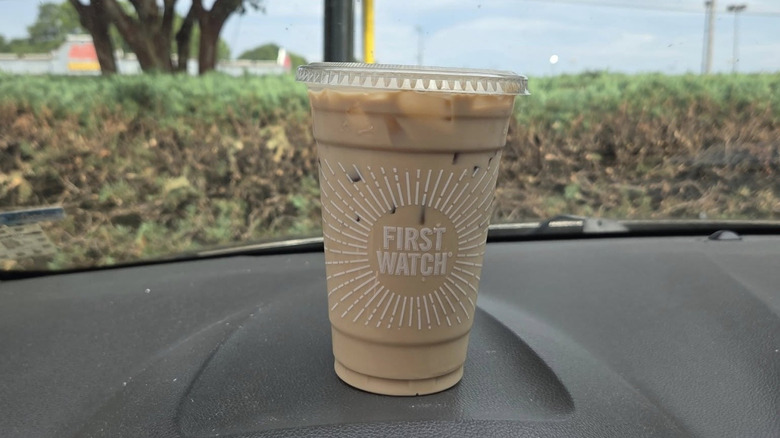
From its name alone, First Watch brings a subtle intrigue to the morning coffee ritual, hinting at deeper meanings and cultural connections far from the company's 630 U.S. restaurants spanning 32 states. At its core, the name First Watch is a nautical term describing the first shift of the day, but the company's approach to food centers on broader aspirations, such as seasonal ingredients inspired by the position of the sun. In a similar vein, it's hardly surprising that First Watch sources its coffee through a carefully cultivated food ethos rooted in the Gateway to South America.
First Watch is headquartered in Bradenton, Florida, but its coffee story begins and evolves much farther south, in the country of Columbia. Tucked within mountainous terrain is a coffee-growing region called Huila, where First Watch sources coffee beans through the company's Project Sunrise, fueled by a devoted collective called Mujeres en Café — Women in Coffee. Members are female coffee farmers whose roles stretch far beyond the fields and into the communities at large, serving as teachers, mothers, entrepreneurs, and pioneering leaders on multiple fronts.
These women are the heart of Project Sunrise, the human connection between beans in fields and coffee in cups more than a thousand miles away. For First Watch, it's not just a sourcing arrangement tied to a distant dot on a map; it's a relationship tied to lives and labors of women producing a meaningful harvest of high-quality, single-origin Arabica beans. Here's a closer look at that journey from coffee tree seedlings to bean processing, drying, packing, shipping, roasting, and brewing.
From female Columbian farmers to First Watch cafes

The term "single origin" sounds like a trendy java phrase knocked about in coffee-purist circles, but there's an enormous amount of time and care involved in earning that distinction. Arabica beans are one of the world's four coffee bean types, and with the First Watch single-origin version, it all starts with seedlings planted during the wet season in Huila. It takes them roughly three or four years to become productive plants bearing coffee cherries, after which each cherry gets hand-picked by the Mujeres en Café farmers, ensuring the ripest fruits make their way into the evolving stream.
Once harvested, the cherries move to the coffee mill, where the fruit gets stripped away from the beans hidden inside. Each cherry harbors two beans, which get washed to remove the sticky coating. Then comes fermentation, lasting about 18 to 24 hours as the remaining sugars break down, helping determine the ultimate flavor of the coffee. The beans then dry slowly over several days, and a thin outer parchment layer gets removed, finally releasing the coveted pale-green coffee bean.
Next up is the sorting, with each bean inspected by hand, allowing only the ones meeting specified standards to continue on the journey. From Colombia, they're packed into large burlap bags and shipped out by sea, eventually arriving at the Port of Charleston and onward to Royal Cup's roasting facility in Birmingham, Alabama. Trained tasters cup the coffee, approving consistency and quality before the beans get roasted for the specific flavor profile defining First Watch coffee. With all this attention to detail and commitment to cultural connections, it's inspiring that First Watch ended up on our Tasting Table list of the 10 fastest growing chain restaurants in 2025.