

The Subtle Little Ways Restaurant Workers Influence Customers To Leave
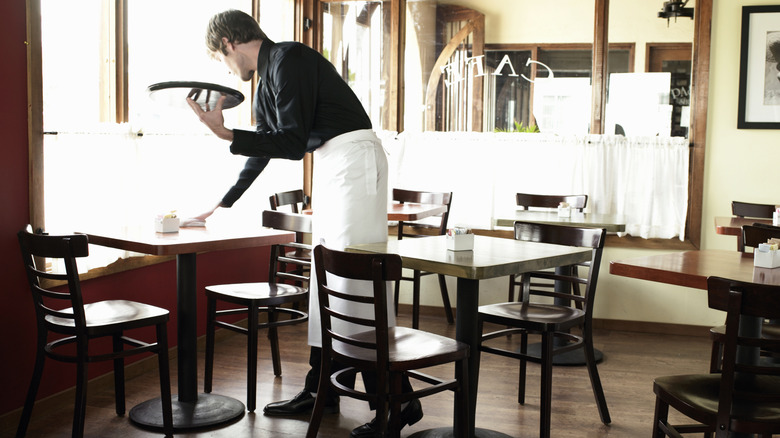
You're dining at a nice restaurant when all of a sudden the server appears to be hovering around your table. Are you eating too slow? Do they want you to leave? Are they just waiting to ask how you like the food? Sometimes, dining out means having to understand certain etiquette rules and subtle cues from the staff. Working at a restaurant changes you into a more mindful diner, but those who have never worked in the service industry might be puzzled by certain gestures. To take the guessing game out of the process, we spoke to Nikesha Tannehill Tyson — an etiquette expert from the Swann School of Protocol in Shreveport, Louisiana, and co-author of the book "Gracious Living."
When asked what indirect signs a server might give the customer to let them know it's time to start wrapping up, Tannehill Tyson said, "The first clue could be if the server brings your check without it being requested." That's certainly a sign that the staff considers your meal done and isn't expecting (or perhaps wanting) you to order anything else. "Pay attention to the server's body language," the expert advises. "Do they leave the check with you and check back quickly or if they begin clearing the table without offering you anything else such as drink refills or dessert." It might feel awkward in the moment, but picking up on these cues will make you a better patron.
Why do restaurant servers want customers to leave?

Most often, the servers will want you to leave when closing time is near and you are very obviously still making it through the early stages of your main course. For you, this occasion might be a fun night out, but for the restaurant staff, it is a job they would like to clock out of at an appropriate time. Staying right up until closing time is one of the dining etiquette mistakes you should avoid, but if it does happen, Tannehill Tyson shared with us the best course of action.
"Plan your exit by having your payment method ready," she begins. There's nothing worse than rummaging through your purse looking for a credit card three minutes before closing. Then, "request your check from the server, close out, and thank them by name with a warm acknowledgment, 'I didn't realize it was closing time, thank you for your patience, good night (server's name).'"
Being polite goes a long way, as does not taking the rush personally. Just like there is etiquette that signals when you're done eating, so, too, there is etiquette that signals when it is simply time to leave. The tipping culture in the United States could be another reason why waiters rush you out. If they are making the majority of their income from tips, their livelihood depends on speedy customer turnaround.