

How To Prevent Your Lasagna From Turning Out Watery, According To An Italian Chef
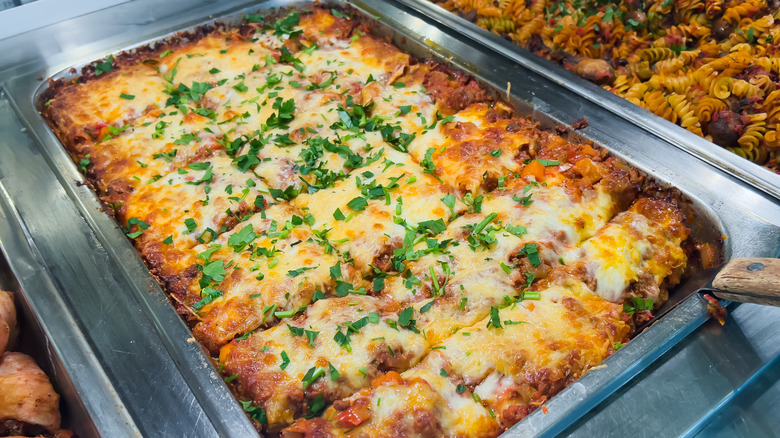
While most lasagna recipes are fairly foolproof to execute, a common issue is the dish coming out watery. That's why we consulted Jasper J. Mirabile Jr., the owner and chef at Jasper's Restaurant and Host of Live! From Jasper's Restaurant for his knowledge on all things lasagna. He doesn't point the blame to liquid ingredients like tomato sauce or béchamel, but instead argues that ricotta cheese is the likely culprit.
According to Chef Mirabile, "not draining your ricotta cheese is the biggest factor in watery lasagna." Not technically a type of cheese but a cheese byproduct, ricotta is rich and creamy due to the addition of two different types of milk. Store-bought ricotta is especially watery because many brands use extra whey and skip the draining process. So Chef Mirabile recommends testing the ricotta by spooning it into a bowl "to see how much water comes out of it." The easiest way to drain ricotta is to pat it with paper towels, but placing it in cheesecloth over a bowl to sit in the fridge for two hours is even better.
Not only should you drain the ricotta of any excess water, but Chef Mirabile also says that "eggs are a must in the ricotta cheese mixture...it makes for a perfectly creamy filling when mixed with eggs, parsley, and salt and is not watery at all." The eggs act as both a binding agent and a leavening agent so that "the cheese rises in the oven and makes the lasagna fluffy and light."
More tips for the best lasagna
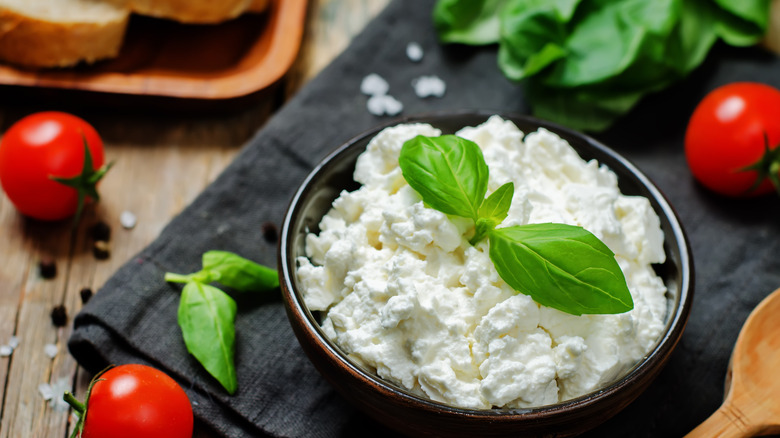
Watery ricotta will result in watery lasagna, but no matter how much you drain it or add eggs, all of the ingredients you add to lasagna have some water content. If you are making a spinach lasagna or even a classic lasagna Bolognese, the water content in veggies, aromatics, meats, and sauces will create some excess liquid. So if you see water pooling at the top of your lasagna, Chef Mirabile says, "there's no reason why you can't lean the lasagna pan to the side and drain out some of the water, but be very careful."
It is also crucial to let your lasagna rest after taking it out of the oven. This resting period will bring more structural integrity to the lasagna, giving the cheese, noodles, and fillings time to firm up. Resting the lasagna for 15 minutes is the bare minimum. Chef Mirabile told us, "I like to make the lasagna ahead of time, at least six or eight hours, and then reheat the casserole before serving."
We have plenty of other expert chef-approved cheese-related tips. If you don't want to use ricotta, celebrity chef Ree Drummond recommends using cottage cheese instead. Chef Michael Symon advocates for bringing even more types of cheese to the mix like topping your lasagna with fresh mozzarella. Broiling lasagna for the last 5 to 10 minutes of its baking time will crisp up the cheesy topping and help evaporate excess water that might have pooled during the bake.