

How To Properly Clean Up After An Oven Fire
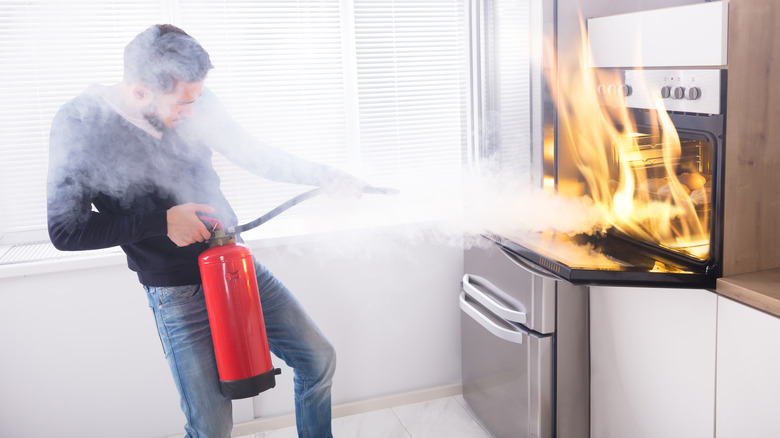
An oven fire is a stressful, dangerous situation. Even after you have extinguished the fire, proper cleanup is needed to remove harmful toxins, soot residue, residual grease, and odors. Cleaning thoroughly can also help you determine if you need to make any repairs to oven components.
Cleaning your oven after a fire is a multi-step process. Once you have safely extinguished the fire, turn off the oven and close the oven door. You should also unplug or disconnect nearby appliances and electronics. Open all of the windows and doors for ventilation and review and document the damage for insurance purposes. Once the oven has cooled, put on gloves and a mask and begin removing loose debris from the oven floor, racks, and door. Vacuum up any remaining powder or residue from the fire extinguisher that you used. To neutralize dry chemical fire extinguishing residue, spray a mixture of 50% warm water and 50% isopropyl alcohol on the oven's interior. If you used a sodium or potassium bicarbonate fire extinguisher, spray the oven's interior with a mixture of hot water and two tablespoons of white vinegar. Let it sit for five minutes.
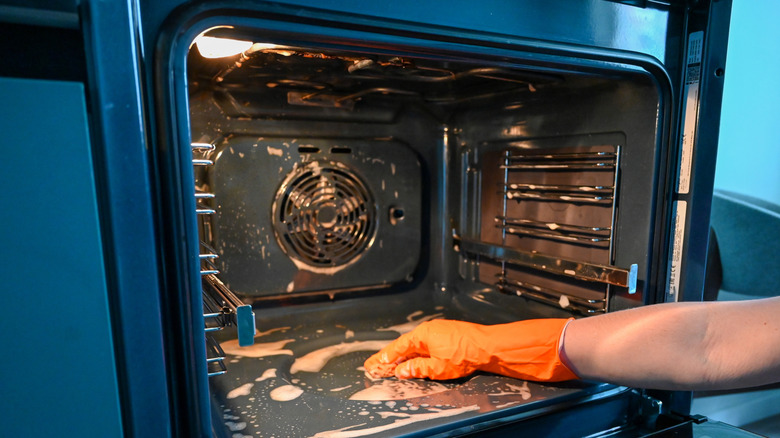
Remove the oven racks and soak them in hot water and a degreasing dish soap like Dawn for several hours, then clean off residue with a soft brush or sponge. Finish cleaning the interior of the oven using Dawn soap and a clean, damp cloth to remove all remaining cleaning solutions and residue, and then leave the oven door open to allow it to dry completely.
Have your oven professionally inspected before using it again
The most common causes of oven fires are a malfunctioning or damaged oven component, a flammable item in the oven like a towel or baking paper, dirt or grease buildup, unattended cooking, and dripping or overflowing ingredients. Before you use your oven again, you should have it inspected by the gas company (if it is a gas oven), and/or an appliance repair specialist to make sure it is still safe to use. If the fire was caused by overflowing ingredients, burning paper or fabric, or a buildup of grease, the oven should be safe to use again after a proper cleaning. If the fire was due to a malfunctioning component like a faulty heating element, gas line issue, or damaged wiring or electrical components, you will need to have it repaired or replaced.
Once your oven is cleared for use, take steps to prevent a future kitchen fire. First, keep kitchen towels, oven mitts, and flammable items away from the oven and stovetop at all times. Be aware of the things you should never keep in your oven's bottom drawer, such as flammable items and combustible chemicals. Never leave items cooking on the stovetop unattended, and regularly check on anything cooking in the oven. Clean your oven regularly to remove grease, crumbs, and spills.
You should also pick the right fire extinguisher for your kitchen so that you are prepared if another oven fire occurs. We recommend a multi-purpose ABC extinguisher as well as a fire blanket to smother grease fires quickly, and a fire spray for small kitchen fires. Fire sprays are lighter than extinguishers and so they are easier for kids and elderly household members to use, plus the fire suppression foam is non-toxic, biodegradable, and easy to clean up.