

Why Some Boomers Tend To Overcook Their Food
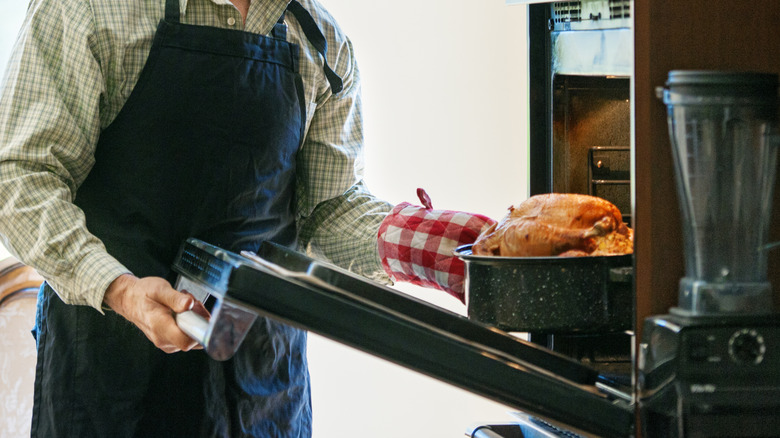
Forgive the boomers and their overcooked food, they know not what they do. While home cooks today are lectured on the gospel of medium rare meat, and steeped in the food science that can tell us exactly when chicken is at its most juicy, anyone over the age of 30 remembers a time when food was overcooked constantly. Of course everyone's parents varied in cooking skill, just like they do today, but many people with boomer parents grew up subject to a constant stream of dry meat, and bland, boiled-to-death vegetables. But like many generational food failings, this type of cooking was not because of some lack of skill, or good palettes mysteriously skipping a generation, it was the result of what they were taught was the right thing to do, combined with lingering traditions.
While we certainly fret about food recalls today, concern over the safety of food, especially meat, was hammered into the boomer generation their entire lives. For chicken it was salmonella, for pork trichinosis, and for vegetables it was the many diseases lurking in dirty, uncleaned produce. And cooking food long and past a certain temperature was seen as the remedy to all three. Department of Agriculture (USDA), and Food & Drug Administration (FDA), safety regulations from the era, and even into today, established baseline temperatures that went far beyond what was "safe," even by scientific standards, out of a fear of preventing even worst case scenarios about bacteria presence that were highly unlikely. So when your boomer parents or relatives cook pork to the point of leathery dryness, they were just doing what experts of their time were telling them to do.
Concerns over food safety meant many boomers learned to overcook food to kill bacteria
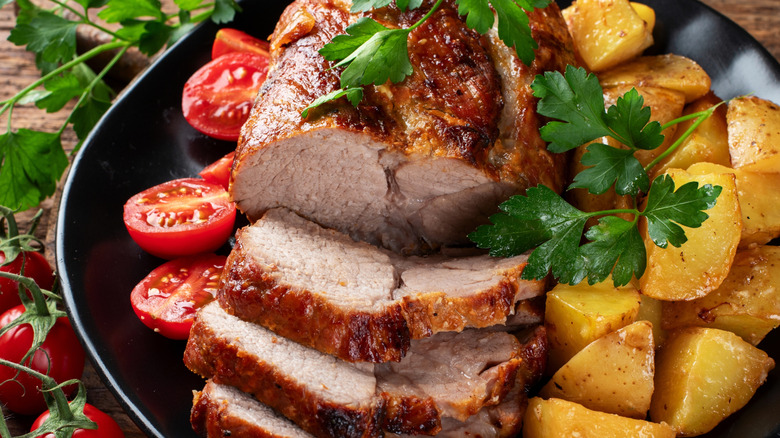
Trichinosis really was more of a concern before the '80s, and despite ongoing fears around food safety and cleanliness today, modern regulations and detection methods have made food-borne illnesses much more rare. When you bought fruits and vegetables in the '60s and '70s, there was still an understanding that it was naturally dirty, and up to consumers to clean it, but now the burden of safety has shifted more to farms and producers, so the need to cook produce more safely has declined.
There is also simply some carryover from traditions boomers picked up from their parents. Boiling vegetables in particular was just standard throughout much of the Western world for centuries, partially from an outmoded idea that ovens were for baking, not cooking. Roasting vegetables was enough of a novelty as recently as the '90s that the New York Times had to run a trend piece on it. It was also thought the flavor in the dish, whether it be that mushy asparagus or dry pork, was going to come from sauces and toppings anyway, so overcooking and not getting any browning wasn't as much of a problem.
We know better now, but only because experts wised up and fears receded. The FDA for example lowered its recommended pork temperature to 145 degrees Fahrenheit in 2011, after it had once been as high as 185. We're just lucky to be born in a time with a better understanding of food science and safety, but certainly plenty of precautions we do or don't take today will look just as silly to the next generation as boomers overcooking food today.