

9 Frequently Returned Food Items At Trader Joe's
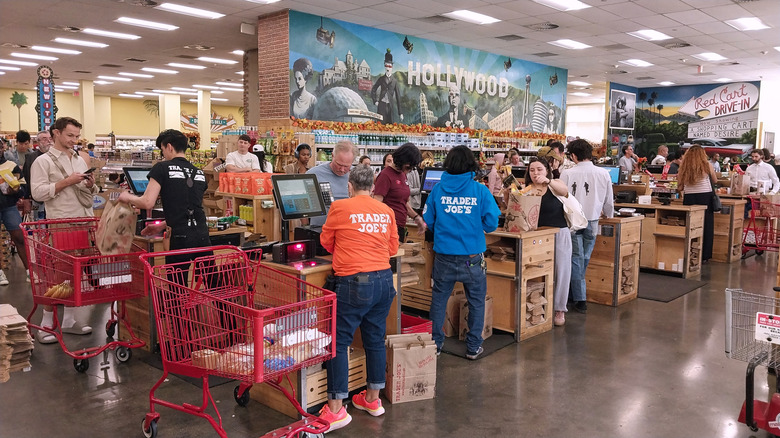
Even if you've been shopping at Trader Joe's for years and have mastered the art of shopping there, you may still find yourself returning items from time to time. Knowing which ones are most often returned can help you watch for and avoid problems.
Luckily, Trader Joe's has a very relaxed return policy, allowing you to return anything for a refund, store credit, or exchange. The store's lax return policy allows you to return products you don't like, even if there's nothing else wrong with them, and even without a receipt. There's no time limit on the exchange either. According to an employee on social media, returning items you simply don't like is actually helpful to the company for knowing whether to continue to stock a product or not.
While you might have come to this list expecting one specific product that Trader Joe's shoppers didn't like, that doesn't seem to be the reality. Instead, the products that Trader Joe's customers mention most often on social media as ones that they return are fresh ones that spoil easily or ones that simply didn't suit their individual tastes. In many cases, though, there are ways to avoid returns of certain types of items, like checking expiration dates and refrigerating or freezing items since they have fewer preservatives than leading brands at other grocery stores. Once you know which nine items are most often returned, you can make better purchase and storage choices related to those products.
Tortillas and products including tortillas
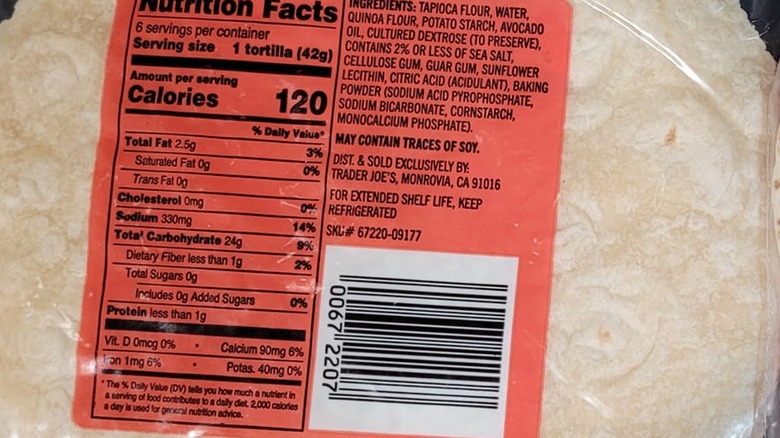
Some Trader Joe's products that are frequently returned are tortillas or packaged products that contain tortillas, like taco kits. Shoppers on social media report that even tortilla packages that are still factory sealed can end up moldy almost immediately, regardless of the sell-by date. However, it turns out that there's a reason TJ's tortillas go bad quickly: they don't have artificial preservatives.
While you might be able to use unrefrigerated packages of tortillas from leading brands for weeks without them going bad, the same just isn't true for the ones from Trader Joe's. As a result of the lack of preservatives, many shoppers have learned it's best to put TJ's tortillas straight in the refrigerator or freezer rather than keeping them out. In fact, if you return moldy tortillas, the manager is likely to ask you how you stored them because the packages often say you should refrigerate them to make them last longer. Although the store will still take them back, whether you were storing them in the fridge or not.
When TJ's tortillas are refrigerated, customers say that they last about a week. The good news is that you can also freeze them to make them last longer, and customers say they're easy to pull apart and use as needed when frozen.
Cheese
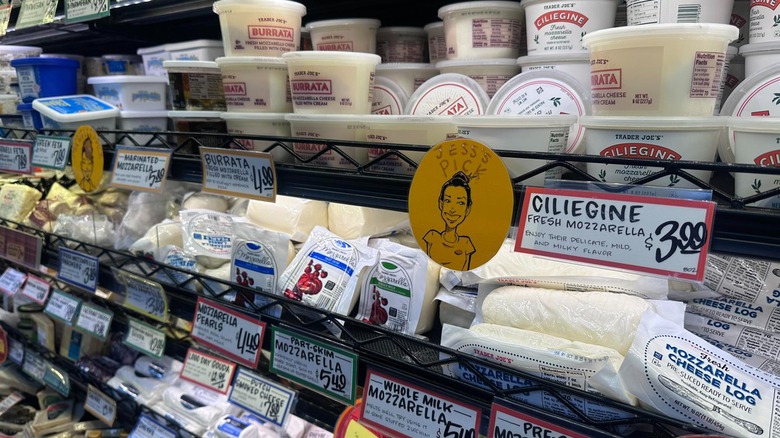
Trader Joe's is known for its amazing array of tasty cheeses, but they are by no means immune to mold. In fact, a Trader Joe's employee on social media has revealed that moldy cheese returns at Trader Joe's are fairly common. Although some returns are simply because customers ended up not liking the cheese they tried for the first time, too.
Plenty of TJ's customers on social media have mentioned their cheese going moldy. It's not surprising for cheese to mold in general. However, some shoppers have discussed having bad luck buying cheese that was already moldy or getting some that went moldy within a couple of days after they bought it. However, some frequent TJ's cheese buyers have mentioned that it's a good idea to repackage plastic-wrapped cheeses after getting them home, storing them in a glass container, or wrapping them in waxed paper or parchment paper.
Additionally, since Trader Joe's tends to have all kinds of fancy cheeses, people are often trying and returning types they might not be familiar with. So, if the taste and texture don't suit you, you're certainly welcome to bring it back. One we've seen mentioned as being returned and disliked is strawberry Stilton. With Stiltons being extra stinky, we can certainly understand the sentiment.
Bread products
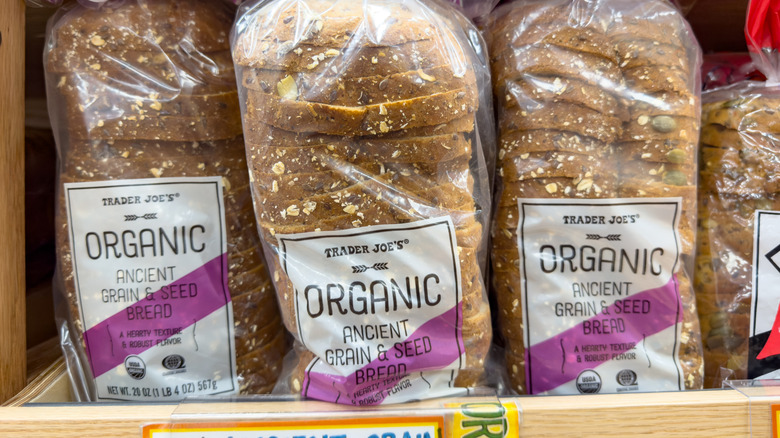
According to a Trader Joe's employee, another food that gets returned often because of mold is, unsurprisingly, bread products. So, don't be shy about returning any of your breads if they get moldy before their time.
On social media, TJ's shoppers talk about bakery products going bad in as few as two days. Items like bread, bagels, and pitas that you'll find in the bakery aisle tend to mold quickly because they don't have a lot of preservatives. Even other bakery items like brownies have a tendency to go bad quickly. Although you might not have noticed pastries going bad if they tend to get consumed quickly in your house.
Freezing is a better idea than refrigeration for keeping bread from going stale. While you might be used to freezing and then unthawing whole loaves of bread to use, if you unthaw an entire loaf of Trader Joe's bread at once, you're going to run into the problem of having it mold in a short period of time. So, some customers on social media have hit upon the strategy of only taking as much out of the freezer as they can use in a couple of days instead of the whole loaf. Ina Garten has a great bread freezing tactic that would work here: freezing separate portions of the loaf in plastic wrap so it's easy to take out only what you need.
Produce
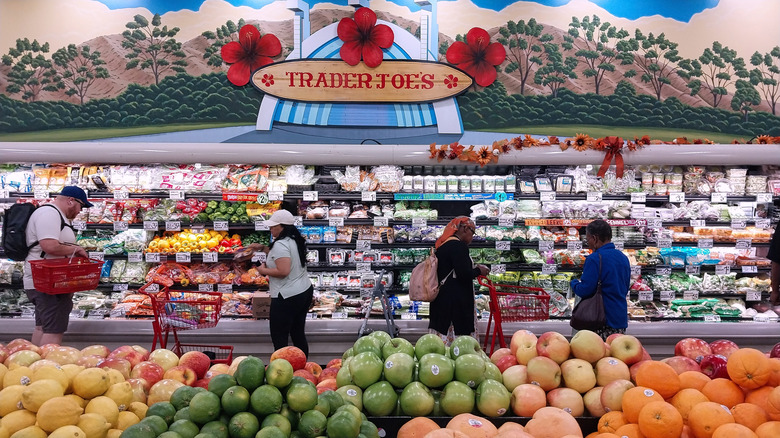
Produce is tricky, no matter where you buy it, which is why it's on our list of frequently returned Trader Joe's products. Even if you spot check it before you put it in your cart, you can get home to find some surprise rot deep in the package, or it can simply go bad faster than expected.
Trader Joe's shoppers on social media have mentioned a variety of produce returns, including bad arugula, wilted salad, sour tomatoes, and moldy dates. Some customers just take photos of their moldy products instead to get their refund (a photo of the barcode might also help if you didn't keep the receipt and aren't physically bringing in the product). While there are people who only return produce to TJ's when it goes bad before the sell-by date, employees on social media say that others bring produce back weeks after purchase because they couldn't eat it all before it went bad (granted, this feels more like taking advantage of the company's lax return policies).
There are a lot of ways to keep produce fresh longer. One TJ's customer on social media mentioned a couple of strategies they use at TJ's. First of all, they only buy as much as they know they can eat within a week. Secondly, if the produce is in a plastic bag, they take it out of the bag before storing it at home.
Milk
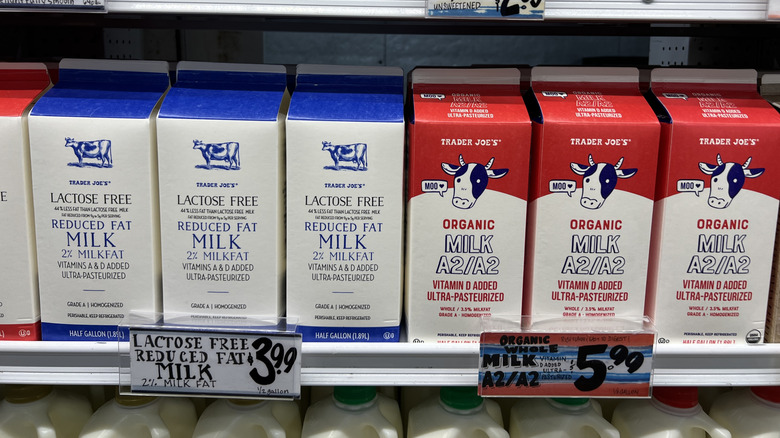
Even if you buy milk that hasn't expired, you can apparently still end up needing to return spoiled milk from Trader Joe's. In fact, it seems that some shoppers have given up on Trader Joe's milk altogether because of the spoilage. Once again, it seems to be a preservation issue, as TJ's milk isn't ultra-pasturized like the milk you tend to get from other grocery stores.
Shoppers on social media have reported taking milk home from the store only to have it go bad in just a couple of days or a week. Sometimes, unexpired milk from Trader Joe's goes bad even when it's been unopened. The good news is that you don't have to take a whole jug or carton of spoiled milk back to the store to get your refund. Just take a picture or bring back the receipt.
There are a few strategies shoppers have started using when they buy TJ's milk. Specifically, they've found that the lactose-free milk doesn't spoil as quickly as the regular milk does. Even shoppers who aren't lactose intolerant have switched over to lactose-free milk (whether they're lactose intolerant or not) to avoid the quick spoilage problem. The organic whole milk also seems to last longer. Another strategy is to check all the expiration dates and buy cartons that have expiration dates that are farther away in the future. Something else to do is buy half-gallons rather than full gallons so that you can consume them before it goes bad. If you don't want to shop too often, you can freeze extra half-gallons for later.
Oat milk
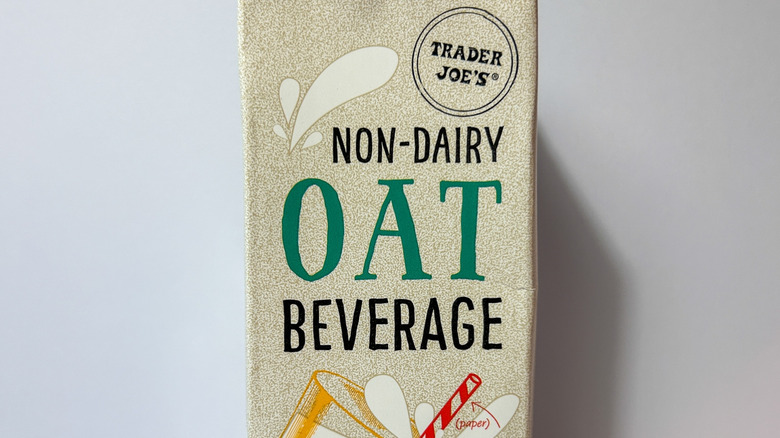
Cow's milk isn't the only type of milk going bad at Trader Joe's; shoppers also often return the oat milk. While oat milk can go sour like cow's milk, it's often the texture and other signs that have customers feeling something is wrong with it, inspiring returns.
Oat milk buyers at Trader Joe's have had a variety of problems with their oat milk. Some have discovered chunks in their oat milk, or describe it as being lumpy, curdled, gummy, or glue-like in texture. Others have noticed their coffee being sour or having an odd flavor like metal, dust, or soap. Looking inside the carton, some have even found mold to go with the off flavors and textures.
There are a few ways that shoppers have found to give them better luck with TJ's oat milk. First of all, it helps to check the expiration date before you buy TJ's oat milk. Some have discovered that they haven't had as many problems with the shelf-stable oat milks as they have with the refrigerated ones and have switched which ones they buy. Still, even if you're going for the shelf-stable variety, it's best to avoid ones that are going to expire soon, instead looking for one that has an expiration date a couple of months out. After getting bad oat milk often from TJ's and other stores, one shopper says they always open their oat milk before leaving the parking lot and return it immediately if there's anything amiss.
Meat and fish
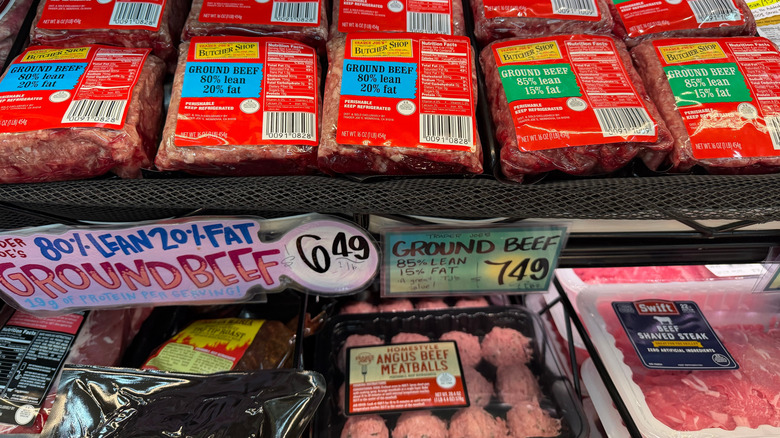
TJ's shoppers have talked about having problems with all sorts of meats, from chicken, ground beef, and turkey to steak and salmon. This has been especially disappointing since the meat is sometimes more expensive from TJ's than from local grocery stores. Customers have mentioned spoiled meat, strange-tasting meat, bad smells while cooking, and even meat with off-putting textures or slime.
One customer said they seem to have better luck with prepared and seasoned meats rather than the plain ones, but wondered if perhaps the seasoning was covering problems they might have noticed otherwise. Another shopper simply ended up swearing off buying meat from TJ's after having their last five purchases go bad in the refrigerator within two days of purchase. The good news is that you don't have to bring in the spoiled meat to get your money back or a replacement. Instead, the UPC label, photo of the package with price, or receipt is enough. When in doubt, it's just best to throw it out because nobody wants to have to touch or smell bad meat for longer than necessary.
Beauty products

While most of the frequently returned products at Trader Joe's are fresh foods, beauty products are on the list, too. If you think about how many times you try a beauty product you don't like and never use it because of the smell, allergies, texture, etc., it's no wonder the liberal return policy at Trader Joe's leads to lots of beauty product returns.
Rather than waste their money on something that's going to sit in their bathroom cabinet unused or end up in the trash, many Trader Joe's shoppers simply return beauty products that don't work for them. TJ's shoppers on social media mention all sorts of returns, including conditioner that leaves their hair tangled, soap that has a smell they don't like, body butter with a smell that gives them sinus problems, and blueberry face scrub that turns their face purple.
With such a small beauty section and brands that are recognizable as being from TJ's, there's really no need to have a receipt for returns. Honestly, with such a lax return policy, you're probably more likely to try new products. So, it's a win for both the company and for you to find what really does work for you.
Wine
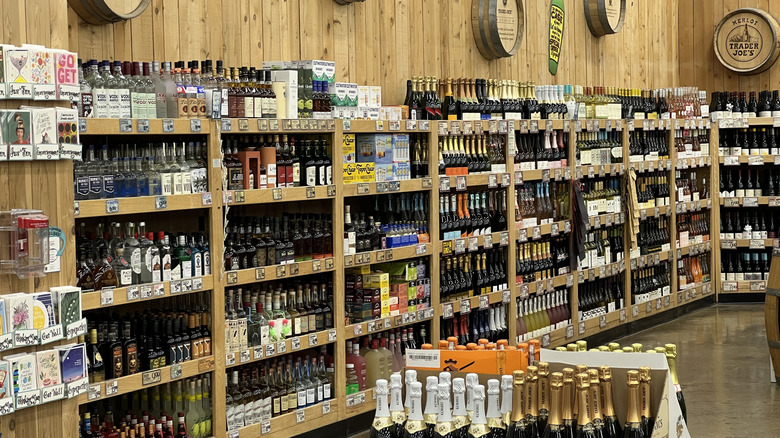
Last on our list of frequently returned Trader Joe's items, there's wine. Granted, not all states' liquor laws allow returning wine, but it often ends up getting returned for one reason or another in states where it's permissible.
Even in a regular liquor store, there's the chance you're going to try a wine that doesn't appeal to your tastes. So, it's no surprise that people sometimes end up returning wine that's unpalatable to them. Several wine shoppers have mentioned on social media that they've had a Trader Joe's employee recommend a wine to them and tell them they can return it if they don't like it. After buying it and disliking it, some have decided they want to return it.
Of course, since you don't want to carry an open container of liquor back to the store because of liquor laws, this is when Trader Joe's easy-going return policies really come in handy. You could just bring in the empty bottle or a picture of the bottle with the barcode on it. Although you might want to check the liquor return policies in your state first, because some states (like California) don't allow it, no matter the corporate return policy.
Methodology
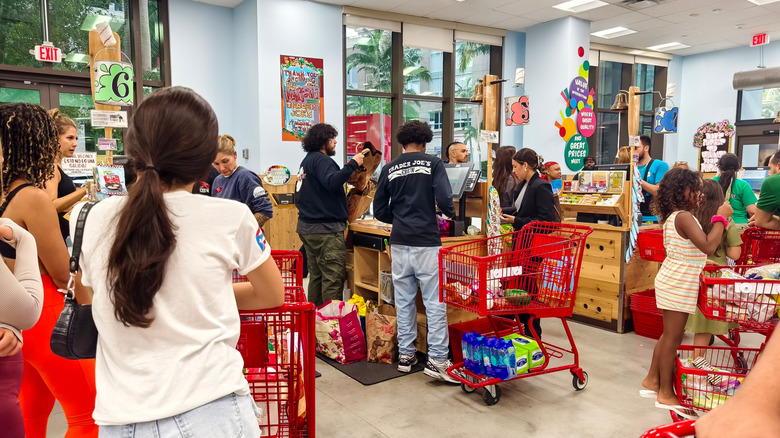
To decide which food items are most often returned to Trader Joe's, we looked at conversations on social media where customers were talking about their returns. It just so happened that the most significant conversations about Trader Joe's product returns seemed to be happening in Reddit forums.
Instead of finding singular items that were mentioned often, we mainly found general categories of items that people talked about being returned often. If just one or two people mention having problems with an item, we didn't include it on our list. Instead, all of the items on the list are in categories that multiple people have mentioned having problems with, indicating a pattern.