

How To Safely Drink Fire Cider To Enjoy The Amazing Benefits
We may receive a commission on purchases made from links.
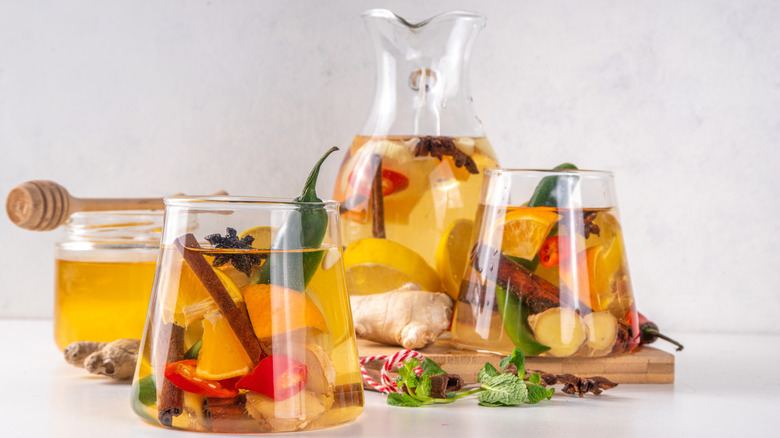
Homemade, cost-effective, and generations-old, fire cider is the traditional herbal vinegar tonic that belongs on your radar. If you've never tried it before, fire cider is a staple beverage of cold and flu season, but it's tasty enough to enjoy year-round, with health benefits that never go out of season. The elixir is made by steeping roots, peppers, alliums, and herbs in unfiltered apple cider vinegar, characterized by bobbing chunks of whole spices and sliced citrus fruits. The name "fire cider" is a nod to the tonic's tasting profile: Bold, spicy, pungent, tart, and warming.
While exact recipes can vary, fire cider refers to some combination of unfiltered apple cider vinegar, onions, garlic, herbs, and spices, all brewed together into a potent immune-boosting sipper. To safely enjoy it, only consume one to two tablespoons per day. As proponents of the daily apple cider vinegar shot note, throwing back a shot of straight vinegar can damage tooth enamel. To protect your chompers, dilute that tablespoon or two of fire cider in a glass of water (hot or chilled), and drink it through a straw. Enjoying diluted fire cider with a meal can also help counterbalance the acid's potent effect on your body and teeth. Others stir in a bit of honey to further offset the acidity, such as this raw manuka honey (another natural antibacterial) by Manukora brand (currently $10.59 per 8.8-ounce jar on Amazon). You could even add a shot to your next Bloody Mary (don't forget the straw).
Dilute the tonic, and grab a straw
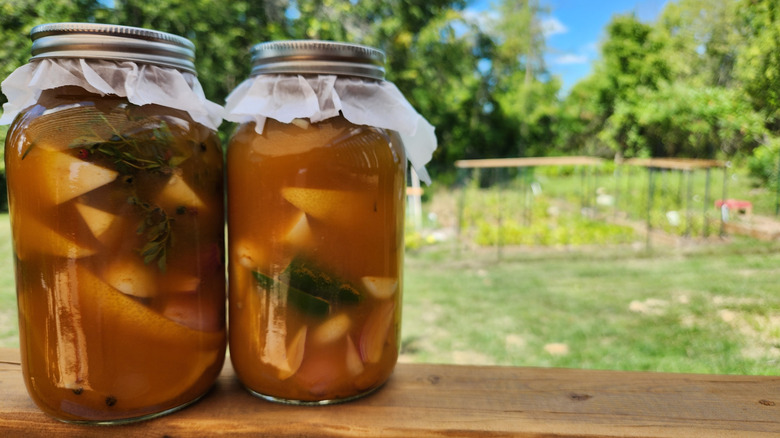
Fire cider is a concentrated source of antimicrobial and antioxidant properties that can help stave off seasonal colds – and safely drinking it is an important way to ensure the maximum health benefits. Technically, its proven efficacy is supported by limited evidence due to the lack of clinical trials. But, fire cider shouldn't be regarded as a medical treatment, instead as a longstanding wellness-promoting herbal tonic part of folk tradition and plant medicine. Fire cider has been prized for boosting immune system health by supporting microbial balance in the gut biome, as well as helping reduce inflammation, quell muscle and joint pain, boost respiratory health, stabilize blood sugar, aid in digestion, and stimulate lymphatic system activity.
Thanks to its flexibility, making fire cider can also be a thrifty way to utilize leftover produce odds and ends, not unlike whipping up a batch of homemade stock. Other common elements include horseradish, jalapeno, ginger, turmeric, cayenne pepper, lemon, orange, cinnamon, black peppercorns, rosemary, thyme, grapefruit, habanero, and more. Traditionally, fire cider is jarred and fermented for three to four weeks, then strained through cheesecloth. To brew it, the ingredients are coarsely chopped, added to a larger jar, covered with vinegar to submerge, then sealed in a jar and aged, shaking the jar every few days. Pro tip: Longer fermentation yields a bolder taste. However, for faster enjoyment, our fire cider recipe offers a non-fermented version that comes together on the stovetop in just 30 minutes.