

Before Buying Frozen Food, Give The Bag A Squeeze. Here's Why
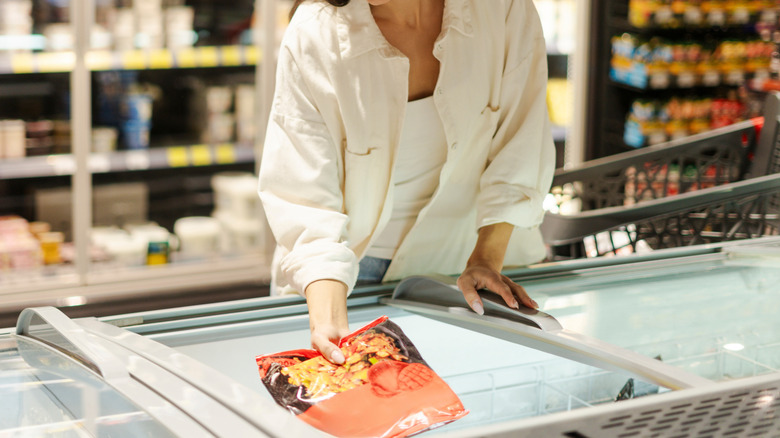
Frozen vegetables and other foods are a convenient and affordable way to stock up on items that may be out of season or that you want to keep longer without worrying about spoiling the way fresh ones might. Frozen vegetables can last up to a year in your freezer while still maintaining good quality. That said, they can still face some quality issues, and one easy way to check is to squeeze the bag for ice crystals or large frozen chunks.
If frozen vegetables thaw, even partially, and are then refrozen, ice crystals form inside the bag. That ice forms from moisture drawn out of the vegetables because the freezer is actually a very dry place. As bagged vegetables thaw, they begin to lose moisture, which stays trapped in the bag. Once they refreeze, ice crystals form and, if there's enough moisture, it can freeze into large chunks. This can apply to seafood like shrimp and scallops, and other frozen foods as well.
You can feel the ice crystals by hand if you squeeze the bag. Ideally, you should feel the individual vegetables and nothing else. But big pieces or sharp, icy chunks mean the vegetables have already lost some moisture and freezer burn is setting in. The term comes from the dehydrated, burn-like spots that form on food when it loses moisture in the freezer. The taste and texture of the food will suffer as a result. Freezer burned food is still safe to eat, but it won't taste as good as it should.
Don't get burned by freezer burn
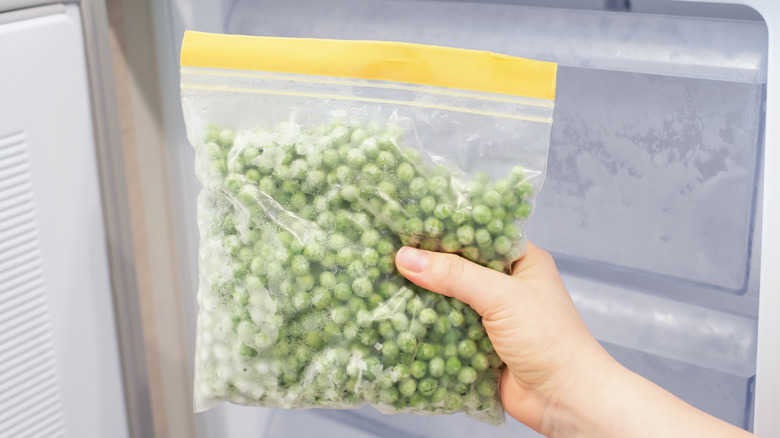
What you want to feel in a bag of frozen food is each individual piece. Whether it's a broccoli floret or a whole shrimp, they should be separate and easy to feel, without clumps or sharp edges. Not only will freezer-burned foods not taste right after you cool them but, as we pointed out when covering freezer aisle mistakes, they will turn out mushier, too.
Unfortunately, frozen items will almost always go through the process of losing moisture and forming ice crystals. This happens thanks to some simple scientific processes like sublimation and reverse sublimation. If the temperature fluctuates enough, water vapor forms in the bag and then freezes onto a cold surface, like the exterior of your vegetables. Even if the temperature is consistent, the air inside the bag will move towards equilibrium with the frozen items by balancing the amount of moisture between them. Since the freezer air is dry, the moisture comes from the food. That's why things like vegetables only have a year shelf life, because this process is impossible to avoid forever.
The best way to prevent ice from forming for as long as possible is to make sure your freezer works properly. It should be set to -18 degrees Celsius or about 0 degrees Fahrenheit. Try not to keep the door open for any longer than necessary when taking items out or putting new ones in. If you're freezing your own veggies, avoid these common storage mistakes to ensure they freeze as well as possible.