

The Grocery Store Deal That's Specifically Designed To Make You Spend More
While you may not be happy with prices at grocery stores these days, sometimes there are deals that seem too good to be true — and they usually are. It's not that grocery stores are lying to you and going to charge you more; it's just that there is a little psychology and marketing going on to separate you from your money. It's a strategy you may have heard of before, called "loss leaders," and supermarkets have been using it for decades. So, for more specifics about how loss leaders actually work, we spoke with Alli Powell, owner of Grocery Getting Girl, who reveals just why grocery stores do this and what some examples are.
On loss leaders, Powell tells us: "It's something they don't make much of a profit on, but use it as a way to draw people into the store to spend on other things." And it's not just a smaller profit; loss leaders are often priced to the point where stores are losing money when you buy them. One example Powell gives is particularly famous: Costco's delicious rotisserie chickens. "They put them at the back of the store, so you have to walk by a bunch of other products before you get to the chicken," she says. "By that point, there's a good chance you've already added other items to your cart, or you will on your way out."
Loss leader deals get you in the store and spending money
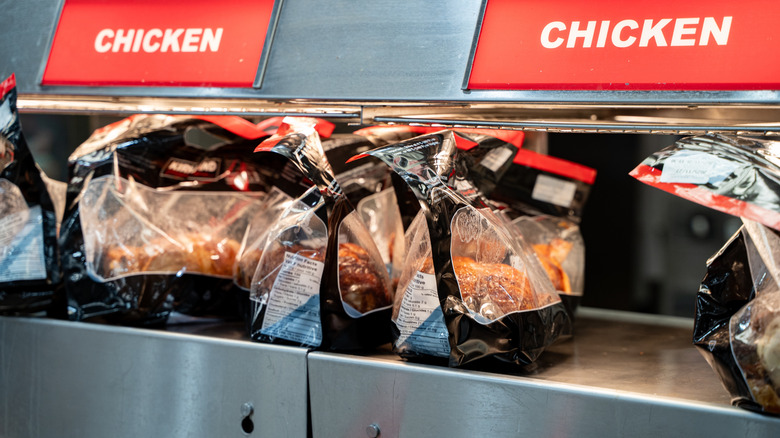
Costco really is the best single example of this phenomenon. The rotisserie chicken is famously priced at $4.99 and has been since 2009. Even back in 2022, before meat prices continued their recent upward climb, the company was estimated to be losing $30 to $40 million a year on rotisserie chicken sales because of how cheap they are. And, of course, the warehouse is also the source of the most famous loss leader deal of all: Costco's $1.50 hot dog combo, which hasn't changed since 1985.
All grocery stores do this to some extent. You most commonly see it in items you may not even realize are great deals, like eggs and milk. This is because these are staples where customers frequently compare prices to find the cheapest grocery stores, so keeping them artificially low produces the illusion of value. And, like Powell said about Costco rotisserie chickens, they are also usually placed at the back of stores to get you walking past everything.
This strategic placement extends to temporary sales, too. Loss leaders are often paired with complementary items that have higher margins. A great deal on steak may have spices and condiments set up nearby, quietly encouraging you to buy both. It may seem simple, but companies wouldn't keep doing it if it didn't work. So, next time you go to grab a rotisserie chicken, or any other deal that seems too good to be true, save some money by keeping your eyes on the prize.