

For Bakery-Worthy Boxed Cake, These Are The Only Pans To Use
We may receive a commission on purchases made from links.
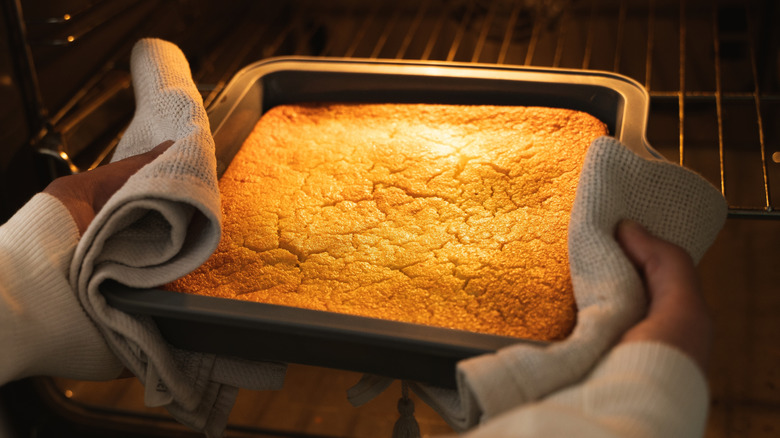
Boxed cake is meant to be simple, but if you're looking to take yours to the next level, there are some extra steps you can take to make it taste like it came straight from the bakery. From using room temperature eggs to swapping oil for butter, most swaps are incredibly simple and don't require buying additional ingredients. However, if you use boxed cake mix frequently, there's one investment you might want to make to ensure consistent, high-quality results. You may already have a collection of cake pans, but if they're not light-colored aluminum ones, the quality of your cakes may be impacted more than you think.
Unless you're aware of the baking science that explains the difference between light and dark cake pans, you probably didn't consider color when building your collection. You may not have even noticed any real problems baking cake in dark pans, but once you start baking with light pans, you'll see why this is such a crucial swap.
Darker materials absorb more heat than light materials. They radiate more heat, too, which means that your boxed cake batter is likely to cook faster and potentially brown. When it comes to cake, though, you want your batter to bake evenly, and you definitely don't want crispy edges that stick to the pan. A lighter, aluminum pan will solve this, since it absorbs less heat and bakes more gently, resulting in a bakery-worthy dessert you'll be shocked came from a box.
How to prep your cake pan for the perfect bake
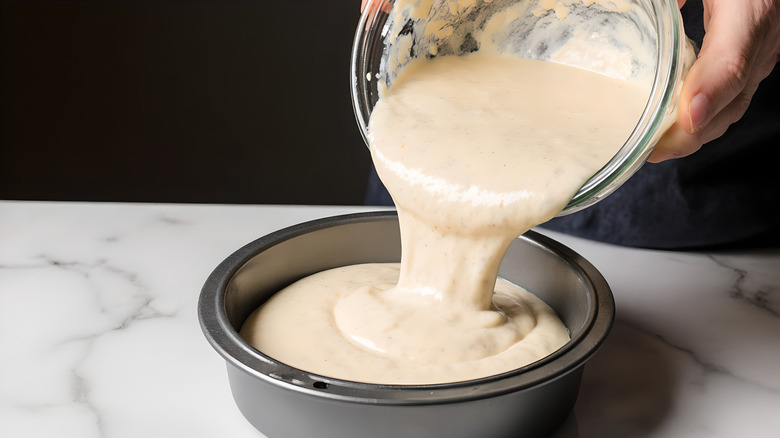
Although choosing the correct colored baking pan matters more than you'd think, if you haven't properly prepared the pan before adding your batter to it, your cake could still suffer. Not prepping your cake pan can result in a cake that sticks to the pan, which might ruin its shape when you try to remove it. Luckily, this can be easily avoided, so long as you create a barrier between the batter and the pan itself.
There are various ways to prepare a pan for baking, but one of the most common and effective ways to do so is with a little bit of parchment paper. This method works regardless of the shape of your cake. Even if it's round, simply cut the paper to create a round shape that covers the bottom completely. For extra security, spray the sides of your cake pan with a nonstick baking spray.
If you're all out of parchment paper, a nonstick baking spray, such as Pam, is one of the best substitutes. It's quick and easy to apply, especially if you're in a rush, and it's effective at minimizing sticky situations. Butter works well, too, but be aware that it can cause some minor sticking on the bottom due to the presence of milk solids. To be extra safe, add a light coating of flour over the butter. This crucial step, plus the use of aluminum baking pans, is sure to leave everyone impressed by your boxed cake-making skills.