

The Popular Soda That Has Only Slightly Less Caffeine Than Mountain Dew
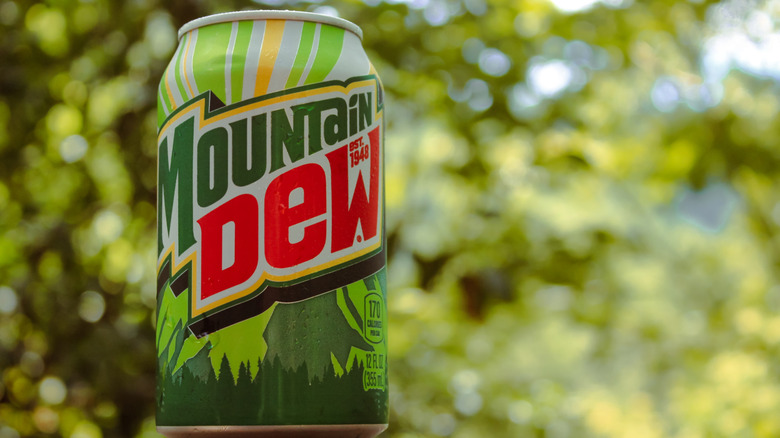
Afternoon energy slumps are the worst. We each have a way of dealing with it — some go for a cup of coffee, others for black tea. But those who really need to be on their feet will skip the coffee and reach for a soda — something like a Mountain Dew. Besides delivering a nice, caffeinated jolt for the brain, the citrusy fizz is just as effective at waking the palate. Here's the thing, though: If you either dislike or are getting fed up with Mountain Dews, there's another soda sitting right there on the shelf that's almost as caffeinated — we're talking about Dr. Pepper.
Every 12-ounce can comes with a solid 41 milligrams of caffeine, or 14 behind Mountain Dew's 55 milligrams, according to data from the University of Utah. Just a quarter cup of tea's worth of difference.
But these numbers are only true if you pick up either the standard or diet Dr. Pepper. The Cherry Vanilla variant comes down to 39 milligrams. Mountain Dew's got more variety going on — the regular stuff hovers around 54, Diet Mountain Dew stays right there too, but the zero-sugar version cranks it up to a whopping 68 milligrams. So while Dr. Pepper isn't the biggest player in the caffeine game, if you like the flavor and aren't too bothered about maximum caffeine bang for your buck, pick up a can the next time your body's on emergency power. It'll wake you right up.
Dr. Pepper's journey from being a no-caffeine to an energy drink
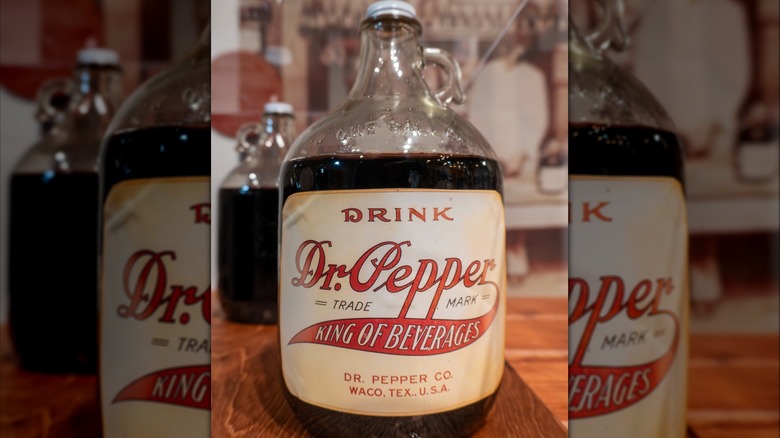
Surprisingly, Dr. Pepper wasn't always caffeinated. When it first showed up in the late 1800s, the formula had zero caffeine. And yeah, zero cocaine too — even though both were perfectly legal stimulants used in drinks back then. It stayed that way up until 1917, when Robert Lazenby, the inventor and president of the Dr. Pepper Company at the time, added a bit of caffeine to the recipe to give the drink an energizing kick. It was briefly swapped out for vitamin B-1 in 1939, but since it made the drink spoil faster and messed with the taste, caffeine returned in just a few years to Dr. Pepper — and that's pretty much where it stayed.
By the 1950s, Dr. Pepper was all-in on the energy angle. Ads started popping up telling people to grab one at "10-2-4 o'clock" — basically, hitting you at every energy slump between breakfast and dinner. One poster from 1957 even called it the "Pepper-Upper," a drink to reach for when you're tired or thirsty. If Dr. Pepper was going to claim it could perk you up, the company needed actual caffeine in there to back it up. That's how it went from having zero to the 42 milligrams of caffeine that it has today.