

10 Unexpected Ingredients That Give Prime Rib 10x The Flavor
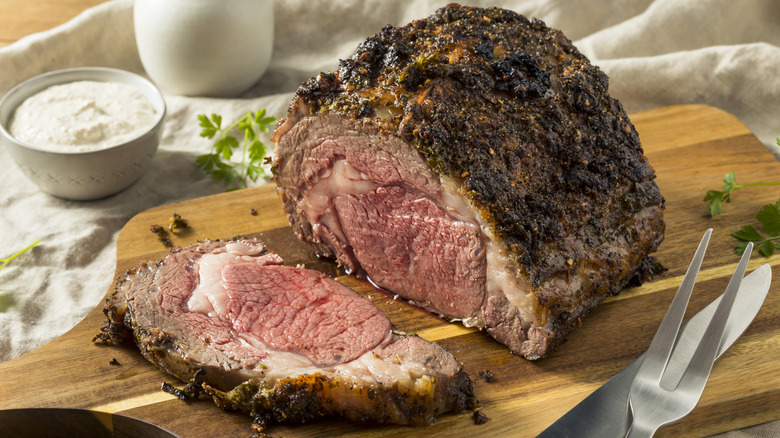
A rich, marbled prime rib is an indulgent pick for a special occasion dinner, and this lavish centerpiece delivers plenty of flavor on its own. The meat is often seasoned simply before slow-roasting and comes out tender, juicy, and perfectly pink in the middle. While a simple sprinkle of salt, pepper, and herbs is enough to make the beef shine, if you really want to take a prime rib roast to the next level, it pays to get a little more creative with your seasonings.
The succulent roasted beef serves as a versatile base for sprucing up with bold ingredients. Whether you're adding a rub or glaze before the prime rib hits the oven, or whipping up a delicious sauce to serve alongside those meaty slices, there are countless ways to transform this luxurious cut into something unique, surprising, and loaded with flavor.
You can amplify the meat's savory richness with umami-forward additions, or balance the saltiness with a layer of something sweet or tangy. Spicy and aromatic ingredients work beautifully here too, making each bite more dynamic and complex. So, next time you're preparing prime rib, consider switching up your usual approach and giving the meat a mouth-watering makeover.
1. Maple syrup
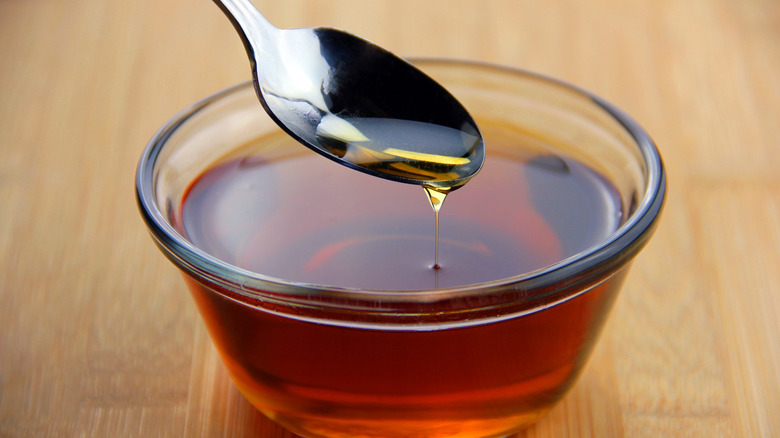
Maple syrup might feel more at home on pancakes, but it makes an unexpectedly delicious addition to roast beef. The syrup's deep, caramel-like sweetness enhances the natural richness of the meat, working to balance those robust, savory notes to build a more layered flavor profile. When brushed over as a glaze before cooking, the sticky coating turns into a gorgeous golden brown crust in the oven, contrasting the melt-in-the-mouth meat beautifully.
You can either brush the maple syrup over it as is, or mix it with some extras beforehand for a more dynamic flavor boost. The syrup pairs brilliantly with herbs like thyme and rosemary, and serves as a fitting contrast to tangy mustard. Stir the syrup with minced garlic for a hit of aromatic goodness, or spice the mixture up with a dash of paprika. Another option is to add a dry rub to the beef before brushing on the glaze.
To really boost that sweet, sticky crust formation, consider adding a second brushing of the syrup mixture about halfway through the cooking process. Let the meat rest, cut it into juicy slices, and feel free to serve it with some complementary sauce on the side. A glossy bordelaise, fiery horseradish sauce, or even a herby chimichurri would all go down a treat.
2. Miso paste
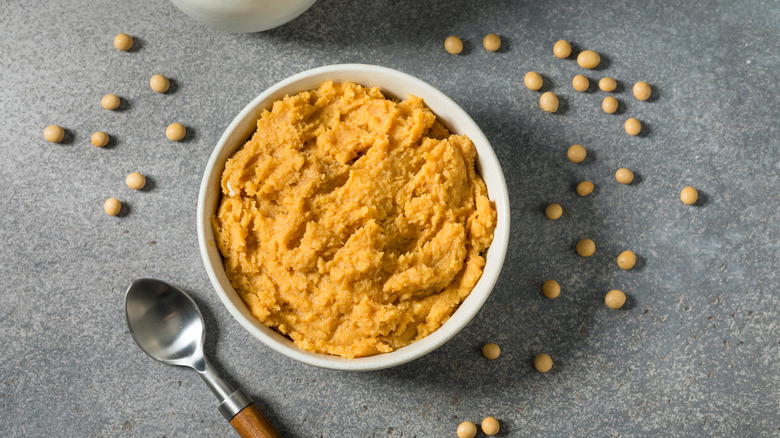
Miso paste is a staple of Japanese cooking, and it also tastes fantastic rubbed onto a juicy prime rib roast. This fermented soybean mixture is adept at building savory depth. The umami-rich paste is packed with tangy, earthy notes, and gives the beef a robust injection of flavor without overwhelming the natural taste of the meat.
You can use any type of miso that takes your fancy. White miso offers a sweeter, milder taste, while the yellow variety boasts a more intense flavor thanks to its longer fermentation times. To season your beef, just rub the paste all over the surface of the meat before cooking. Mixing the miso with a splash of oil can help to make it more spreadable, and you can totally throw in extras such as garlic, mustard, soy sauce, or sriracha. The best approach is to remove the prime rib from the fridge, add the miso coating, then let the meat sit for around an hour so it can marinate and come to room temperature.
Miso makes a fitting addition to a gravy, too. Try simmering the paste with some red wine and beef broth to make a simple jus, or adding a spoonful of miso to a classic buttery, herby beef gravy for an irresistible hit of umami.
3. Espresso powder
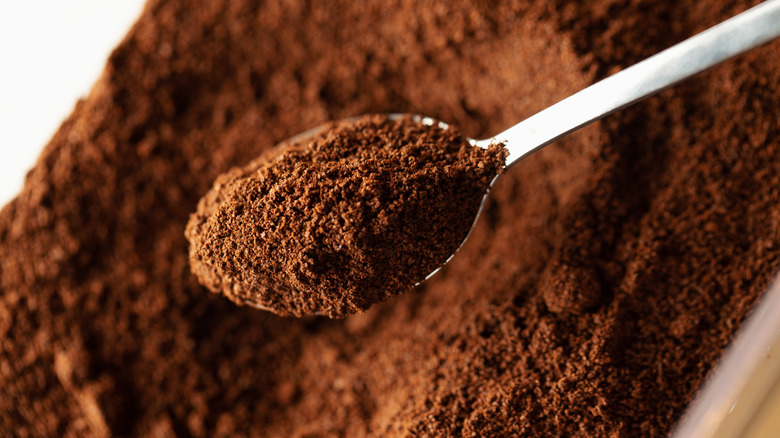
You might've tried spiking a homemade chocolate cake with espresso powder, but how about using this potent pantry ingredient to upgrade your beef? Rub the finely ground coffee over prime rib to deepen the savory notes of the meat, giving everything a darker, more complex edge.
A little goes a long way with this seasoning, and the goal is not to make the meat taste noticeably coffee-like, but simply to build richness and depth. Espresso powder works best in unison with other dried ingredients as part of a flavorful rub. Try combining the coffee with chili powder or cayenne pepper, brown sugar, garlic powder, or herbs like oregano and thyme to balance that earthy bitterness with a touch of warmth, sweetness, and aromatic flavor. This bold medley can then be applied liberally to the prime rib after you've patted the meat dry.
Once roasted to perfection, the meat will develop a glorious dark brown crust and moreish caramelized flavor that truly sets it apart. The coffee-enhanced prime rib tastes incredible alongside all of the classic sides, such as mashed potatoes, creamed spinach, and honey-glazed carrots.
4. Chocolate
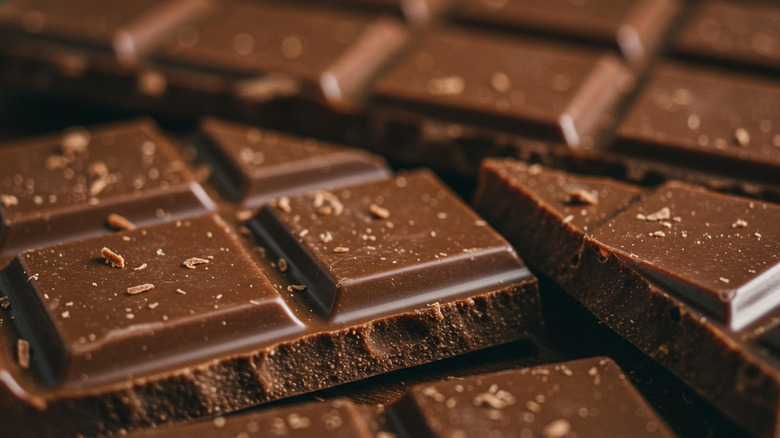
Chocolate with beef sounds like a wacky concept, but trust us, this combo is a game-changer. In fact, chefs have long been leaning on this unlikely duo, which yields a moreish mixture of bittersweet and salty flavors. Don't worry, chocolate won't make prime rib taste like a dessert. Instead, it adds a mellow boost of earthy richness that amplifies the natural meaty taste. Much like espresso powder, chocolate has a knack for subtly enhancing flavor without being overwhelming.
For a quick and convenient way to add chocolatey depth, reach for cocoa powder. This can be incorporated into a dry rub, perhaps alongside some warming spices like paprika, cumin, or chipotle powder. Alternatively, you can craft a homemade, chocolate-infused sauce to pair with the beef post-cooking. Try melting some finely chopped dark chocolate into a silky beef gravy. It works great with a classic aromatic base of shallot or onion, and it'll complement acidic ingredients like port, balsamic vinegar, or red wine especially well, providing a rich contrast to those bright, tart notes.
5. Anchovies
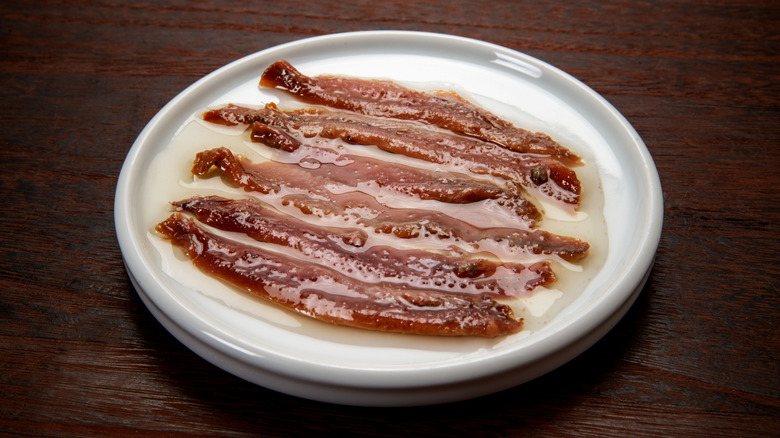
Anchovies are renowned for their flavor-boosting abilities and are a key ingredient in a variety of dishes, from creamy Caesar salad to a briny spaghetti alla puttanesca. So, it makes perfect sense that prime rib can also benefit from the anchovy treatment. These tiny fish are loaded with umami, delivering a salty, deeply savory finish that'll make the beef shine without making it taste noticeably fishy.
Canned anchovy fillets are the easiest option here, and after a quick drain, they can be incorporated into a punchy paste, ready for smearing over the prime rib. Mash or blitz the fish in a food processor with a splash of olive oil and any additional ingredients of your choice, such as fresh rosemary, garlic, or a squeeze of lemon juice. Spread the anchovy mixture liberally over the meat's exterior, which will form a delightful crust during cooking. For the best results, opt for the reverse sear technique, which gets things perfectly crisp and caramelized.
Anchovies are also an ideal candidate for flavoring a butter sauce, which is perfect for drizzling atop slices of the meat upon serving. Just add the mashed fish to a saucepan with butter and some complementary herbs and aromatics (parsley, chives, and lemon zest are excellent choices), then heat everything until melty and fragrant.
6. Balsamic vinegar
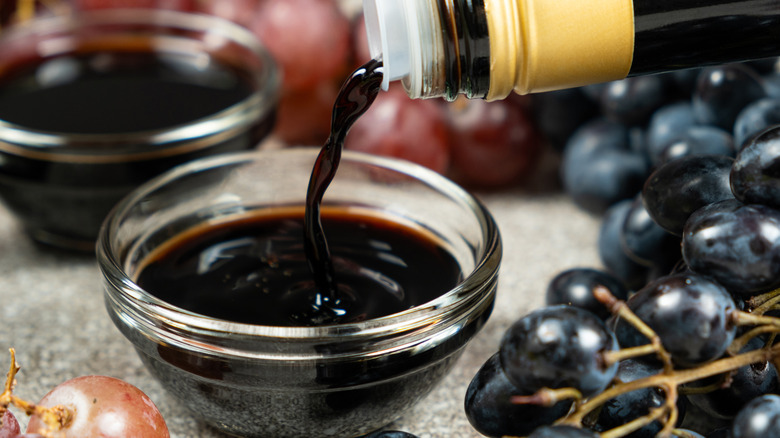
Give prime rib a bright, tangy lift with the help of balsamic vinegar. The ingredient works wonders on the meat, cutting through the fatty richness with its distinct blend of sweetness and acidity. It keeps things from feeling too heavy, resulting in a more balanced bite that's equal parts elegant and satisfying.
One of the best ways to use balsamic vinegar is in a glossy glaze, which you can brush over the meat before roasting to help build a nice caramelized char, or drizzle it as you plate up. To make a simple honey-balsamic glaze, heat the two ingredients together in a saucepan until the mixture reduces by about half. Another approach is to add a splash of balsamic vinegar to a more traditional beef gravy, perhaps alongside sliced mushrooms or red wine, to give the beef a bright upgrade after cooking.
A balsamic rub is another effective way to introduce tangy flavor. Choose a selection of dried seasonings, such as fennel seeds, mustard seeds, Italian herbs, or thyme, and mix everything with a splash of the vinegar and some minced garlic to create a paste to spread over the uncooked prime rib.
7. Blue cheese
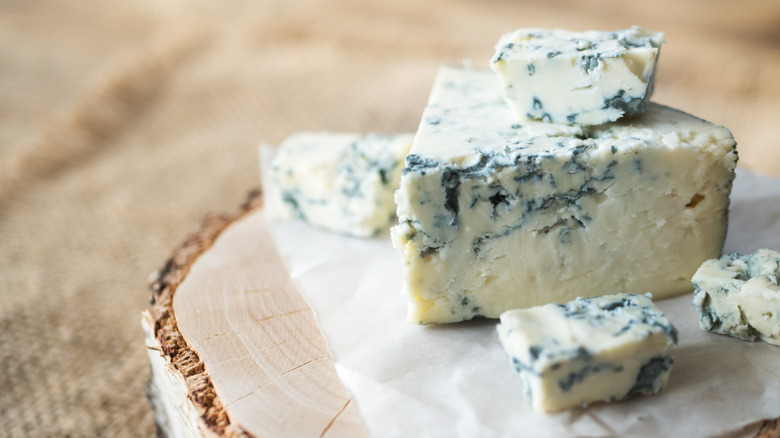
The sharp, tangy taste and creamy texture of blue cheese make it a fantastic addition to a well-cooked prime rib. This bold addition amps up the indulgence no end, bringing heaps of sharp, salty flavor to the meat, and there are a few different ways to bring the beef and cheese together.
Blue cheese works exceptionally well in the form of a crust or crumble. Craft a hearty topping mixture by combining breadcrumbs, softened butter, and any seasonings of your choice with the crumbled cheese. Chopped chives, parsley, and red pepper flakes make excellent additions here. The crumble can then be pressed on top of the prime rib partway through cooking. As it warms, the cheese softens and melds with the other ingredients, building a golden, crispy crust that takes every bite to the next level of deliciousness.
If you'd rather bring that creamy element in at the serving stage, a blue cheese sauce is a great option. This can be made by melting crumbled Gorgonzola, Roquefort, or Stilton in warm heavy cream, garlic, and herbs. A splash of beef broth or Worcestershire sauce will give the sauce a deeper savory flavor, while a dollop of horseradish livens things up nicely. The sauce's ultra-silky consistency feels right at home with the prime rib's melt-in-the-mouth texture.
8. Truffle oil
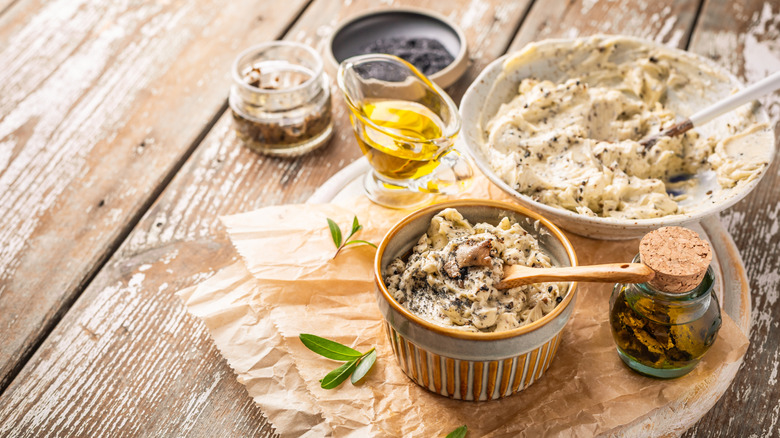
Truffle butter is an ingredient that screams luxury, and you need only a small amount to give prime rib a whole new dimension of flavor. This elegant blend is typically made by mixing softened butter with truffle oil, truffle paste, or finely diced black truffle. The mixture is undeniably rich, with a distinctive earthy aroma that builds plenty of depth when paired with beef, making your roast feel infinitely more refined.
The infused butter can be used as it is, or further enhanced with extra mix-ins like fresh, minced garlic or chopped parsley. Slather the truffle butter liberally over the beef before cooking, allowing it to melt slowly into the surface as the meat roasts. If you're serving prime rib with a pan sauce or jus, try elevating the mixture by stirring in a spoonful of truffle butter towards the end of cooking. The butter will also make the sauce thicker and glossier , as well as adding that signature earthiness.
You can absolutely continue the truffle theme into your side dishes, too. Mix some of the flavorful butter into creamy mashed potatoes, or melt it over steamed greens like broccoli, asparagus, or green beans to tie everything together with the same robust, aromatic notes.
9. Garlic confit
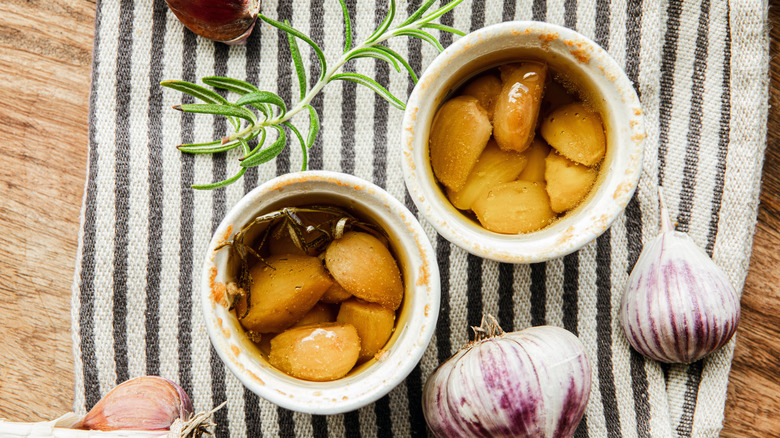
Garlic is a classic partner for beef, but garlic confit takes this pairing to a whole new level. Raw garlic offers a more potent aromatic flavor, but slow-roasting the cloves in oil gives them a wonderfully sweet, mellow taste and tender, buttery texture that fits in seamlessly with the succulent, marbled prime rib meat.
As fancy as it sounds, garlic confit is actually incredibly easy to make, and you can even prepare it in a slow cooker. Just add peeled garlic cloves to the pot with some salt and pepper, pour in the olive oil, and leave everything to simmer on low until the garlic is tender and fragrant — around three hours.
The simplest way to elevate the beef with garlic confit is to spoon the whole or lightly mashed cloves atop the sliced meat upon serving. Drizzle a little of the infused oil from the confit over too, and you'll have a deeply aromatic topping for the meat that's not harsh or overpowering. If your roast is already coated with fragrant herbs or a tangy glaze, the garlic makes for a harmonious pairing. Or, pair the sweet, golden cloves with a spoonful of creamy horseradish or vibrant chimichurri for a punchier finish. Either way, the confit will help you build a more layered final dish that feels fit for a celebratory meal.
10. Gochujang
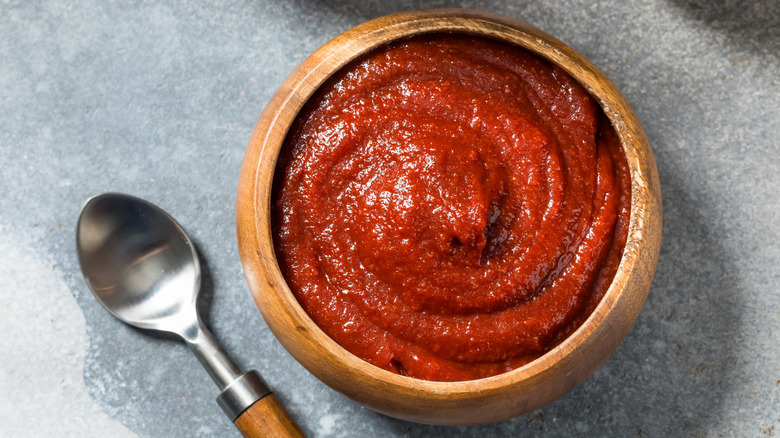
If bold, fiery flavors are more your style, you can certainly count on gochujang paste to give prime rib a spicy, umami-packed kick. This Korean chili paste balances heat with subtle sweetness and a fermented tang, making it a lively alternative to traditional beef seasonings. It brings a unique complexity slathered over prime rib that gives the meat an unexpected yet totally irresistible twist.
With its thick, paste-like texture, gochujang fits nicely into a rub. It'll taste fantastic with other Asian-inspired ingredients like fresh ginger, sesame oil, and soy sauce. To balance the warmth with a hint of sweetness, try adding a drizzle of honey or a sprinkle of brown sugar. Or, feel free to build even more heat by sprinkling in some gochugaru (Korean chili flakes). For maximum flavor, reserve some of the rub mixture and add a second layer partway through roasting, to ensure the spicy paste fully penetrates the meat, and bakes up into a golden, caramelized coating.
A gochujang sauce is just as delicious an option, offering a runnier, stickier texture that'll cling to the juicy sliced meat as you plate. Soy sauce makes an ideal umami-boosting base, and a splash of rice vinegar will keep things bright. Sweet and tangy orange juice also serves as a fitting addition, working to mellow out the heat of the gochujang and contrast the rich, savory profile of the beef.