

The Easy 30-Second Trick That Prevents Cauliflower From Browning
We may receive a commission on purchases made from links.
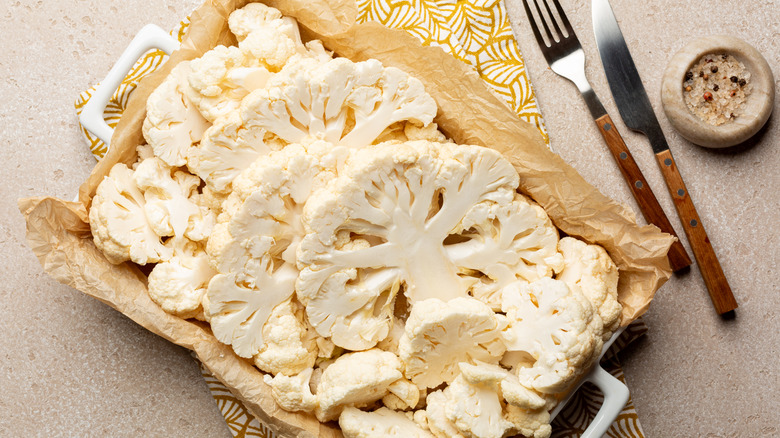
Cauliflower's heyday has arguably passed, but that doesn't mean that folks still don't appreciate the versatility of this cruciferous vegetable. Not only does it still hold strong in the Trader Joe's freezers in the form of cauliflower gnocchi, but you can also find a whole host of cauliflower recipes readily available on the internet, like cauliflower Parmesan. Whatever way you slice it (or rice it), you can benefit from this one simple tip.
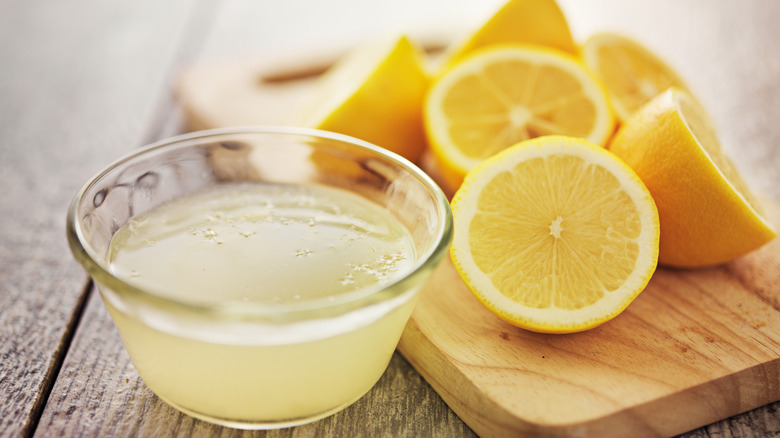
If you want to prevent your florets from browning, try treating them with a bit of lemon juice. This hack comes in handy if you are preparing a whole head for a week's worth of recipes and want to stave off that unsightly discoloration. Cauliflower is white due to the presence of certain pigments. When exposed to oxygen, the color changes. The high acidity of the lemon juice slows oxidation, which prevents the color change. It's the same premise behind why apples brown, and why many people add lemon juice or an acidic ingredient to cut fruit to prevent it from browning.
While discolored cauliflower is technically still safe to eat (so long as it doesn't have mold growing on it), it can ruin the aesthetics of your recipe. Adding lemon juice (or vinegar, in a pinch) will prevent the color change from occurring — and it couldn't be easier to do. Simply add a drizzle of juice to the outside of the head, then steam the head with water until it's tender. You can also rub the outside of the cauliflower with a sliced lemon half and proceed with your recipe as normal.
Other ways to prevent your cauliflower from browning
You may be surprised at some of the things that cause cauliflower to brown faster. For one, if you boil your cauliflower in alkaline or neutral pH water, you could be accelerating the browning (which is where the lemon juice or vinegar comes in). If the cauliflower is treated with an alkaline substance (like hard water), the pigments turn yellow. Acidic-leaning water (like one treated with lemon juice), on the other hand, will make it appear white. Knowing the hardness of your water comes in handy here, and you can even get test strips for it (like this option from Varify) online. Some knives and cooking materials, like copper and aluminum, are reactive, meaning that they can cause discoloration when they interact with oxygen or acidity. Cast iron and stainless steel are generally recommended as good cooking materials for cauliflower.
If you're making a Chicago-style giardiniera, you may also want to reconsider the liquid you pickle your cauliflower (and other veggies) with, as darker vinegars can make these spots look more pronounced. And, if you don't really care too much about your cauliflower's appearance, you can also scrape these spots off with a knife and proceed with your recipe as normal.