

The Genius And Safe Way To Eat Leftover Sushi (Even Haters Will Love It)
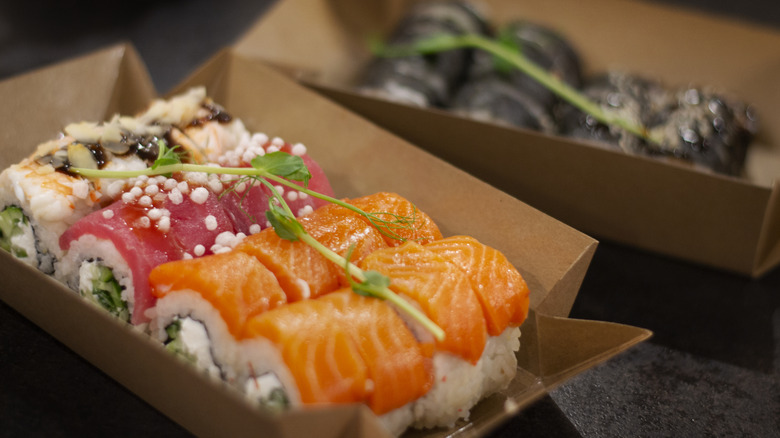
While we all love a good leftover, many types of foods are indisputably better when they're eaten fresh. Sometimes, as with sushi, freshness isn't just a preference, it's a necessity. But roll on the next day, and even if you follow best practices to avoid any dangers of eating leftover sushi, last night's sushi simply isn't as impressive as it once was. Rice hardens and dries; that fish isn't quite as fresh; avocado takes on a different hue. Fortunately, you can revamp leftover sushi by simply cooking it.
Outside of battered and fried rolls or aburi nagiri, cooked sushi seems counterintuitive. But there are loads of great ways to do it which buoy the already present flavors while adding something new. You can quickly pan fry leftover sushi after applying an eggwash, for instance. This adds moisture back into the rice while covering it in an unctuous coating of egg. You should only dip your sushi in the egg for long enough to soak it, and keep in mind that this works better for certain types of rolled sushi. Futomaki and uramaki are primo, Gunko-maki or temaki may lose some fillings between the dipping and the frying, so take exra care. You can also deep-fry leftover sushi, coated in batter or breadcrumbs. Cooked sushi may even appeal to haters who refuse to eat raw fish.
Alternatively, sushi soup is an option. In this case, leftover sushi would be boiled with water or stock until it takes on a fish stew-like consistency. This is a good choice for sushi that was made without mayo or cream cheese, which may well curdle in boiling water. However, while cooking sushi is a great choice in many cases, you can't cook all leftover sushi, and should be aware when there's little hope for yours.
Not all leftover sushi is right for cooking
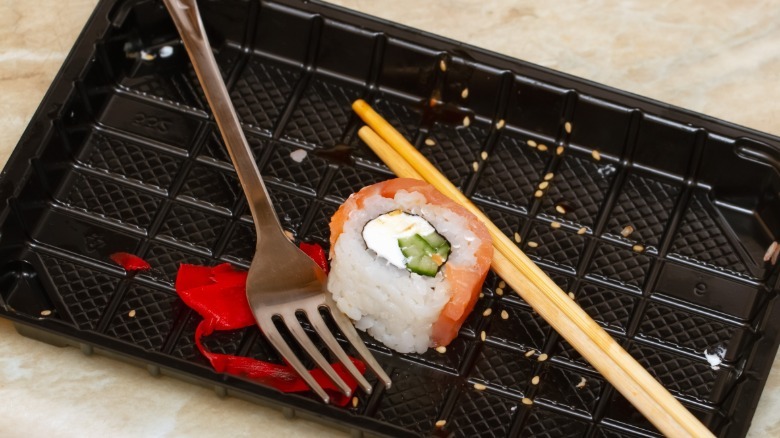
First and foremost, you should only ever cook leftover sushi that was refrigerated quickly. If it took more than two hours for you to cool your leftovers, then the chance that food borne bacteria multiplied has increased exponentially. Similarly, sushi that's older than 24 hours needs to be treated with a sense of skepticism, rather than given complete acceptance of being the stuff your next meal is made of. Because of the role that time plays, it's far safer to cook leftover sushi that was from a restaurant or at least made to order, than it is to cook grocery store sushi that might have already spent significant time in a deli case.
Per the USDA, raw fish can still be good up to two days in the fridge, but only if it's not exhibiting signs of spoilage. There are many sensory signs to identify sushi that's past-its-prime. It may smell funky or ammonic. The fish may have extreme discoloration, or it may have developed a film that looks slimy. If any of these are aspects are prevalent, then it's a safer bet to leave your leftovers behind.