

The Part Of Prime Rib That Needs Extra Attention When Seasoning
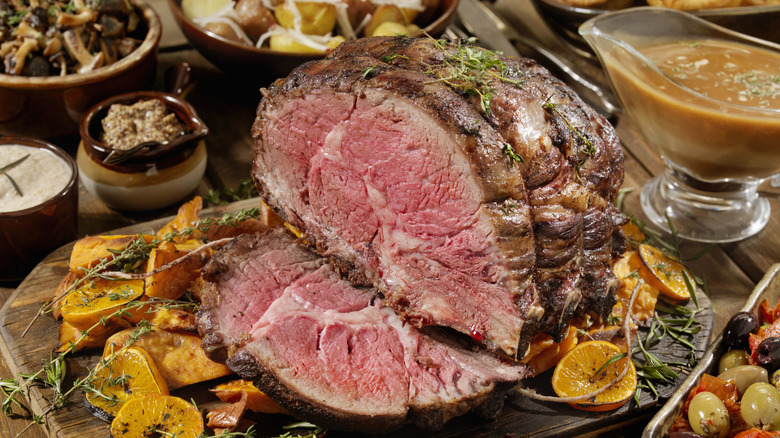
You don't need much to make a good prime rib. A high-quality piece of meat is necessary, of course, and you won't get too far without an oven. But apart from that, all that's really called for is some oil and a few key spices. However, since there's very little to hide behind, you need to make sure that those seasonings really shine, and there's one part of the roast where you need to pay attention to this in particular: the fat cap.
Recipe developer Taylor Murray previously shared all of her top slow-roasted rib roast tips with us, and she emphasized the importance of seasoning the meat well. The black pepper should always be freshly ground, kosher salt is a must, and sumac adds a lovely hint of citrus. The best way to apply the spices is through a dry rub so that the salt can draw out moisture and create a flavorful crust. But, most importantly, Murray says you need to make sure that the fat cap is evenly coated.
The fat cap is essential for the absolute best prime rib for many reasons. First off, it's full of flavor, but it also protects the meat against high temperatures, allowing it to stay tender while cooking. It also creates that golden crust everyone desires. Seasoning it is the key to getting flavor into the meat, as the fat will carry it through into the muscle fibers as it renders in the oven.
How to properly season a prime rib
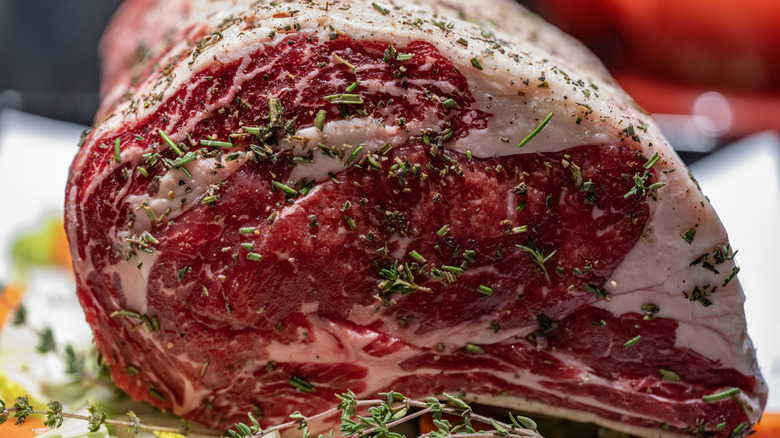
You need to score the fat cap before seasoning to ensure all the flavors get in there properly. All you have to do is make cuts crosswise into the fat using a sharp knife, being careful to stop before you get into the meat below. If you're trimming the fat, make sure to leave the layer at least ¼ inch thick.
Applying the seasonings to the fat cap the night before cooking will create the deepest flavor and if you leave it uncovered in the refrigerator after preparing, it will take on a dry-aged affect, leading to a dehydrated surface that crisps up more during cooking. Make sure you season the entire roast, not just the fat cap, though Murray says you don't need to worry about the bottom of a bone-in roast as much, as it will be removed for carving.
Some other seasonings that work well with prime rib include garlic, rosemary, lemon zest, paprika, and onion powder. You can make an herb paste with olive oil too or press breadcrumbs and Parmesan into the crust toward the end of cooking. As long as something is coating that fat cap, you're sure to get a good result, especially if you use chef-approved method for perfectly tender and flavorful prime rib.