

The Sneaky Way Dining Kiosks And Service Tablets Jack Up Food Costs
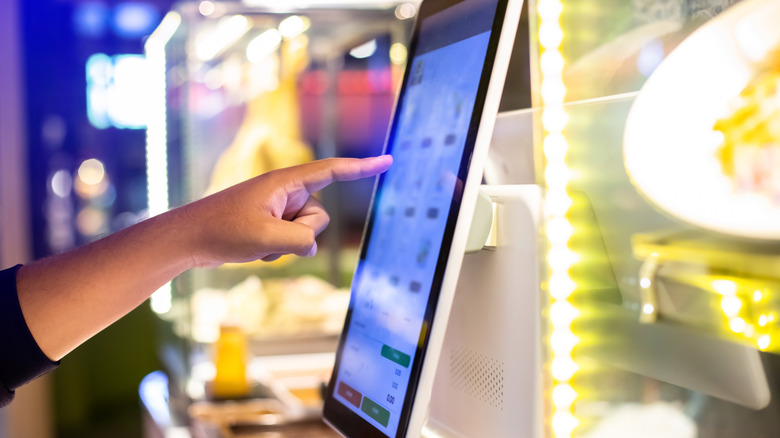
Kiosks and tablets might make food service seem more convenient, but the technology could be causing you to spend more than you intended. Among this frictionless dealing lies tactics that intentionally encourage added sales. Reports from restaurants have indicated that consumers are likely to spend as much as 20% more on an order placed through one of these devices. Even Shake Shack has pointed to kiosks as a key ingredient in booming sales — and it's certainly not the only one.
Of all the tricks restaurants use to make you spend more, upselling is a lot easier when pop-ups that suggest add-ons fill a screen. Instead of relying on an employee to suggest a bigger size or extra items, prompts for upgrades and additions are simple to program and happen automatically. Attractive visuals and fancy menu descriptions can result in a meal that contains extra drinks, sides, or bigger sizes than what was initially planned.
Without the perceived social pressure of customers standing in line waiting to place their own order or having to deal with potential judgment from an employee. Customers ordering at a kiosk or while scrolling through a mobile app also have a certain anonymity that is shown to encourage more indulgent shopping. In all of these ways, kiosk ordering makes it easier to say yes to upgrades and extras.
Kiosk-induced buying behaviors
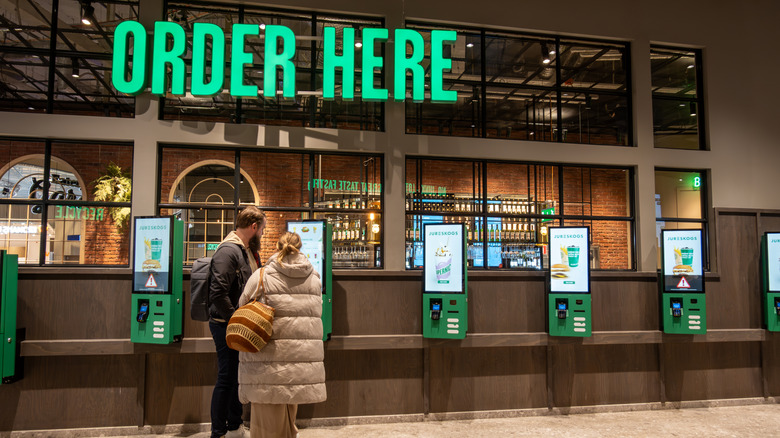
The placement of items on apps and digital kiosks also impacts the way in which a customer approaches an order. In what is known as the anchoring effect — or the cognitive bias of relying on the first piece of information presented to you — restaurants trick you with the most expensive menu item by listing it first. In so, they set a benchmark so that the next viewed items seem less pricey.
Additionally, a 2024 study published in the Journal of Consumer Psychology found that the ability to physically touch product visuals builds attachment, ultimately leading to a higher willingness to pay. Understanding some of these tactics and potential buying behaviors before stepping up to a digital kiosk means that decisions — and boundaries — can be set in advance.
As tempting as any pop-up deal might seem, take stock to see if that item was a part of your planned meal before impulsively addings thing to your order and checking out. Now that ordering has become easier, sometimes friction has to be self-imposed — and going in with an ordering plan is an easy defense.