

The US Hospital With Food Actually Worth Eating
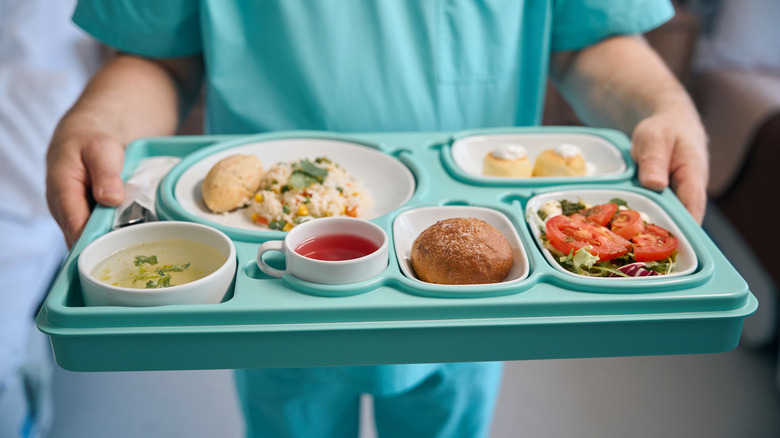
There are two kinds of food people consistently make fun of: airplane food and hospital food. But while chefs have made strides to elevate airline menus, hospitals often fall behind. Hospitals have to serve meals to hundreds or even thousands of people, all with different medical concerns and palates. This is one reason seasoning is often rare in hospital food. However, not all hospitals are committed to boring food. Aside from the Colorado hospital kitchen, Manna, UC Davis Health's executive chef, Santana Diaz, has undertaken farm-to-fork practices at UC Davis Medical Center.
Patients at UC Davis Medical Center are treated to dining services that emphasize locally grown, whole foods and plant-based ingredients. "The goal was to provide a cleaner food program for better-quality food for our patients, visitors, and staff," Diaz said. The results benefit everyone, too, not just the patients. "By sourcing food from our local region, our food program was able to support the community not only through the food we served to patients, but also economic benefits to the region based on our transparent food procurement."
Diaz and his culinary team prepare 6,500 meals per day across three different locations on the University of California Davis campus — one of the state's leading universities in agriculture. The program sources produce and protein from all over the state, typically within 250 miles of the hospital. For that reason, availability changes throughout the year.
Hospital doesn't mean horrible
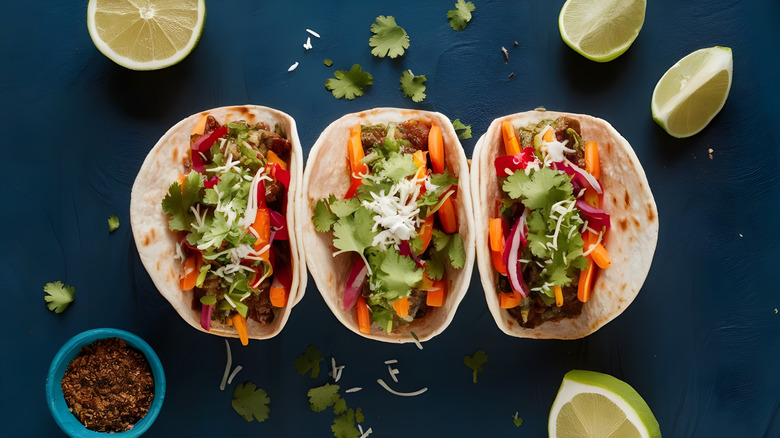
UC Davis makes use of Produce Express, a family-owned local produce distribution service, as well as the Beef 2 Institution initiative, which works with California cattle ranchers. The result is the ability not only to source but also to trace and verify all foods to ensure they meet organic or fair trade standards. The real question, however, is what this means for patients in terms of the food they get to eat. For instance, Santana Diaz told Tasting Table about the hospital's version of Taco Tuesday and the ingredients that make it unique.
"Our non-GMO organic tortillas are sourced from Mi Rancho in San Leandro, California. We feature California beef seasoned with a house-created 'Fiesta Spice' which we've partnered with Whole Spice in Petaluma for production," Diaz said. "We offer a tofu sofrito for the vegan option and use Hodo Tofu out of Oakland, California ... The sides to build the tacos or bowls include rice and black beans from True Origin Foods." Diaz also shared that they support the local Zocalo family restaurants by featuring their salsa roja, along with California cheese from Rumiano, and sour cream from Clover Sonoma.
Diaz and his team have to balance delicious-sounding recipes with the limiting dietary needs of the patients, including renal and low-sodium diets, every day of the week — not just on Taco Tuesday. "We work with our RD's and submit recipes for their review and nutritional values while our chef team keeps palatability at the forefront for our patients," he told us. "It is an ongoing process that takes place with almost every recipe we create."
Farm-to-fork frustrations
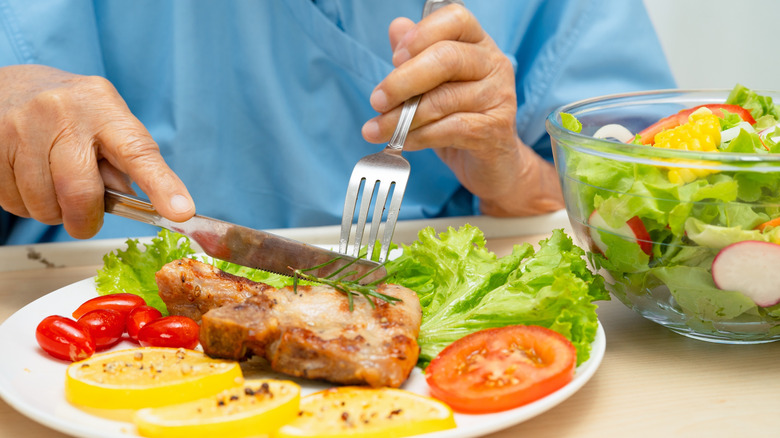
As you might expect, there's a reason not every hospital is able to do what UC Davis is doing. There are some challenges that Santana Diaz and his team must confront to make this work. One of the biggest is the cost of the food they source. "Although this is not the only limiting factor, it cannot be ignored. Our program is currently developing a formula to quantify the regional economic impacts and measure the true community return on investment to justify the costs," Diaz said.
"Another important opportunity to address is the skill of the culinary team," said Diaz. "Ongoing training with new seasonal recipes takes place daily within our catering services and quarterly within patient care and retail food service with menu changes." As you can imagine, even many professional chefs are not fully adept at working with seasonal and local ingredients year-round. The advantages of seasonal menu options are amazing, but they clearly require some work.
Diaz also told Tasting Table that the farm-to-fork program is something anyone can enjoy — not just patients. "Food from our main culinary operation is available within not only patient care and our existing retail locations but also our catering services that are offered throughout the 144+ acre teaching hospital campus." That said, there are some differences between what patients receive and what just a casual diner might eat.
"Retail and catering operations do not experience some of the limitations that patient care diets have, but are vetted through our dietitian team for nutritional value information, as well as promoting healthier options without limiting too many comfort food options," Diaz explained. If you find yourself near or on the Sacramento, California campus, maybe give it a try.