

Is It Safe To Eat Honey If You Have A Bee Allergy? The Answer Is Sticky
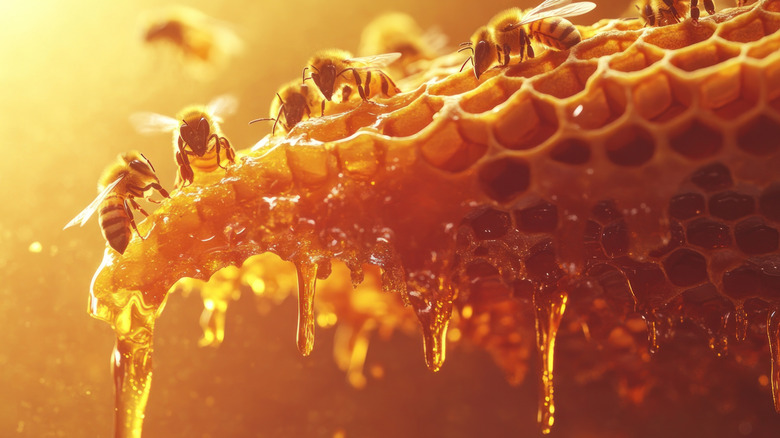
Bee allergies are no joke, and those who have them are justifiably concerned about contact with anything related to the insects. Understanding the mechanism of what triggers an allergic reaction is complicated, and when it comes to something like honey it can be difficult to determine just how safe it is. So can you eat honey if you have a bee allergy? It depends on the exact nature of the allergy we're talking about and whether you're just having honey or other bee products.
If you're allergic to bee stings, there's good news for your sweet tooth. The venom that bees produce has nothing to do with the honey they produce. Compounds and proteins in that venom, when injected into your body by the bee's stinger, are what lead to a potentially dangerous anaphylactic reaction. But those compounds should never come in contact with honey because it comes from the other end of the bee. So you can safely consume honey if you are allergic to bee stings. That said, you can still have an allergy to honey itself.
Though rare, honey allergies do exist and, according to a 2023 article from the Annals of Allergy, Asthma, and Immunology, can lead to symptoms like hives, vomiting, cramps, and diarrhea. A bigger potential issue occurs if you have a pollen allergy. Even though raw honey is filtered before you consume it, some pollen will always remain. On the bright side, it's usually a small amount so you may only cause mild itchiness.
The sweet and sour of honey
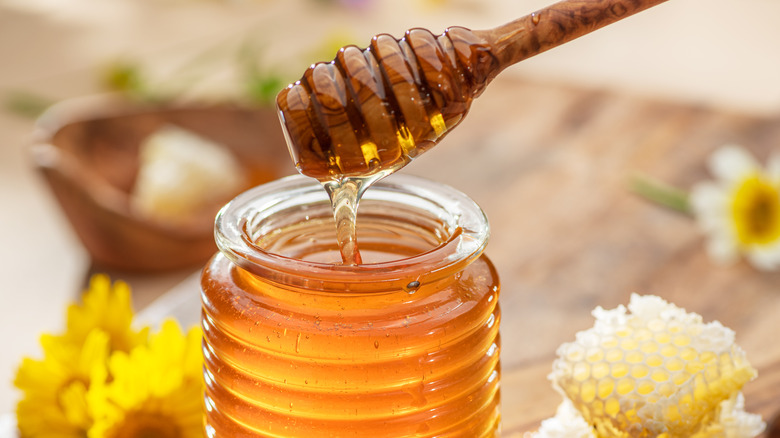
There is a myth that honey can actually help treat allergies to either bees or pollen, but this is not true at all. It doesn't treat or prevent any allergies, it's just a tasty sweetener you can use in your cooking or for lots of other things.
Other bee products, like bee propolis or royal jelly, also pose allergy risks. Propolis is the resin bees make to help construct their hives, and it's often used in cosmetics and even products like toothpaste. It too can contain pollen, but also oils and compounds from trees that the bees strip to make the propolis. Though it's claimed to have health benefits, there is little research to support such claims and much more to indicate it's a noteworthy allergen.
Royal jelly, another bee product produced to feed the queen, is often touted for health benefits. It contains some of the same proteins as bee venom and can cause severe allergic reactions in susceptible people.
Your best bet, if you have any allergies related to bees, is to stick with some of the many kinds of pure honey from a trustworthy source. There should be very little cause for concern. If you find that you have a mild itchy reaction and you know you have problems with pollen, you may want to avoid honey products going forward, or take antihistamines and allergy treatments as a precaution.