

7 Ways To Make Boxed Cake Mix Taste Like It Came From A Bakery, Without Adding Any Ingredients
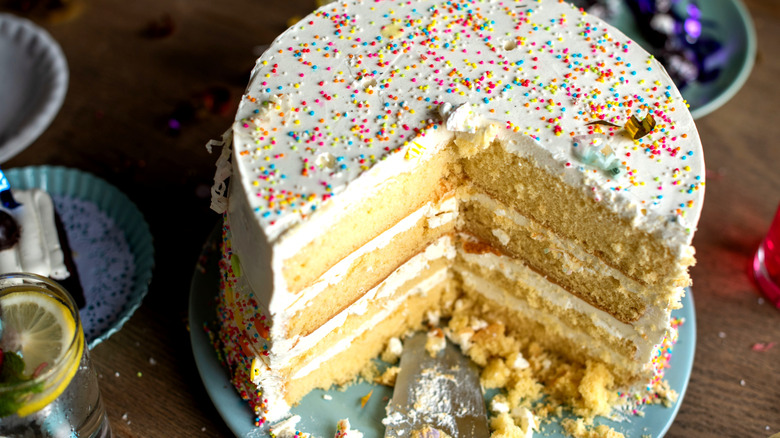
Boxed cake mixes may not impress everyone, but they absolutely deserve a spot in the pantry. When you're short on time or baking on a budget — or heck, maybe just craving their nostalgic flavor — these mixes are hard to beat and incredibly convenient. They make whipping up cakes quick, easy, and simple to make without much brainwork. But even the absolute best packaged cake mixes can fall short when compared to bakery-style cakes, which are known for their finer crumb, softer texture, and more tender bite.
Here's the good news: You don't need to overhaul the back-of-the-box recipe or add a bunch of extra ingredients to get bakery-level results. As a trained pastry chef and former bakery owner, I'm here to tell you that there are some straightforward things you can do to improve the taste of a cake-mix-cake — all without adding any ingredients. Simple steps — like baking at a lower temperature, using the right kind of pan, or making one easy liquid substitution — can make a surprisingly big difference. Here are a handful of things to try next time you're in the kitchen with a boxed cake mix in hand.
1. Sift the dry mix
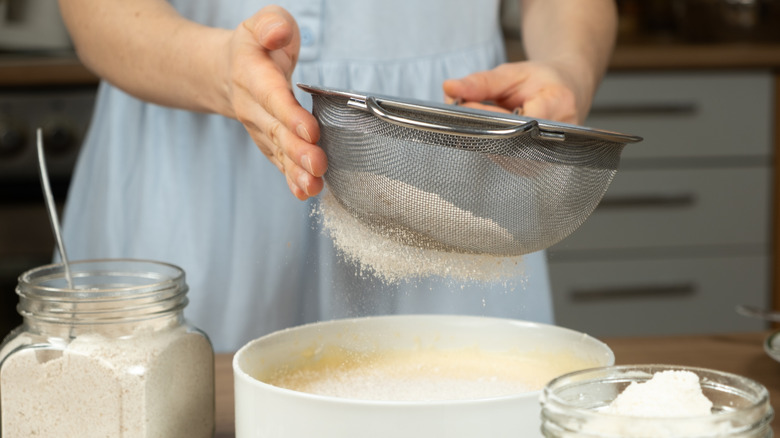
When you open a package of dry cake mix, it may look lump-free and ready to use. But even the most finely milled mixes can contain small clumps that form during storage, transport, or just sitting on the shelf. Sifting the dry mix through a fine-mesh strainer before using it will break up clumps, distribute the leavening agents, and aerate the mixture, ensuring a smooth, light cake batter.
Sifting your dry ingredients is a must-do step, even when baking from scratch. I always sift my dry ingredients — be it flour, cocoa powder, leavening agents, spices, or powdered sugar. Doing so results in a cake with an unbeatable texture — it's the same principle behind sifting flour twice when baking angel food cake.
The result? A lighter, fluffier cake that rises evenly, has a softer texture, and a more uniform crumb. In short, a cake that tastes as if it came from a bakery rather than a box.
2. Use room temperature eggs
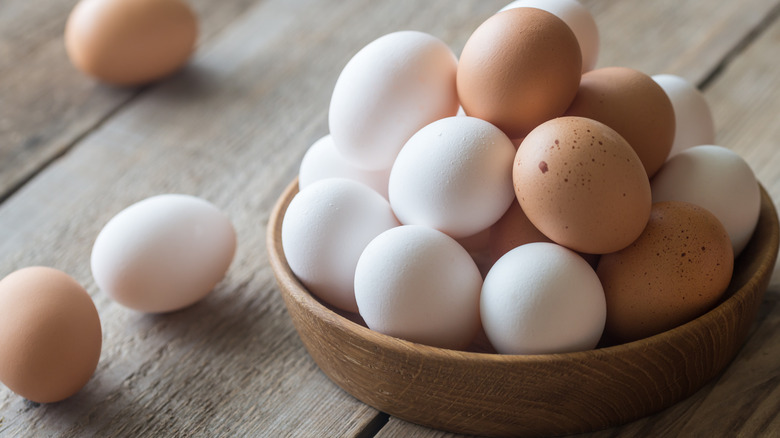
We've all been there: A sweet craving strikes, a last-minute request pops up, or you simply forgot to take eggs out of the fridge earlier in the day. Whatever the reason, you need a cake fast, but your eggs are a chilly 35 degrees Fahrenheit.
The issue? Cold eggs don't incorporate well into cake batter, so your cake may not turn out as well as it should. Room-temperature eggs emulsify more smoothly with the other ingredients, creating a batter that's better in trapping air during mixing, resulting in a lighter crumb once baked.
The best (and fastest) way to get your eggs to room temperature is easy. Fill a bowl with warm tap water, then gently place the eggs in the water. Make sure the eggs are fully submerged so they warm up quickly and evenly. When the eggs feel warm to the touch, they're ready to use; in my experience, it takes about 5 to 10 minutes.
Make sure your water bath isn't too hot, or the eggs will begin to cook inside their shells, rendering them useless for baking. Use your fingertips to test the water temperature; if it feels like bath water, you're good to go.
3. Substitute water with milk
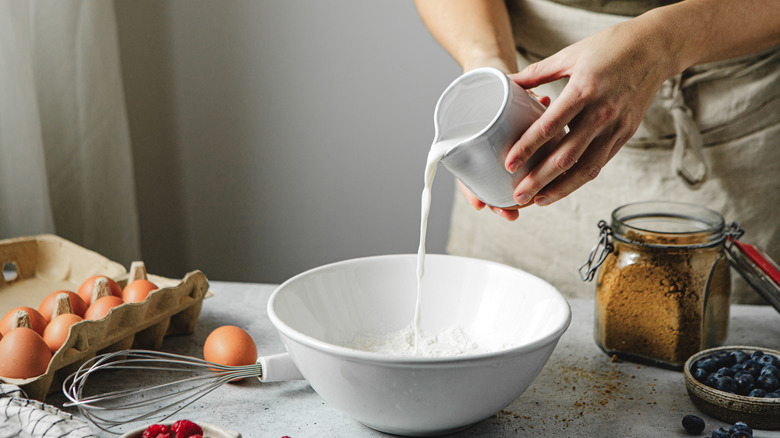
Most boxed cake mix recipes call for water as the liquid, but there are other flavorful substitutes that can improve the final taste. My go-to is milk — and swapping it in is one of the easiest ways to take boxed cake mix to a new level.
Whole milk works best because of its fat content. That fat adds richness, flavor, and moisture to the final cake. Milk also contains proteins and natural sugars that promote browning during baking, which contributes to a deeper taste and appetizing golden color. The best part? Subbing water with milk couldn't be easier — just swap in an equal amount.
Out of milk? No problem; there are other flavorful substitutes for water when using a boxed cake mix. Consider 2% milk, plant-based milks, or buttermilk. Even leftover coffee and fruit juices can work well in certain cakes. Choosing a simple substitute for water is a simple step that can make your cake taste less box-y and more like it came from a bakery.
4. Don't overmix
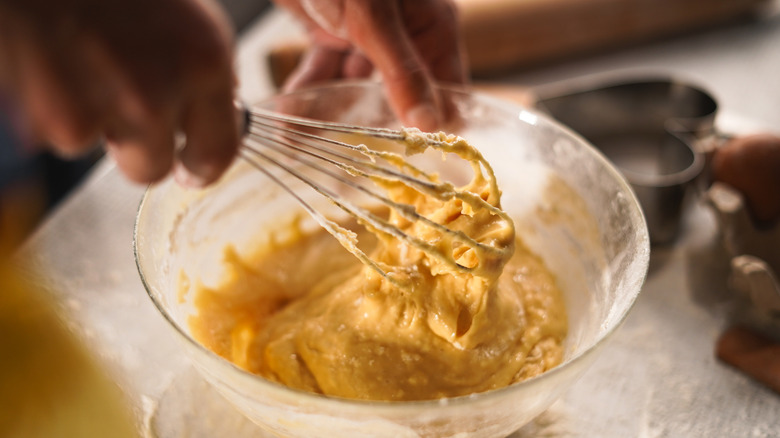
Once you've placed your wet and dry ingredients into a mixing bowl, you're in the home stretch to get the cake batter in the oven. But be careful not to make the crucial mistake of overmixing.
Stirring the batter too much when combining ingredients can ruin a cake's texture. Excessive mixing can cause gluten development in the flour, which can turn a light, tender cake into one that's dense and tough. Instead, mix just until the dry and wet ingredients are combined.
An easy way to avoid overmixing is to skip the stand mixer and mix the batter entirely by hand. Cake mix batter comes together really quickly and easily, so there's usually no need to pull out an electric mixer. Instead, use a whisk or a rubber spatula. Doing so gives you more control and makes it easier to stop mixing at the precise moment all the ingredients are combined. It also prevents you from whipping too much air into the batter, which can affect how evenly the cake bakes and rises.
5. Use light-colored baking pans
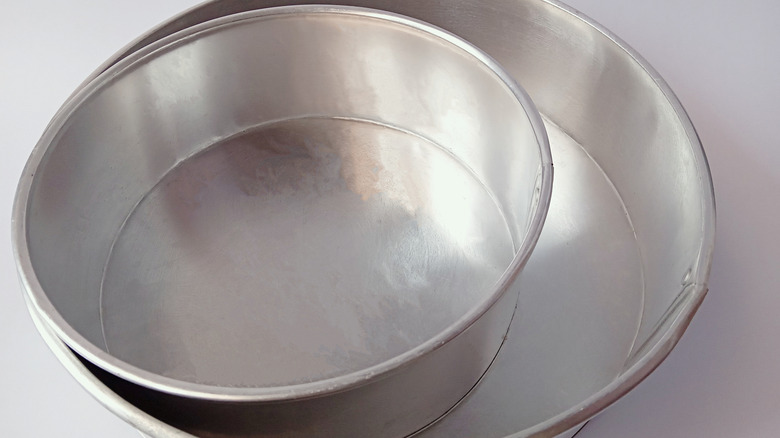
Once your batter is ready, the next step is to choose the best cake pans for baking. The right pan can make a noticeable difference in how evenly a cake bakes — and tastes. Professional bakeries typically use light-colored baking pans, specifically, aluminum ones.
Aluminum pans reflect heat rather than absorb it, which allows the batter to bake at a steady, consistent rate. Because the heat is distributed more gently, the cake has time to rise evenly and develop a soft crumb.
Dark-colored baking pans, on the other hand, absorb more heat, which can cause your cake's edges and bottoms to brown too quickly while leaving the center undercooked. It's a frustrating dilemma; leave the cake to bake long enough for the middle to cook fully, and you may end up with burnt edges.
If you're a frequent baker, light-colored baking pans are a wise investment. Just be sure to properly prepare the pans for baking before pouring in the batter!
6. Bake your cake at a lower temperature
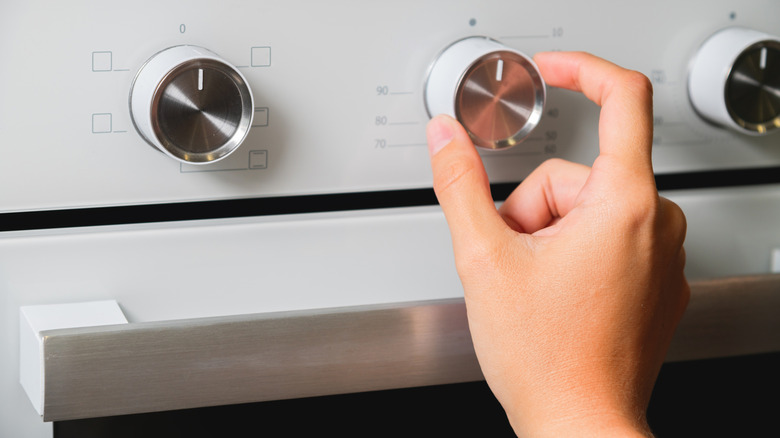
One simple way to improve the taste of a boxed cake is to bake it at a slightly lower temperature than what's printed on the box. A gentler heat gives the cake more time to rise in the oven and lets the center bake fully without the exterior cooking too fast. A lower temperature can also prevent a domed top from forming, leaving you with a flatter, more bakery-style cake. Baking your cake at a lower temperature is a simple hack for crafting perfect cakes every time.
So how low should you go? If the recipe states to bake at 350 degrees Fahrenheit, try 325 degrees Fahrenheit and increase the baking time by about 5 minutes. It may seem hard to believe that a 5-degree temperature reduction would make a big difference, but it does. Your cake will have a softer, more tender crumb and a flatter top, making it taste like it came from somewhere far more impressive than a box.
7. Wrap the cake overnight
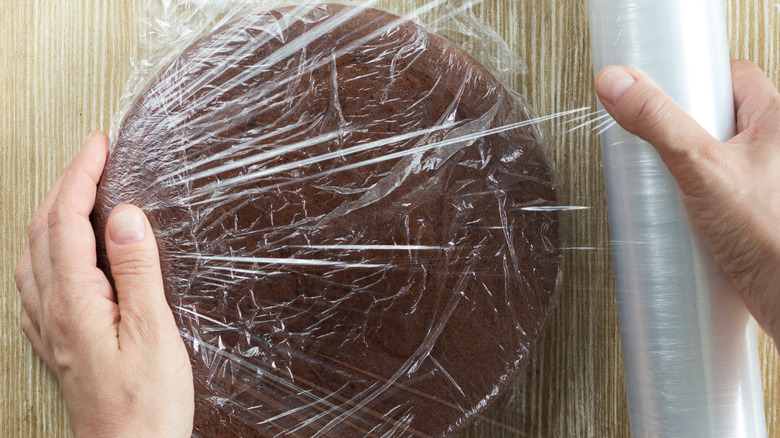
I started baking when I was pretty young, and I was always told to let cakes cool completely before wrapping them for overnight storage. Well, I'm here to tell you that I was seriously misled. Turns out, wrapping cakes while still warm actually improves their texture.
The explanation is really rather simple: As a cake cools, it naturally loses moisture as steam escapes. By wrapping the warm cake in plastic wrap (or even a clean dish towel), you trap the moisture and force it to stay in the cake. This is especially helpful if you accidentally overbake your cake — the trapped moisture will soften those hard edges entirely.
So, the next time you bake a boxed mix, let the warm cake sit until just cool enough to handle (about 15 minutes), then wrap it — pan and all — with plastic wrap and let it sit at room temperature overnight. This will trap moisture, allowing it to redistribute throughout the cake. The result is a softer, more tender cake just begging to be topped with a luscious, classic buttercream frosting recipe.