

This Fragrant Hanging Herb Is A Hummingbird Magnet
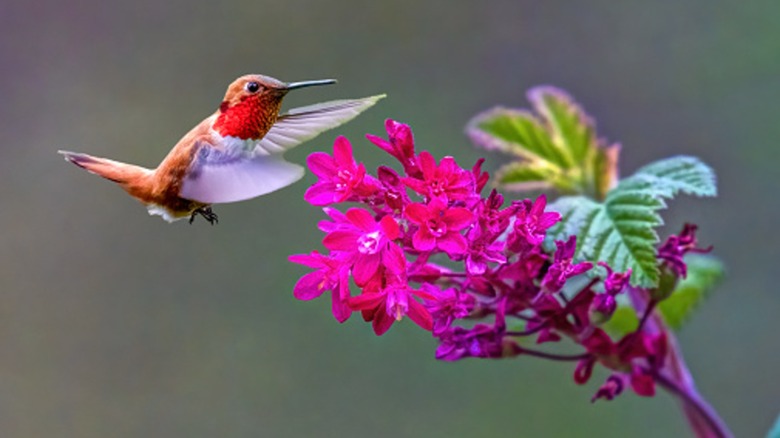
Often described as "the gateway drug to bird watching," hummingbirds are adored for their vibrant colors, flittery flight patterns, and positive spiritual and symbolic associations. Just watching them dart from place-to-place is a delight that you don't have to be a full-blown bird lover to take joy in. If you're looking to attract more hummingbirds to your yard this spring, there's one fragrant hanging herb that doubles as a magnet for these tiniest of fine-feathered friends and an invaluable resource in the kitchen — hanging rosemary.
Hanging rosemary (Salvia rosmarinus Prostratus Group, formerly Rosmarinus officinalis), also called trailing or creeping rosemary, is easy to cultivate and maintain. It differs from rosemary in its shrub form, which grows upright and is often used to form hedges. Rather, the hanging variety, as its name implies, flows, droops, and dangles from baskets, stone walls, and trellises. Its tiny blue, lavender, pink, or white flowers and dark evergreen, needle-like leaves serve as the perfect ornamental backdrop in gardens, allowing the bolder, more colorful showstoppers to have their moment in the sun. Though pleasing to look at, it's the fragrance of fresh rosemary that's worth the price of admission.
Rosemary's sweet nectar is what attracts pollinators such as bees and butterflies and, of course, hummingbirds. Rosemary thrives in the sun away from excessive moisture, making hanging baskets, with their optimum drainage and access to sunlight an ideal solution — not to mention easy access for hummingbirds.
Rosemary in a hummingbird-friendly backyard
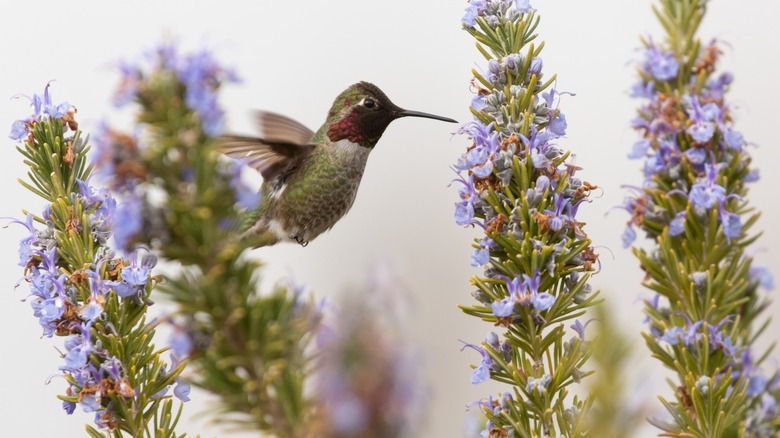
Just planting rosemary in your garden and crossing your fingers isn't enough to guarantee hummingbirds will flock to your yard. And even if they do start showing up, does your yard offer what they need to keep them coming back? Rosemary is just one component of making your yard hummingbird-friendly. The good news is there's a whole litany of simple things you can do to increase the chances of being the next neighborhood hotbed for hummingbirds.
Hummingbirds want to feel safe. You can accomplish this by having plenty of places to hide. Having an array of bushes and small trees of different heights works nicely and adds to the overall visual appeal of your garden or yard. This also gives them plenty of perch spots so they can take a break from all that zig-zagging about. To help them cool off in hot weather, offer shallow pools of water or a mister over a birdbath. Supplying drinking water and access to plenty of insects (eschewing pesticides) augments the rest of their diet. Try strategically-placing a hummingbird feeder or two and include other nectar-producing flowers of various colors, sizes, and bloom cycles in your garden. Everything from lavender, bee balm, and coral honeysuckle, to begonia, columbine, and foxglove is appreciated.
Your established rosemary will be hardy and drought-tolerant. Just be sure to regularly prune it so the stems don't become too long, unwieldy, and dry — a perfect excuse to add a sprig of rosemary to any of these recipes.