

9 Freezer Aisle Mistakes You Might Be Making
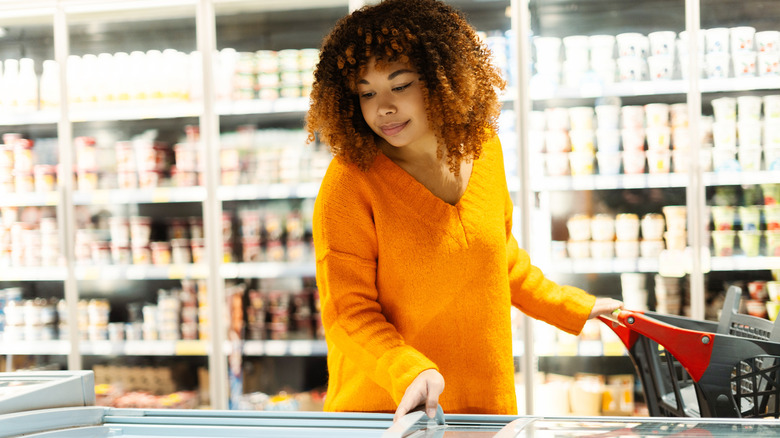
Let's be honest: The freezer aisle at the grocery store is where it's at. After all, it's the home of ice cream, pizza, French fries, nuggets, and more. In other words, you can find most of your favorite convenience foods in the freezer section, along with frozen fruits, vegetables, seafood, and meat. Of course, if you want to get everything home in one piece — and in the best shape, ready to make a delicious meal — there's a few things to keep in mind.
We took a deep dive into some common freezer aisle mistakes you might be making. With this list, you'll be able to make your next freezer aisle shop the safest and most efficient of your grocery store-shopping career. Plus, a few tips will help you save energy, avoid annoying your fellow shoppers, and stop ice cream from melting prematurely. Here are nine freezer aisle mistakes you might be making.
Not squeezing the bag before putting it in your cart
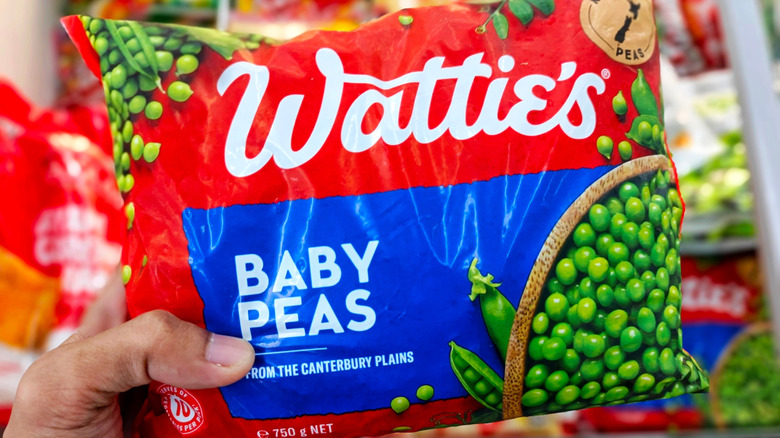
When you're in a rush, it's easy to simply grab an item from the freezer and place it in your cart — without really taking the time to think about what you're buying. But actually, it's a good idea to stop and feel the product for a moment. For example, if you're purchasing a bag of frozen peas, and you come across lots of hard lumps inside? That could be a red flag.
Other similar items, like frozen corn or berries, should move around freely in your hands, as well. If they're solid, that means the bag could have been defrosted or partially defrosted prior to landing on the store shelf; when it was stocked in the freezer, the food refroze together in one solid lump. Thawing and refreezing peas could impact their taste and texture when cooked, and result in a mushier consistency. The reason behind that is simple science, as this process damages the cells of the food, allowing more liquid to escape.
In short, stopping for a moment when you're in the freezer aisle and giving your frozen vegetables (or other things, like small shrimp and scallops) a quick squeeze could actually make a big difference to the quality of your eventual meal. Plus, nobody wants to spend ages cooking dinner, only to end up with limp, soggy ingredients.
Not paying attention to color
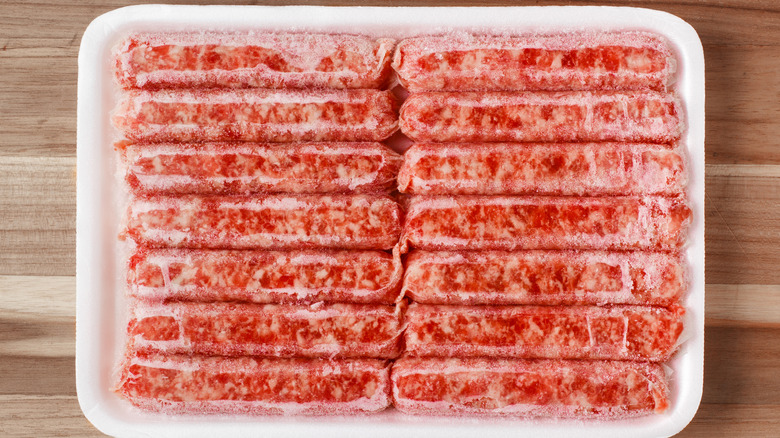
Paying attention to how your frozen food feels is important, but it's also crucial to remember to thoroughly glance over the package visually, too. When chicken has been frozen for a while, for instance, it might have patches of white on the flesh. This doesn't mean the chicken is dangerous to consume, but it does indicate the meat may have freezer burn. Basically, this means it has been exposed to the air (not actually burned by anything), and might taste a little dry and unpleasant.
Mildly discolored frozen food is often caused by freezer burn, which is generally pretty harmless. But sometimes, a change in color can indicate that something is more seriously wrong. If your frozen chicken has green spots or yellow spots, for example, it might be a sign that the meat has spoiled. Eating spoiled meat is not advisable, as it might lead to food poisoning.
Green meat could also be a sign of green muscle disease, which is a condition that affects the chicken's wings and restricts blood supply, leading to necrosis. It sounds grim, but the green tissue is a sign of that necrosis. Again, it's not dangerous, but we can't say that it's that appetizing either.
Ignoring frost build up in the freezer
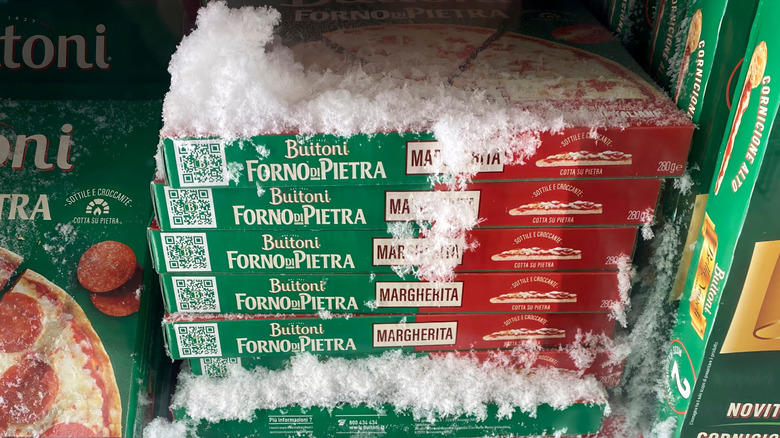
Another thing you should pay close attention to in the freezer aisle is the state of the actual freezers themselves. For example, is there a lot of frost build up on the grocery store freezer doors? If so, it might be best to get your frozen food elsewhere.
Frost build up in a freezer might be a sign that the door isn't closing properly, which can impact the temperature of the entire freezer. While the best way to check the temperature is via thermometer, we're not suggesting you carry one with you to do your weekly shop (although that might not be such a bad idea). Many grocery store freezers will have a thermometer on display. If it reads 0 degrees Fahrenheit or below, you're in safe territory. Not only will this stop bacteria from growing, but it'll also decrease the risk of freezer burn, too.
Frost build up may also be more likely in freezer sections that are overfilled, as this can make it harder for the freezer to maintain the temperature. Too many items in a freezer can block the air vents, hindering the flow of cold air. To summarize: A good, safe grocery store freezer should have plenty of space between items, a temperature read of 0° Fahrenheit or below, and minimal frost.
Picking up food that has already partially thawed
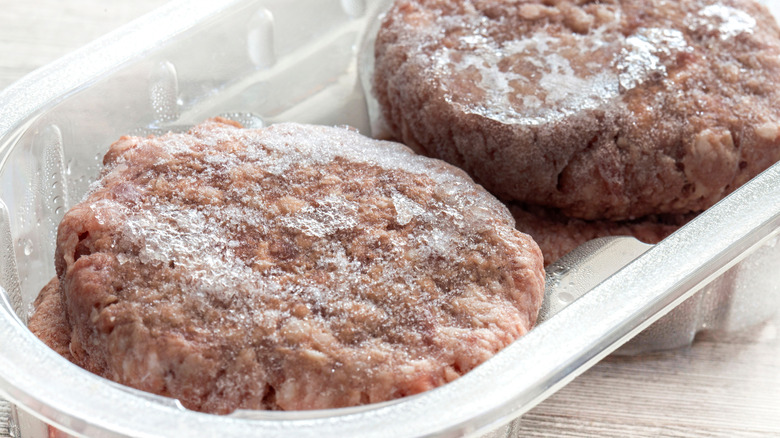
If you pick up a packet of food and it feels a little soft, this might be a sign that it has already partially thawed. Frozen food should feel hard and solid, and so anything different from this should be investigated further. Partially thawed food won't necessarily cause you any harm. You can continue to defrost it if you're planning on cooking it soon, for example, or you can usually safely freeze it again. Although, a reminder that thawing and refreezing will likely affect the taste and texture of the food.
But partially thawed frozen food in a store could also be a red flag that it's not being stored properly. It might even be a sign that the particular store you're buying from is not paying enough attention to food safety. If you spot slightly thawed out frozen food, it's a good idea to alert a member of staff. It could be that the food is thawing because of a fault in the freezer, like a broken door, for example.
Not checking packaging carefully for tears or holes
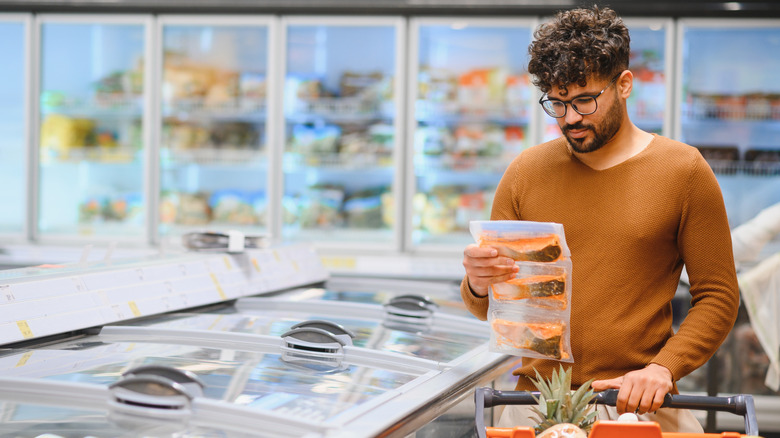
When you're feeling the packaging for hard lumps and carefully inspecting the color, also take a moment to check for any tears or holes. For example, if you get your frozen steak home and notice the packaging is damaged, you're going to be pretty disappointed. Now, if you're wondering whether you can just eat it anyway, well ... no, not really.
The FDA advises against purchasing anything from the grocery store with ripped or open packaging, including anything from the frozen aisle. This isn't solely because the quality of the food could be impacted (although it's true that if the packaging is damaged, the food has likely been exposed to the air, which can cause freezer burn or spoilage). It's also because you simply don't know when or how the packet was torn.
In rare cases, a torn packet could even be a sign of food tampering. This is the illegal and deliberate tampering of food with an intent to cause harm, and potentially even spread disease. Again, it's worth reiterating that this is far from a common occurrence, but it's better to be safe than sorry.
Not shutting the door behind you
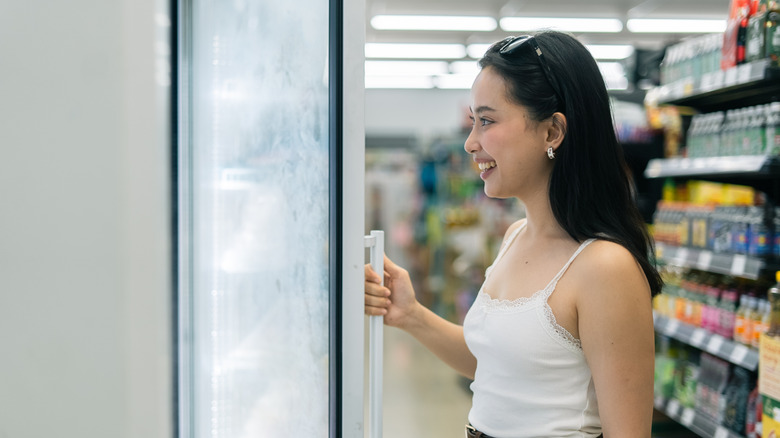
If you want to annoy your fellow shoppers, an easy way to do so is to leave the grocery store freezer door open behind you once you've taken out your item. There are numerous Reddit threads devoted entirely to complaining about people that do this. But it's not just irritating for other people shopping around you — it can also impact the quality of the food in the freezer.
When freezer doors are left open for too long, the food inside can start to thaw, which increases the risk of spoilage. But another issue is the wasted energy. When the door is left open, the freezer has to work extra hard to keep everything at the proper temperature, a process that uses up a lot of energy. While you're not the one personally paying the bills if this happens in the grocery store, it's not great for the planet, either.
Freezers are already a bit of an environmental nightmare. The electricity for grocery store refrigeration systems (which are required to keep freezers cold) produces nearly 1390 metric tons of carbon dioxide every single year. To put that in perspective, that's the equivalent of the annual emissions from more than 300 cars. So the least we can do as consumers is shut the freezer door.
Holding the door open while you're making a purchasing decision
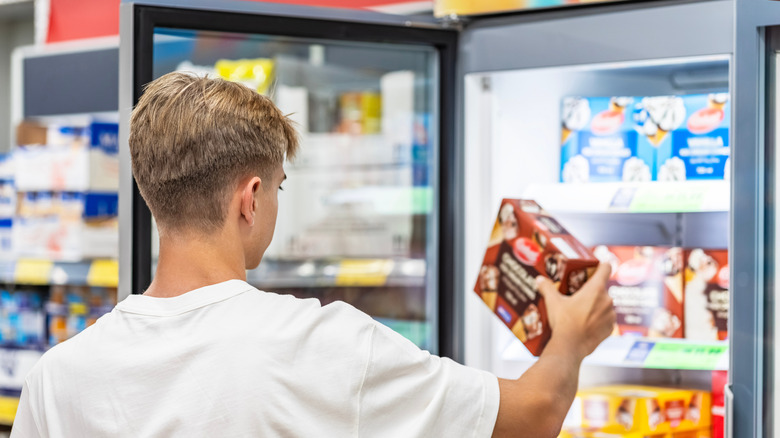
If you're the type of person who likes to take their time before making a purchase, that's totally fair. Choosing the correct, say, frozen pizza for the evening ahead is important. No one wants to rush themselves and end up with anchovies (unless anchovies are your jam, of course, in which case no judgment here). But while you're mulling over your decision in the freezer aisle, please: close the door.
As we previously explained, leaving the door open for too long can impact the quality of frozen foods. But it can also increase the carbon footprint of an already energy-intensive area of the grocery store. Of course, if you're only holding the door open for a few seconds, this isn't a huge problem. But some grocery store workers say they've witnessed shoppers standing in front of freezers with the door open for much longer. One Redditor even claimed they have seen people stand with the door open for a full 20 minutes before making a selection.
Another issue with leaving the freezer door open for too long is that the condensation can cause the freezer door to fog up. This is particularly irritating for the next customer, who can't see through the glass to choose their item. Consequently, this means the next person will have to open the door, and so the cycle continues.
Putting items in the freezer that don't belong in there
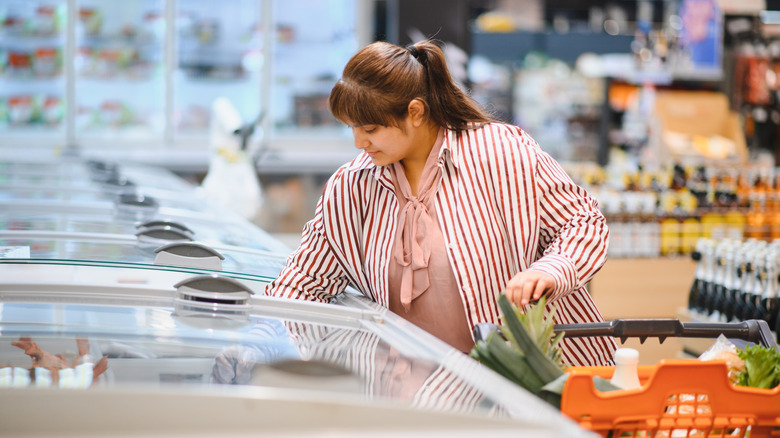
We've all likely been there. You pick up an item at the beginning of your grocery shop, when you're full of hope and optimism about your budget ... only to realize before checking out that you actually need to cull some items. Now, instead of walking back to the section you got an item from, you might just put it on the shelf next to you. But if that shelf is in the freezer aisle, you should avoid placing random, non-frozen items inside it.
While this might seem like common sense to some, grocery store workers have witnessed customers putting all sorts of items in the freezer section. One Redditor claimed they had seen people put everything from shampoo to milk to butter back in the freezer section, despite it obviously not belonging there. This isn't just annoying for the store worker that finds it, but it could also lead to food waste. If items are left to freeze when they are not supposed to be frozen, they can't be resold, and will often have to be disposed of instead.
It also works the other way. If you take an item from the freezer but decide you don't want it, don't leave it on a random shelf elsewhere to thaw out. As one person commented on Reddit, "Nothing like frozen peas defrosting with the cookies, right?"
Starting your shop in the freezer aisle
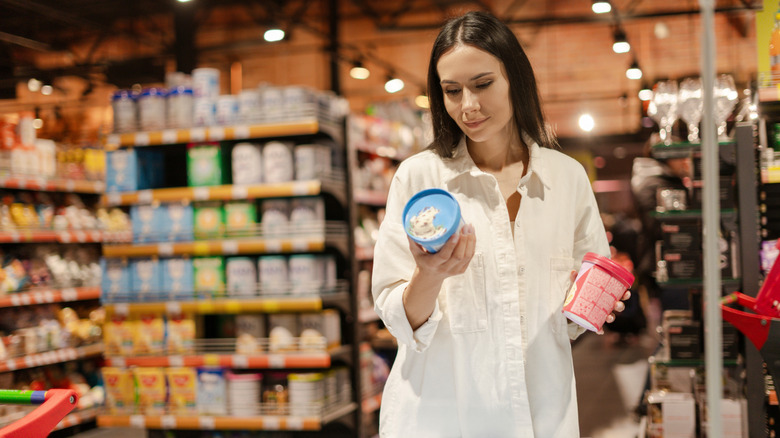
Grocery stores can be pretty overwhelming places, especially if you're shopping in one of the bigger ones. There's a Walmart in Albany, New York that spans 260,000 square feet over two floors, which is a heck of a lot of grocery store to tackle. That's why it helps to have a plan before heading to the supermarket. With that in mind, if you head straight to the freezer aisle at the beginning, you're going to end up with frozen food that starts to melt or thaw before you even make it to the checkout.
Ice cream, for example, starts to melt pretty quickly at room temperature, so consider starting your shop with non-perishable items. This means items like canned beans, rice, pasta, nuts, cereal — you know, essentially anything that isn't as sensitive to temperature. You can also start with fresh items, like leafy greens, or varieties of fruit. After that, head to the refrigerated section to grab things like milk and cheese, and then finish up in the freezer aisle before you head to the checkout.