

What You Should Ask Your Butcher Instead Of 'What's The Cheapest Cut?'
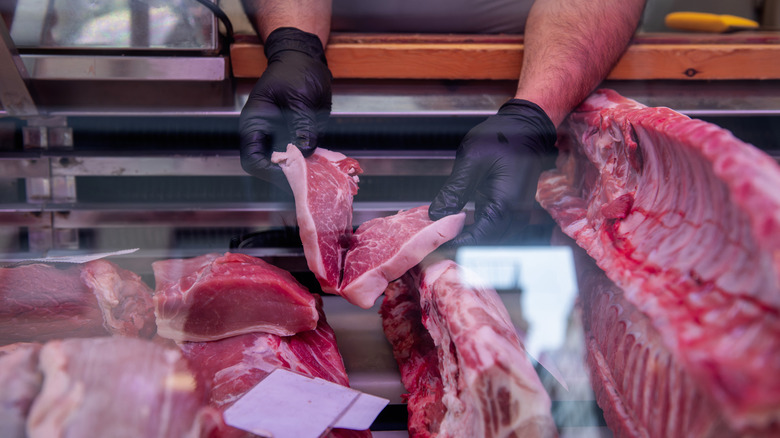
When you're standing at the meat counter, pinching your pennies whilst simultaneously trying to figure out what's for dinner, it's tempting to ask the butcher a seemingly innocent question: "What's the cheapest cut?" It seems only logical if you're cooking on a budget. But this is one of several things you should avoid saying to your butcher. In an interview with Marc Jonna, co-founder and president of Plum Market, along with his butcher team, Tasting Table asked what butchers would rather have you inquire about. "Instead of cheapest, ask for the 'best value for [your] cooking method,'" they said. That small shift in wording can make a big difference in the "final cut," so to speak.
Keep in mind: The least expensive cuts of meat aren't automatically the best option for your recipe. Some cuts are cheaper because they require a specific cooking method or more time to become tender. If you choose one without knowing how to cook it properly, the result can be tough, dry, or a shoo-in for shoe leather. So don't be afraid to ask the butcher what their personal preference is. "Our butchers might steer you toward a bavette or coulotte — under-the-radar cuts that offer the richness of a premium steak at a fraction of the cost," adds the Plum Market team. Butchers always know more affordable cuts that many shoppers overlook. These "butcher's cuts" can offer incredible flavor at a lower cost because they aren't as widely marketed.
Make your butcher your best friend instead
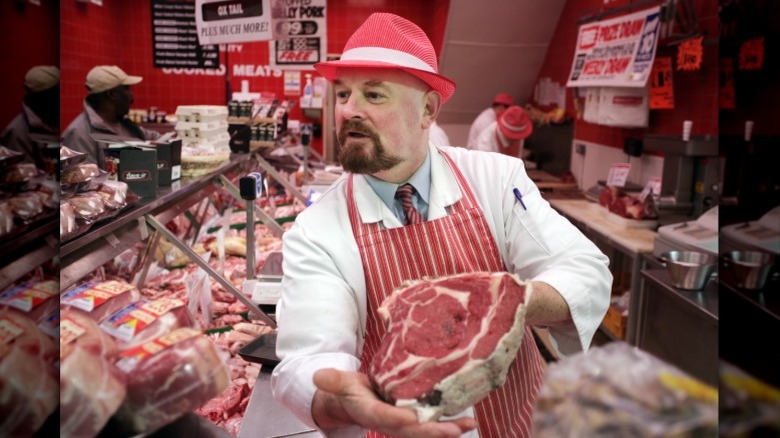
The bavette steak, also known as flap steak, is an underrated, budget-friendly cut that's perfect for grilling. It's deeply flavorful and often cheaper than popular steakhouse cuts, but it requires the right cooking technique. That's why professional butchers think about meat in terms of how it performs in different cooking styles. A butcher knows which cuts shine when grilled, which benefit from a long, slow braise, and which work best for quick weeknight meals. It's helpful first to explain what you're planning to cook or what you have time for, whether it's a stew, roast, stir-fry, or steak dinner. A good butcher can recommend a cut that balances flavor, labor, and price.
There are many ways to save money at a butcher shop, whether it's buying unsliced primal cuts in bulk, scraps and trimming, or joining your local Community Supported Agriculture (CSA). Buying a larger piece of meat (like a whole roast or loin) and slicing it at home is certainly one way to lower the per-pound price. These are all excellent reasons to engage with your local butcher, as it opens the door to these kinds of expert recommendations. Butchers appreciate customers who ask thoughtful questions, which is why building a relationship with them is always your best bet. Instead of treating the interaction like a transaction, you're inviting their expertise into the cooking process. Over time, that relationship can pay off with tips, custom cuts, and insights into the freshest options that day.