

Stop Kitchen Grease Before It Spreads With This Simple Cooking Move
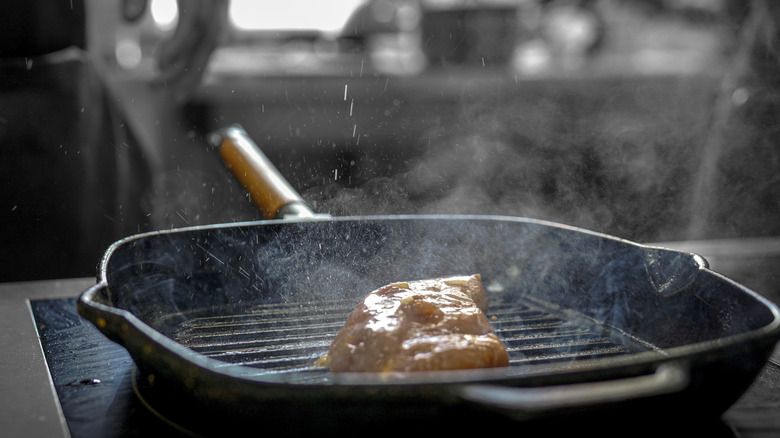
Every well-used kitchen eventually develops that sticky film on its surfaces. It's just physics: Most of the residue comes from a miasma of airborne grease vapor which is naturally produced by the act of cooking food. The simplest way to stop that grease before it spreads, or at least limit how far it travels, is to turn on the range hood while you cook. That way, the floating droplets get pulled up and out before they land all over the room and its fixtures.
As moisture escapes from food, it produces hot steam that lifts microscopic droplets of fat into the air. This creates a barely visible mist, made of aerosolized grease. Because the droplets are so small, they're not very heavy, and can travel several feet from the stove, floating on their magic moment in the rising heat. Then, as they cool, gravity kicks in and they drop down on whatever's underneath, clinging persistently to the fronts of cabinets, the stovetop, backsplashes, light fixtures, and other appliances.
Once the grease makes its landing, it doesn't stay soft and liquidy for very long. As the oil sits on a warm surface, oxygen triggers a gradual reaction called polymerization, where the fatty molecules bond together into longer chains. Add in a layer of ambient dust bunnies that float through every home, and you get that tacky residue we all know and love. The warm air is essentially slowly dry-curing the fat and dust; you see the same thing happening to the surfaces of cast iron pans when they're used or seasoned, making them nonstick, but no one wants their kitchen walls to develop a patina. Capturing those nefarious droplets before they make landfall and adhere stickily makes a big difference in how grimy your kitchen gets.
Hot air goes up and out
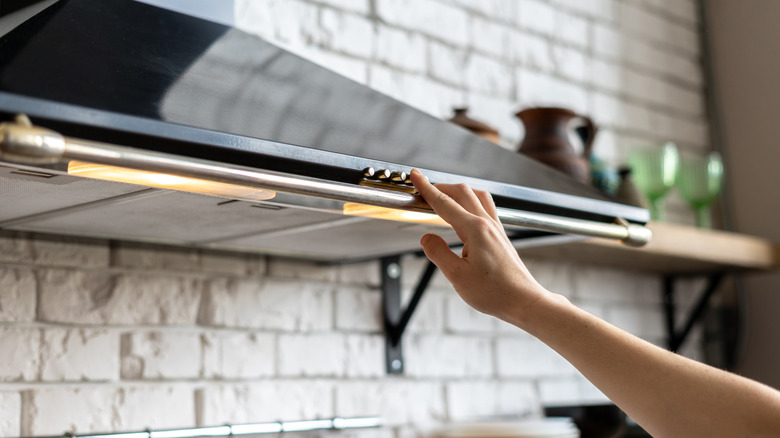
A range hood works by intercepting the rising plumes that cooking releases into the air. The fan draws the steam upward through a metal mesh filter, where the droplets collide with the filter's surfaces and stick. The same principle, called impaction, is at play in industrial air filtration systems. Once captured, the grease is stuck in the filter, instead of settled across the kitchen.
In ducted hoods, the remaining air is pushed outside through a vent — ever walked by your neighbor's house and known exactly what they're having for dinner? Their stovetop grease plume, along with aromatic particulates of the food they're cooking, has been pushed outside through their hood. Recirculating hoods, which are common in apartments and older kitchens where installing exterior ductwork isn't practical, pass the air through a charcoal filter that absorbs odors before being released back into the room. Either way, the hood is doing the job of removing the gooey grease particles before they can cool and settle.
Before mechanical ventilation, kitchens had to absorb the residue of everyday cooking. Wood-fired hearths used chimneys to carry smoke upwards, but greasy cooking vapors settled onto the walls and cookware like a varnish, which is why old kitchens sometimes have that amber sheen. The good news is that the same chemistry that built the gunk explains how to remove it. Alkaline cleaners, like the dish soap or baking soda in our DIY all purpose cleaner, break apart bonded fats so they can be wiped or rinsed away. But trying to fight polymerized grease with elbow grease isn't exactly fun, it's easier to just have it carried away while it's still flying. So keep the range hood running when you're cooking, and occasionally disassemble it to wash or replace the filters.