

The Zero-Cost Solution To Stove Burners That Heat Unevenly
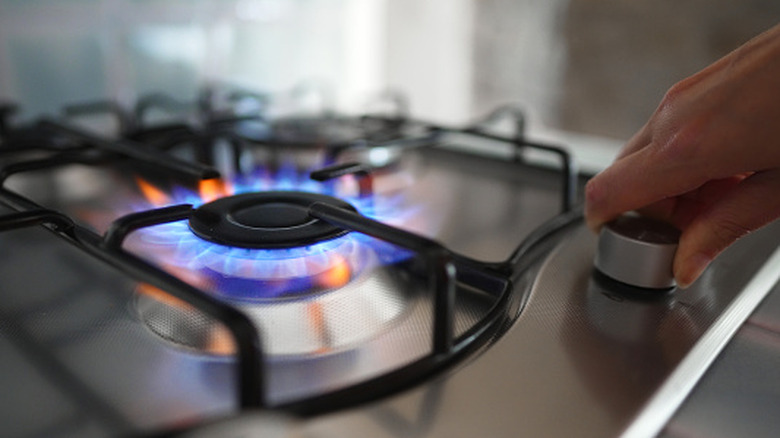
A problem with one of your gas stove's burner heads can lead to uneven heating, which means that your food may burn, stick, or take longer to cook. You could even face bigger safety issues, such as carbon monoxide poisoning or a stovetop fire. Thankfully, there is a zero-cost solution to stove burners that heat unevenly: cleaning your burner heads and caps. It's a gas stove maintenance task you may have been overlooking, but it's a simple one to do.
The most common reason for uneven heating is dirty or clogged burner ports or other components. To clean them, you'll need dish soap and a soft sponge or a soft-bristled toothbrush. Start by removing and cleaning the burner caps with warm, soapy water, then dry them with a soft cloth and set them aside. Underneath the burner caps, you'll see the burner heads. Most types can be lifted up easily for cleaning, but if you encounter any resistance, look up your stove's model number to find the manual or an instructional video that demonstrates how to safely remove them.
Once you have removed the burner heads, soak them in a bowl of warm water and a mild, degreasing dish soap like Dawn. After, you should be able to scrub them clean with a sponge or toothbrush. If you see debris clogging up the portholes, use a straightened paper clip or a toothpick to clear the clogs. Rinse the heads off and then dry them with a cloth. One big mistake to avoid when cleaning your stove burners is putting wet components back in place, so don't replace the burner heads or caps until they are completely dry.
Other reasons why gas stove burners heat unevenly, and how to fix them
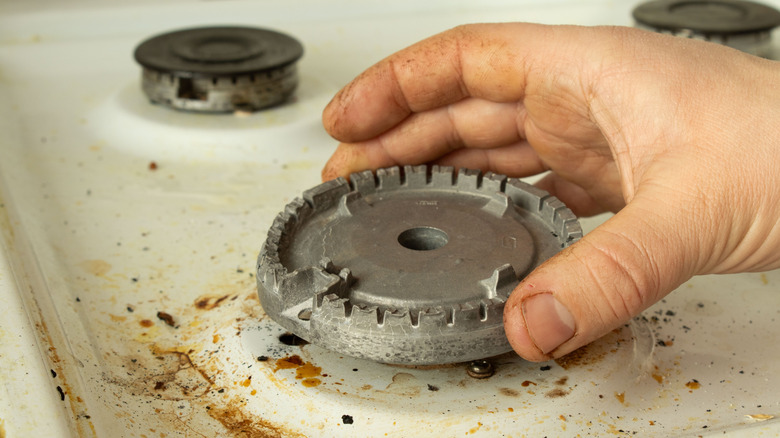
If cleaning the stove burners and burner heads didn't solve the problem, there are a few other potential issues that could cause uneven heating: damaged, or improperly aligned burner caps; using the wrong type or size of pan; or problems with your stove's gas valve or regulator. Start by checking the burner caps. If they are dirty and greasy or aren't placed properly, the gas will be dispensed unevenly, and you'll see lopsided flames when you turn the burner on. Remove the caps and clean them thoroughly using warm water, dish soap, and a soft sponge. Then dry them thoroughly and replace them carefully, making sure each one is sitting flat and centered over the burner head.
If that doesn't fix the issue, make sure you're using the right pan for the burner. Pan size matters when reheating food because, when you use a pan that is too small for the burner, the flames may rise up and around the pan, causing uneven heat distribution. If the pan is too large, the center will get too hot while the edges won't heat at all. If none of those solutions fixes the problem, it's possible that your stove has a bigger issue. Low gas pressure or a faulty regulator or ignition system can cause super high or low flames. If the flame is yellow or flickering or if the gas stove flame turns orange, you should contact a professional, as this is not a DIY project.