

Save Your Soups From Tasting Bland By Salting At The Right Time
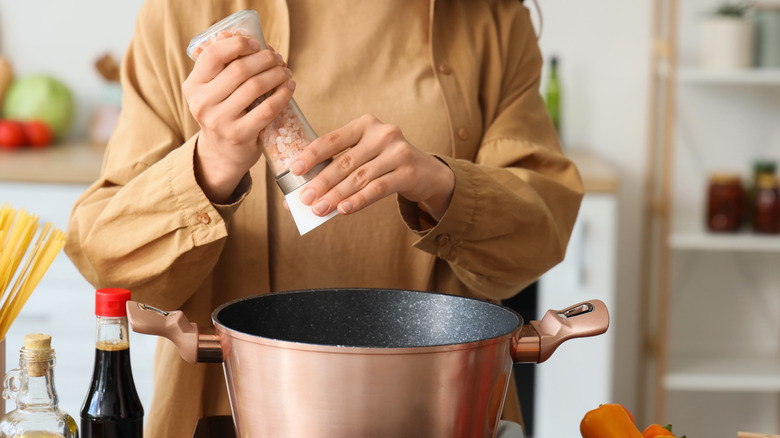
The value of salt cannot be overstated. If you have no other seasoning whatsoever, salt can still improve just about any dish. While it is versatile and incredibly important to the culinary world, knowing how much to use and when to use it is also a key part of seasoning your food. A little dash in a finished dish can make the flavor pop, but adding it during cooking can significantly improve the taste if it goes in at the right time. When it comes to soup, some people are happy to season it toward the end of cooking, but for the best flavor, you should consider adding salt at the beginning.
To be fair, you will probably find numerous opinions on this topic if you search for advice. Some advocate salting at the beginning, others suggest the end, and still others propose a layered approach of adding salt throughout the entire cooking process. But there's a good reason to support salting a soup near the beginning.
Salt doesn't just add saltiness; it also enhances other flavors. It draws liquid out of ingredients like meat, vegetables, and beans. That may be undesirable in some applications, but it is ideal in a soup where the flavors remain in the broth and develop throughout the cooking process. It takes time for the salt to saturate the ingredients in your soup. Proteins and starches will draw that salty liquid in. The longer it remains in the soup, the more it seasons all the ingredients instead of just the broth, which enhances the overall flavor.
You can't be faulted for keeping it salted
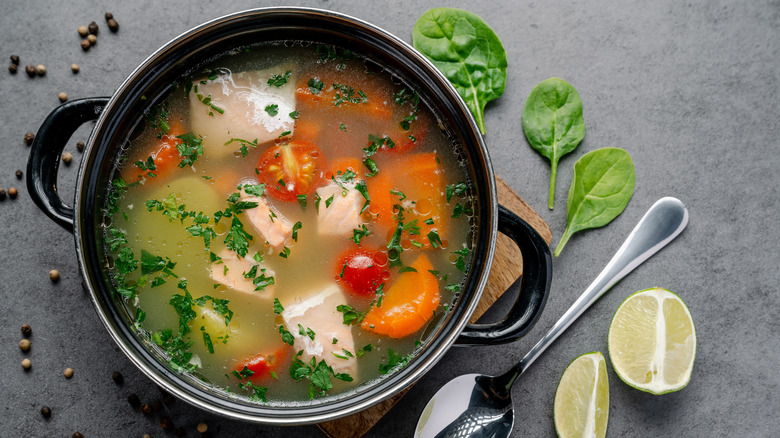
Sometimes you have to be careful about adding salt to a soup at the beginning. The other ingredients you're using can affect how this works — like if you're using bouillon cubes or ham. Those are two very salty ingredients, and that saltiness is going to come out more over the course of cooking. If you also add salt at the beginning, the final dish might be overwhelmed by it. That's why it's always good to check what you have in the pot before salting.
You may want to be conservative with your salt if you plan on reducing the broth as you cook. If you reduce too much without more liquid to compensate, the saltiness could be too strong. That's why some people recommend a layered approach to salting. Add some in the beginning and then more towards the end if needed. You can always add more salt, but it's harder to take it away without diluting the whole soup, which can throw off the flavor balance entirely.
In general, you never want to leave all the salt until the end. Soup is a watery dish, and very often you need more salt than you think in order to prevent it from being bland. This is why it's ideal to taste a soup frequently during the cooking process. Allow it to simmer and develop flavor for a while, then taste again and adjust. If it's not added early enough, you won't get that deeper, developed flavor that makes an okay soup into something great. We have plenty of great soup recipes here, so you can practice your salt timing.