

Why A Half-Martini Actually Makes For A Better Cocktail-Sipping Experience
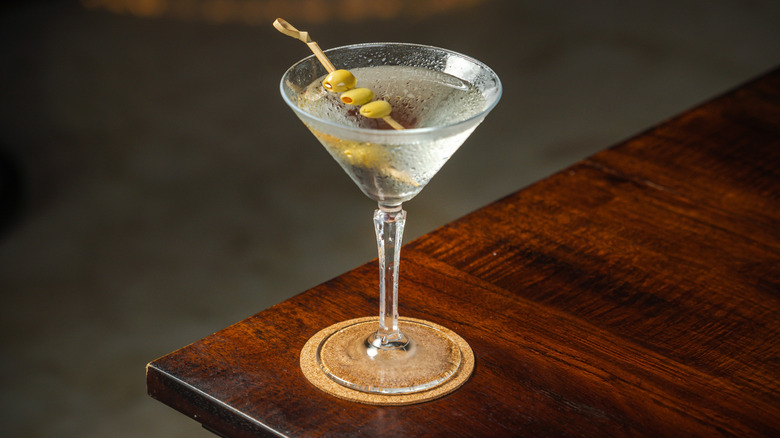
The martini is a classic cocktail that everyone should know. The recipe is simple, composed of just gin or vodka, vermouth, and ice, but the customizations and variations abound. The one thing that they all have in common, though, is that they are best served cold.
The iconic question, "shaken or stirred?" isn't just semantics; it's an essential step in getting your drink to the right temperature. From a sensory angle, being served a cold martini allows you to experience the temperature contrast and dials back the flavor of the punchy ingredients. It makes the cocktail more approachable, which is why bartenders and mixologists are constantly trying to find ways to chill the martini down quickly and efficiently — and keep the temperature there.
If you're trying to become a better martini maker, one simple tip you can follow is to serve half-martinis rather than full ones. You can drink a smaller portion faster, meaning you won't have to contend with a room-temperature martini. When preparing it, be sure to uphold the proper ingredient ratio to keep your drink tasting great. You can cut the recipe in half, or keep the extra in a sidecar over ice and add it in as needed. Serving your drink in a smaller sized glass may be helpful as well, as larger glasses have more surface area, which can warm your drink up too fast.
Must-know tips for keeping your martinis cold
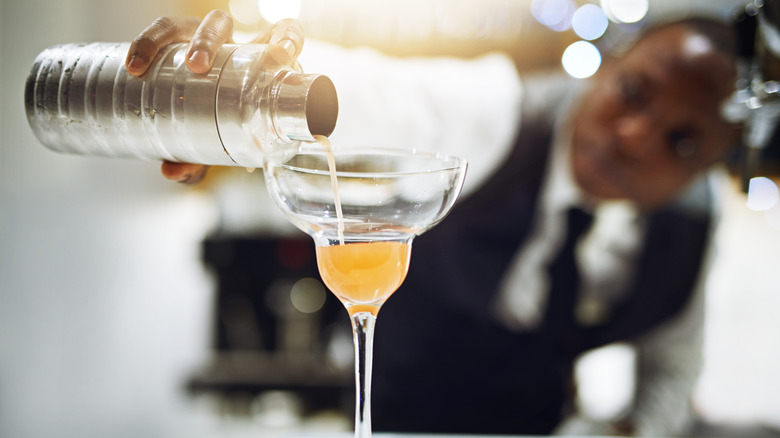
There are many techniques that you can employ to keep your martini cold. If you prefer a colder cocktail, try stirring your drink instead of shaking it. Shaking will break down the ice into smaller pieces, increasing the dilution. Stirring is ideal for martinis because it maintains and highlights the flavor of the spirit. Of course, this is a matter of personal preference (hence the "shaken or stirred" debate), but it does result in a colder cocktail.
You can also tackle your temperature challenges by freezing your martini glass (and your shaker, if you prefer to go that route) before preparing your cocktail. You can also chill your garnishes, like olives, to ensure that they don't warm up your martini any more than necessary. If this seems like overkill, rest assured that it's not; some martini-focused bars have gone as far as to swap in chilled glassware halfway through a customer's martini-drinking experience, while others have employed sound-barrier-breaking technology to essentially lower the freezing point of the drink to around -16 degrees Fahrenheit. Is it worth it for the coldest martini? We'll leave that for you to decide.